The Queen of the Beach movies…for the connoisseur of the bad B’s, she was one of the best.
The beach movies were always about having fun. In the cold war era, with the changing times, they were still simply “at the beach”. There was no hidden agenda in Frankie & Annette’s beach movies. You just went to have a good time. And a good time was had by all
Capsule Review for 42
This is not a sugar-coated treatment of Jackie Robinson. The good and the bad of the bio-flick has to be in the telling of a true story, “the way it was”. There is no attempt to make Robinson’s life seem easier than it was, or harder than it was.
But unlike a documentary, a Hollywood bio-pic has to have some kind of an angle. In this case, the driving force behind Robinson’s advent into major league baseball is found in the character of Branch Rickey.
Ford plays Rickey with a zeal not often seen in his acting of late. Rickey had a vision and a religious bent that comes through in the comments peppered liberally throughout the film. In the end, the film stands as a tribute to Robinson and a kind of opening salvo in the civil rights struggle that is to come.
Some of the action seems a tad contrived after the initial brouhaha is over when Robinson is introduced as a Brooklyn Dodger. But, in retrospect, the film is part of the larger struggle and definitely sends an uplifting message to those who know little of Jackie Robinson’s legacy.
The other baseball bio-flicks in the 6 Degree spectrum include “The Babe Ruth Story” and “The Lou Gehrig Story”. Of all the baseball films that simply set out to tell a story, the one I would recommend is “The Lou Gehrig Story”.
Gary Cooper is never better as Gehrig, a genuinely humble man who became a legend on and off the field of baseball. Gehrig was not only well liked, but also became a national symbol for a tragically debilitating disease-ALS or amyotrophic lateral sclerosis- known simply as “Lou Gehrig’s disease”, that cut short his life.
The scene where Cooper, as Gehrig, is standing on the mound and simply says, “I consider myself the luckiest man on the face of the earth” is so moving and so based in the reality of what actually occurred that it stands alone as the truest film tribute to a sports legend.
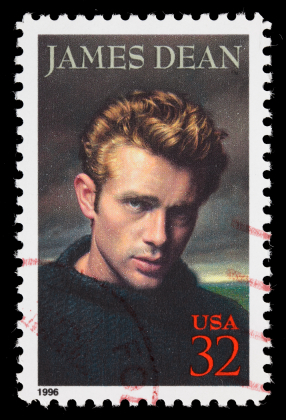
James Dean Legacy in Film

Robert Towne said this about James Dean’s character in Rebel Without a Cause:
He was the fellow who was going to go to the police and tell the truth. I mean, if you look back, no Bible-thumping Protestant could be more of a reformer than James Dean was … he was the last thing from a rebel.
The actors whom James Dean most admired were those he knew from the Actors Studio in New York. They were under the tutelage of Lee Strasberg and Elia Kazan, who helped to promote the Method. The method actor was probably best understood in the prototype model of Marlon Brando’s performance in A Streetcar Named Desire. Brando immersed himself in the role and became synonymous with the part of Stanley Kowalski. He owned the character. Other method actors followed, including Paul Newman, who also studied the form in New York.
James Dean was from this school of acting, and he also immersed himself in his roles. That is one reason why the James Dean legend endures. The era he was born in, the circumstances surrounding his tragic death at such a young age, and his own charisma and good looks captured a generation of young people.
His legacy began with Paul Newman, who took his part in The Left-Handed Gun and also Somebody Up There Likes Me. Steve McQueen continued to carry the mantle with his roles in The Great Escape and Bullitt.
Newman is an older version of Dean in The Verdict. He plays a man on the skids who is lost, alone, confused, and no longer young. This is a departure for the James Dean mold but one he would have welcomed, I believe. In Giant, Dean also played the part of a man who ages decades in the course of the film.
Other prime examples of Dean’s legacy include Robert De Niro as Jake LaMotta in Raging Bull in 1980 and Sean Penn, another method actor, who won an Academy Award for his performance in Dead Man Walking. These actors immerse themselves in their parts and are known for their grueling prep work before the cameras roll.
There are no apparent newcomers to supplant the role that James Dean created. The rebel hero, the rebel without a cause, the lost, lonely, misunderstood and yet sensitive hero is still remembered as the James Dean hero.
Film noir and existentialism gave us role models such as Bogart’s Philip Marlowe or the French actor Jean-Paul Belmondo in Breathless, but James Dean is an exclusively American icon of film.
In the modern era, Sean Penn would have been the closest thing to James Dean when he starred in the comedy Fast Times at Ridgemont High or his Oscar-winning role in Dead Man Walking. Brad Pitt assumed the mantle in Kalifornia, Thelma and Louise, Meet Joe Black, and Fight Club.
There are no hard-and-fast rules here, but certain standards do apply. The existential James Dean hero is not cut from the standard heroic mold. He is often shy and antisocial; he may be very good looking, but not always. Steve McQueen and Sean Penn, although not as handsome as Newman or Brad Pitt, possess the charisma and emotional capacity to convey extreme angst without losing the aura of cool.
This is a feat that is most difficult to pull off. Very few actors can do this gracefully, yet somehow a few of them have worked in the model or format of the James Dean hero. The legacy will grow and continue to survive as long as the American Dream continues, and as long as new generations of teenagers still exist. It may not be forever, but the James Dean legacy survives on film.
Six Degrees 100 Film List
History of The 100
1. To Kill a Mockingbird—Voted by the AFI, along with many other esteemed film organizations, as one of the best films ever made, this is Harper Lee’s moving, simple story set in the Depression-era South. The plot-within-the-plot includes the courtroom drama and trial within the sweet and innocent coming-of-age story of three children.
Six Degrees of Film: All courtroom dramas, coming-of-age films, A Few Good Men, Juno
- 2. Wizard of Oz—Also a masterpiece of film simplicity, The Wizard of Oz is a children’s story first and foremost, a fantasy that weaves magic and spectacle within a simple black-and-white screen story. The picture explodes into vivid color as it tells the tale of a young girl from Kansas who wants to find her way home again.
Six Degrees of Film: Fantasy[ , children’s films, musicals, Harry Potter
- 3. The Sound of Music—One woman made her way into the Guinness Book of World Records by sitting through this movie daily over several years. She must have seen it hundreds of times, and I think about her when the film plays religiously on television at all major holidays and at Christmastime. In recent years, movie chains have held sing-alongs for The Sound of Music as well as The Wizard of Oz
Six Degrees of Film: Costume pieces, beautiful location films, [musicals, Moulin Rouge, Chicago
- 4. Lawrence of Arabia—This movie is a not-so-simple tale based on the real-life exploits of T. E. Lawrence, the famous English adventurer. The deceptively simple quality to this complex man is introduced at the beginning of the film when various people at his funeral try to describe him and each comes up with a different description (see appendix for the Six Degrees of Film blog post, “The Timeless Appeal of Lawrence”).
Six Degrees of Film: Psychological dramas, epic films, Indiana Jones
- 5. Butch Cassidy and the Sundance Kid—Considered by many Hollywood insiders to be the best screenplay ever written, this film originally included some scenes that were reportedly scrubbed because Paul Newman couldn’t say the lines without laughing. Yet this is a poignant film at times that focuses on two real-life outlaws on the run for their crimes. The parts we remember most vividly are those that give the movie the aura of a “buddy” picture, then an action-adventure comedy, and finally a western very much of the sixties.
Six Degrees: Buddy pictures, westerns, costume-period pieces, comedy-drama
- 6. The Godfather—This much-anticipated film launched the careers of Francis Ford Coppola and Al Pacino and reinvigorated the career of the legendary Marlon Brando. When watching in a packed audience, I remember the hush in the theater and the shock and horror during the scene when the horse’s head was used as a symbol of the brutality of the Corleone family. Italian American groups raised so many objections that the word Mafia was not used in the film.
Six Degrees of Film: Drama, period pieces, mob movies, Goodfellas, The Departed, The Sopranos (TV)
- 7. 2001: A Space Odyssey—This great film works on many different levels and is the gold standard for most science-fiction films of the latter part of the twentieth century. The beginning and end of the film take place in very different settings than one would think of as “outer space.” The scenes with the apes on earth and the old man in a sterile room contrast directly with the high-tech world associated with science fiction, and they are vital for the film to work.
Six Degrees of Film: Science-fiction films, futuristic and innovative speculative fiction, Aliens, Blade Runner, The Matrix
- 8. Jaws—So realistic were the shark attacks in this film that when I saw it for the first time, someone actually shouted out in the packed theater, “Is there a doctor in the house?” The intensity lasted through the drive home from the theater. Now that is a masterful piece of filmmaking!
Six Degrees of Film: Suspense and horror movies, Halloween
- 9. The Birds—Most people associate Hitchcock with horror films, but he was such a master of suspense and the thriller that one can argue a case for him in several different categories of film, and he would be at the top of his craft as a director in each one. He was just that good. Most people remember him for Psycho, but he was equally well known for The Birds.
Six Degrees of Film: Thrillers
- 10. The Gold Rush—Chaplin was one of the most recognized and beloved figures in film history. The character of The Little Tramp was so well known that he eclipsed Laurel and Hardy and Greta Garbo in the early days of cinema.
Six Degrees of Film: All epic and recognized film characters of the latter part of the twentieth century, Star Wars characters, Schwarzenegger’s Terminator, Shirley Temple, Lassie, Disney characters, Harry Potter, all well-known film icons
- 11. An American in Paris—Gene Kelly stylishly executed many dance moves that broke the rules when he filmed this beautiful musical with Paris and a host of Gershwin tunes as the backdrop.
Six Degrees of Film: Musicals, musical scores that are instantly recognizable
12. Breathless/Manon of the Spring—French film cinema
Six Degrees of Film: French cinema that still innovates and paves the way
- 13. Casablanca—The most famous of all B movies ever made.
Six Degrees of Film: All B movies made on a budget with word-of-mouth notoriety
- 14. The Freshman—A classic Harold Lloyd comedy
Six Degrees of Film: Comedies, Buster Keaton, Laurel and Hardy, the Marx Brothers, Woody Allen, Mel Brooks, Richard Pryor, Jim Carrey, Lily Tomlin, Steve Martin
- 15. The Birth of a Nation—One of the first epic blockbusters, noteworthy also because of the nature of the content (the Ku Klux Klan are the heroes of the film!). D. W. Griffith became one of the first famous directors after making this now-controversial classic.
Six Degrees of Film: The Last Temptation of Christ, all controversial films that sell tickets
- 16. The Cabinet of Dr. Caligari—One of the first films to have the distinction of being known as a psychological study.
Six Degrees of Film: Martin Scorsese paid homage to Dr. Caligari in Shutter Island with DiCaprio.
- 17. The Quiet Man—John Wayne and John Ford at their iconic best.
Six Degrees of Film: Movies with iconic “tough guys,” Clint Eastwood, Sylvester Stallone, Bruce Willis, Arnold Schwarzenegger
- 18. The Wages of Fear—A foreign film in the category that once you’ve seen it, you will never forget it.
Six Degrees of Film: Slumdog Millionaire
- 19. 8½—Another foreign classic t hat makes many top-ten film lists, and this one deserves to be there.
Six Degrees of Film: Recently remade as the musical Nine with Daniel Day-Lewis
- 20. It’s a Wonderful Life—Jimmy Stewart as Everyman in this classic Christmas story. It probably would have been a hit had it opened anytime near Christmas.
Six Degrees of Film: Tom Hanks takes the mantle from Stewart. It’s called Capra-corn, and the hokey and corny labels are always applied. Recently, the Six Degrees blog recognized The Blind Side with Sandra Bullock for its Capra-esque qualities. The critics usually pan them, but the filmmakers are crying all the way to the bank, because the American public loves to root for the underdog—always have, always will.
- 21. Annie Hall—Among Woody Allen films, this one typifies his best work. It is, at times, self-conscious and overly smug, but Allen is always funny.
Six Degrees of Film: Any film that imitates Woody Allen’s distinctive style, Seinfeld (TV)
- 22. Spartacus—The declaration, “I am Spartacus!” from this landmark film became a catchphrase. Kirk Douglas struggled to make the film, and it helped to put the genius of director Stanley Kubrick forward and established his reputation as a superior filmmaker.
Six Degrees of Film: The Hunger Games and Gladiator
- 23. Dr. Strangelove—This dark comedy directed by Stanley Kubrick highlights the anxiety arising from the nuclear arms race.
Six Degrees of Film: Black comedies owe something to this blackest of dark and hopelessly funny comedies with a frightening element of truth.
- 24. North by Northwest—Another Hitchcock thriller.
Six Degrees of Film: Charade, the Bourne movies, Three Days of the Condor
- 25. Schindler’s List—Spielberg’s true story of one man’s bravery and the heroism of many in the shadow of the Nazi era
Six Degrees of Film: Films that bring a new dimension to World War II, Saving Private Ryan, Defiance, Tarantino’s Inglourious Basterds
- 26. The Outlaw Josey Wales—One of Eastwood’s best westerns, made in the waning days of the genre.
Six Degrees of Film: Modern westerns, the gunslinger with another dimension
- 27. Young Frankenstein—This film brought the genius of Mel Brooks’s comedy to the forefront.
Six Degrees of Film: Spoofs of genres, Scream, Scream 2, Scary Movie
- 28. Ben Hur/Becket—Films with historical backgrounds, and in Becket’s case, the true story surrounding historical figures, is always persuasive if there is a good script.
Six Degrees of Film: The period piece, the psychological and historical figure
- 29. Bullitt—This film is arguably one of Steve McQueen’s best works, and it is also an example of the rebel hero that James Dean portrayed. There comes a time when the rebel will have to grow up, so why not become a detective?
Six Degrees of Film: All detective films, the loner type, James Dean, Paul Newman
- 30. Father Goose—This film represents an astonishingly courageous move for the aging but always debonair Cary Grant. He played the part of a kind of antihero, a role he had never played before.
Six Degrees of Film: The hero playing against type
- 31. Cat Ballou—Jane Fonda stars in this comic take on a “liberated woman” of the old West
Six Degrees of Film: The antihero, female hero
- 32. The Fog of War—An extraordinary antiwar documentary.
Six Degrees of Film: Nanook of the North, Waiting for Superman, Super-Size Me, Sicko
- 33. The Big Sleep—An example of film noir at its best.
Six Degrees of Film: Film noir of the twenty-first century
- 34. The Empire Strikes Back—Lucasfilm and Team Lucas are at their rebel best. Lucasfilm formed an industry where science fiction and graphic arts meld to form something other than the old-timey science-fiction bad Bs. The funny thing is, the plots are not any better, but the technology outstripped the content at some point along the way.
Six Degrees of Film: Bad B science-fiction movies
- 35. Apollo 13—Ron Howard filmed this history-making space flight using just the deftest of touches to give us pathos, comedy, drama, action, and the Hollywood happy ending. The tagline, “Houston, we have a problem,” is now part of the popular vernacular.
Six Degrees of Film: Historic reenactments.
- 36. The Verdict—Paul Newman is another James Dean rebel from the fifties school of acting who has grown up through the movies. After the rebel hero fails, he may become the antihero whom Newman portrays in this film.
Six Degrees of Film: James Dean
- 37. Cat on a Hot Tin Roof—The adaptation of a stage play made a classic drama for the big screen.
Six Degrees of Film: Plays adapted for film, Doubt
- 38. National Velvet—Arguably one of Elizabeth Taylor’s best films and a model for all family films.
Six Degrees of Film: Family films, films with dogs or horses
- 39. Harry Potter and the Sorcerer’s Stone—J. K. Rowling’s books created a monster of cash plus the bonus of a generation of young readers with this film and the series that followed.
Six Degrees of Film: Fantasy films, children films, good versus evil films
- 40. Blade Runner—One of the best science-fiction films of all time. Ridley Scott invents the future.
Six Degrees of Film: Speculative fiction, one step beyond science fiction
- 41. Goodfellas/Raging Bull—Scorsese’s best, with Robert De Niro, of course.
Six Degrees of Film: Scorsese and his mean streets, Scorsese as film student, great director, with De Niro, DiCaprio
- 42. Cleopatra—This film invented buzz and hype! The love story between Rex Harrison and Elizabeth Taylor is one of the better parts of this rather long film.
Six Degrees of Film: The epic film, historical epics, “buzz” films that bust, Liz and Dick, behind-the-scenes Hollywood gossip
- 43. Jurassic Park—The gold standard of digital blockbusters.
Six Degrees of Film: Spielberg-ese in the movies
- 44. Forrest Gump—“Run, Forrest, Run!” entered the vernacular after this movie starring Tom Hanks as the mentally challenged but loveable everyman.
Six Degrees of Film: Jimmy Stewart films
- 45. One Flew Over the Cuckoo’s Nest—This book-to-film about personal freedom starred Jack Nicholson and swept the Oscars in 1976.
Six Degrees of Film: Oscar sweeps such as It Happened One Night, book-to-movie scripts
- 46. Sons of the Desert—What can be said about such a perfect gem of a comedy? Laurel and Hardy were the best at what they did.
Six Degrees of Film: Laurel and Hardy, existential man, little guy pushing the boulder up a hill
- 47. Some Like It Hot/Sunset Boulevard—Billy Wilder classic comedy and Billy Wilder black comedy.
Six Degrees of Film: Prizzi’s Honor
- 48. The Apartment—This sophisticated comedy features Jack Lemmon and Shirley MacLaine, each portraying their versions of the Lovable Loser.
Six Degrees of Film: The lovable loser on film
- 49. Singin’ in the Rain—Classic film about the movies. Gene Kelly hit it out of the park with this one.
Six Degrees of Film: Films about film, classic dance sequences in film
- 50. Gone with the Wind—The real gold standard for blockbuster hits.
Six Degrees of Film: A sacred cow, a beloved film, such as Citizen Kane
- 51. Thunderheart—One of Val Kilmer’s best films, this one has a great cast. Michael Apted directed the film with a backdrop in the Badlands, which drives the plot.
Six Degrees of Film: Lesser-known films, great acting, character actors, time-sequence photography
- 52. They Might Be Giants—This film, which is not often shown, stars Joanne Woodward and George C. Scott, arguably two of the best actors of their generation.
Six Degrees of Film: Sherlock Holmes genre, plot within a plot, great actors, black comedy, A New Leaf with Elaine May and Walter Matthau
- 53. Many Rivers to Cross—Also rarely shown, this film has a strong cast. Eleanor Parker (Ilsa, the sophisticated countess from Vienna in The Sound of Music) is good as a strong-minded frontier woman, and Robert Taylor is better than average in this light comedy
Six Degrees of Film: Ensemble casts, strong female leads, Doris Day
- 54. I Was a Male War Bride—Hard to pick a favorite Cary Grant comedy, but this is one isn’t shown nearly as often as some of his later color films.
Six Degrees of Film: Lesser-known Cary Grant comedies, backdrop of bombed-out European cities, strong female leads, Ann Sheridan
- 55. Rachel and the Stranger—William Holden, Robert Mitchum, and Loretta Young star in this period tale with a strong female lead and a message about enslavement and freedom.
Six Degrees of Film: Amistad and Amazing Grace
- 56. The Dish—Sam Neill and the rest of the cast are good in this eye-opening slice of life depicting the impact that the moon landing had on the world outside of the United States.
Six Degrees of Film: Lesser-known films depicting true events and some small slice-of-life stories that ring true and stand the test of time
- 57. The Navigators—This haunting film about a young boy with visions of the future who is charged with finding a cure for the Black Plague defies expectations. The film foreshadows a young boy’s ability to see into the future in which a small group of medieval youth is somehow transported into a modern-day big city.
6 Degrees of Film: The Sixth Sense, Let the Right One In
- 58. The Year of Living Dangerously—Early film of Peter Weir starring a young Mel Gibson, who give one of his best performances as an antihero. Sigourney Weaver and Linda Hunt are also perfectly cast in this film.
Six Degrees of Film: Foreign correspondents; culture, politics, and money; good intentions gone awry; Syriana; A Mighty Heart; The Quiet American
59. Picnic at Hanging Rock—Another early film of Peter Weir, this film is based on a true story of a group of Australian girls picnicking at a popular tourist attraction called Hanging Rock during the Victorian era. They are lost and some never return, but the ones who do seem to have suffered a life-altering experience. The event has undertones of horror and sexual tension as the returning girls struggle to tell the adults what happened.
Six Degrees of Film: The Haunting
- 60. Giant—This film was James Dean’s third—and last—film as a leading actor, and one for which he was nominated for an Academy Award. Elizabeth Taylor and Rock Hudson were costars.
Six Degrees of Film: Australia was a recent epic that is reminiscent of this blockbuster production.
- 61. The Life of Brian—The irreverence of Ricky Gervais with the addition of perfect comic timing makes this Monty Python movie such a gem.
Six Degrees of Film: British comedy, always deviant compared to American humor, is still cutting edge with shows like The Office and other films from Ricky Gervais. Monty Python performed and aired in the UK during the sixties and seventies when SCTV was in its heyday and Saturday Night Live was cutting edge and far out of the mainstream with its cast of “Not Ready for Prime Time Players. ”
- 62. The Big Country—A lesser-known Gregory Peck film, with the western vistas providing the perfect backdrop.
Six Degrees of Film: Giant and Australia
- 63. Laura—Gene Tierney is perfect in this seldom-shown classic example of film noir done right. A haunting melody and B plot with an A cast help to raise this film from just another thriller to one that is a cut above the rest.
Six Degrees of Film: The Big Sleep
- 64. Bent—Clive Owen gives a great performance in this sensitive film based on a stage play about a homosexual man who is captured by the Nazis and sent to a concentration camp.
Six Degrees of Film: Cabaret
- 65. The Sum of Us—A young Russell Crowe plays a gay man who shares a remarkable relationship with his dad. The film is notable not only for Crowe’s performance but also for that of Jack Thompson, the Australian actor cast as Crowe’s father. This film also is based on a stage play.
Six Degrees of Film: Cabaret, dealing with the subject of homosexuality
- 66. A Man for all Seasons/The Lion in Winter—These Academy Award winners take on historical events.
Six Degrees of Film: Period pieces and medieval films such as Ivanhoe
- 67. True Romance—Tarantino.
Six Degrees of Film: All Tarantino films!
- 68. Nadine—Kim Basinger and Jeff Bridges are good together in this quirky comedy that suits her unique acting style and vulnerable nature, as well as Bridges’ charm and comic turn.
Six Degrees of Film: Rachel and the Stranger
- 69. Cinderella Man—Russell Crowe stars and Ron Howard directs in this true story of prize-fighter James Braddock in the Depression era. For some reason, this film is one that got away.
Six Degrees of Film: Depression-era films, The Set Up
- 70. Jeremiah Johnson—It’s man against nature, man against man, and man against himself in this story with Robert Redford.
Six Degrees of Film: Nanook of the North
- 71. The Fabulous Baker Boys—This film stars the Bridges brothers, plus Michelle Pfeiffer, who was never lovelier, as the singer who falls for a cynical Jeff Bridges.
Six Degrees of Film: Stormy Weather
- 72. Zoolander—Released in September 2001 around the time of the 9/11 attacks, this film suffered because no one really wanted to see a light comedy in that time period.
Six Degrees of Film: Young Frankenstein
- 73. The Frisco Kid—Harrison Ford and Gene Wilder star in this western with unlikely casting.
Six Degrees of Film: Destry Rides Again
- 74. Nothing but Trouble/ Glen or Glinda—The Brain that wouldn’t die.
Six Degrees of Film: Bad movies, bad Bs, obscure comedies are these films’ legacy
- 75. Tune In Tomorrow—A film within a film, with Peter Falk, Keanu Reeves, and Barbara Hershey
Six Degrees of Film: Sunset Boulevard
- 76. Wings of Desire—Remade from the original German film by Wim Wenders, this film stars Peter Falk, Nicholas Cage, and Meg Ryan.
Six Degrees of Film: The remake of the original
77. The Matrix—A classic with two sequels, this film has many imitators, which have always come up short.
Six Degrees of Film: Blade Runner
- 78. Sin City—
Six Degrees of Film: Storyboard movies are a true genre these days.
- 79. My Own Private Idaho—
Six Degrees of Film: Juno, Shopgirl, independents, Sundance Film Festival, and all the wannabes since then
- 80. Batman/Superman—
Six Degrees of Film: Hollywood sequels, the comic-book genre of films, Waltz with Bashir, A Scanner Darkly, Lethal Weapon III
- 81. 300
Six Degrees of Film: The advent of cartoon-graphics films
- 82. Slumdog Millionaire—
Six Degrees of Film: The social message film, Bollywood, foreign films, Life Is Beautiful
- 83. The Right Stuff—
Six Degrees of Film: Ensemble films, films with breakout casts in which several leading actors are featured in supporting roles, The Hangover, Anchorman, Taps, The Breakfast Club, LA Confidential
- 84. Topper—
Six Degrees of Film: Screwball comedies
- 85. The Poseidon Adventure—
Six Degrees of Film: Apocalyptic, gloom and doom, blockbuster big-budget films
- 86. Titanic—Director James Cameron figures right behind George Lucas and Lucasfilm for moviemaking genius and artistic vision with a comic-book, storyboard mentality when it comes to plotlines.
Six Degrees of Film: Avatar
- 87. To Catch a Thief/Charade—Formulaic movies with attractive stars and pedestrian plots have been around since the beginning of film. And, suckers that we are, they keep sucking us back in.
Six Degrees of Film: The Way We Were, Love Story
- 88. The Passion of the Christ—Scorsese presented us first with The Last Temptation of Christ in 1988, but this film directed by Mel Gibson was a huge hit. There is always controversy when filming the life of Christ, but this was for the most part well received in the Christian community and set off a slew of Christian-themed films.
Six Degrees of Film: Religious movies were in vogue after this release.
89. Terminator—Everyone knows who the Terminator is.
Six Degrees of Film: Terminator 2 and the ensuing genre
- 90. Get Smart—A television program of the sixties that satirized secret-agent stories was resurrected for this film.
Six Degrees of Film: Land of the Lost, Bewitched, I Spy, The Honeymooners, The Flintstones—there is never a dip in the demand for the resurrection of old TV shows.
- 91. Casino Royale (the James Bond franchise)—The formulaic nature of the Bond brand is what keeps this series going.
Six Degrees of Film: Dr No, From Russia with Love, Never Say Never Again
- 92. The Sixth Sense/Halloween—
Six Degrees of Film: Horror films are always in demand. Bad B and horror often go together.
- 93. Roman Holiday—In this romantic comedy, the hero and heroine do not end up together—a twist on the standard romantic fare of the 1950s. Sometimes Hollywood takes a great notion to tell a tale right, and in this instance, the instinct for a cute and sappy Hollywood ending was curbed, and the picture worked.
Six Degrees of Film: The Nun’s Story, On the Beach
- 94. Indiana Jones (the entire franchise)—The action-adventure model for the past twenty years, this brand works for the same reason that the Bond films did and do—we know the ending.
Six Degrees of Film: Indiana Jones ad nauseum
- 95. The 40-Year-Old-Virgin—In this twenty-first-century comedy, Steve Carell is the Everyman. There are lots of sex jokes, but this film works because it plays against type.
Six Degrees of Film: Knocked Up, Forgetting Sarah Marshall
- 96. There Will Be Blood/No Country for Old Men—Daniel Day-Lewis is a murderer who stars as the lead in There Will Be Blood, and sex symbol Javier Bardem plays a cold-blooded killer with an odd hairdo in No Country for Old Men.
Six Degrees of Film: Nihilistic visions, amoral characters, antiheroes, murderers as the lead characters, The Departed
- 97. Julie and Julia/Mamma Mia—When a great actress wants to show off her acting chops, she often picks a comedy to show her versatility and range. The great Meryl Streep steps out of her usual dramatic roles and plays comedy in these two films.
Six Degrees of Film: Katharine Hepburn in Adam’s Rib and Bringing Up Baby
- 98. Ninotchka—Garbo laughs!
Six Degrees of Film: The Iron Maiden
- 99. The Thin Man—Upcoming remake of the same film.
Six Degrees of Film: Remakes of almost every genre are popular in Hollywood.
- 100. Superman/Superman and Batman/The Dark Knight—
Six Degrees of Film: Even the comic-book films of a decade ago are being remade at a remarkably fast pace.
Ridley Scott: A Champion of Women, from Prometheus to Alien-Guest blogger Krystyna Hunt
The recently released Prometheus, directed by Ridley Scott is a strange and baffling mix of deep questions, sublime art direction and set design, superficial plot and amateurish screenplay and casting. It is yet another riddle of its director. Ridley Scott has created both great wonder of cinema and great clunkers, sometimes both in the same films.
At first glance Ridley Scott seems to be a man’s director. He is interested in manly subjects like outer space, horror, ferocious bloody death, war and conflict, action and mayhem. He has a large and devoted following in the male sphere, probably only third after The Star Wars and Star Trek sagas.
But he has shown an astonishing sensitivity towards women. You could say that with Alien in 1979, he broke the mold of women never being cast as action heroes, or having the courage and vitality of a man. He proved that a leading lady did not have to be glamorous but could still be riveting and sexy.
Except for Carrie Fisher’s Princess Leia, in the Star Wars series, (which was still kind of a girly role), women were in action adventure films merely for sexual titillation. Usually, because of their physical weakness or penchant for glamour the woman was either caught by the villain and had to be rescued by the hero, or sprained her ankle when running and had to be carried by the hero. Women in adventure films were either trouble or boring.
The two women in Prometheus played by Noomi Rapace and Charlize Theron are the strong, vibrant, tough survivors we now take for granted in adventure films. No more sprained ankles or lost earrings.
In Alien, Ridley Scott cast the sublime Sigourney Weaver. She played Lt. Ellen Ripley, a sweaty, hard-working, hard-fighting foil to the Alien invasion – the only one who could take the creatures on. She went on to appear in all the Alien sequels and had herself major stardom and an important career.
Ridley Scott’s next film in the history of women’s evolution was Thelma and Louise in 1991. The leads were 2 wounded-by-men women, who in their flight from men across the country became heroes to male and female audiences alike. The stars, Susan Sarandon and Geena Davis were both nominated for Best Actress Oscars.
Next was G.I. Jane in 1997, starring Demi Moore as Lt. Jordan O’Neil. This had a mixed box office and critics’ reaction. Although ground-breaking in its story of a woman training to be a Navy SEAL, the film may have been too much for audiences to take. Demi Moore was renowned for her beauty and asking an audience to pay to see a film with a shaved head while she struggles to compete for a place in a military unit that most men would not be able to get into was not very appealing. Ripley was forced by circumstances to react to the Alien. No one could blame her for dropping her femininity. But Jordan O’Neil chose to compete with men directly, to out-man them so-to-speak, on their own terms, for no specific reason other than she wanted to. Audiences were uncomfortable and stayed away.
Ridley Scott went on to greater things with his best-received movie, Gladiator. He sank to his greatest low with Robin Hood, oddly enough starring the same actor, Russell Crowe. However,Hollywoodcaught on to what he innovated and women stopped being portrayed as empty-headed distractions for guys doing guy things – at least in films that want to be taken seriously.
And now Prometheus, launched in 2093 is responsible for a woman and a robot going on to search for the origins of mankind. Lt.Ripley on the Nostromo is set to follow Prometheus’s path and discover the Alien some 10 years later.
Krystyna Hunt is a film critic who explores how women are portrayed in the movies on her blog, Cherchez La Female
http://www.cherchezlafemale.com/

Prometheus
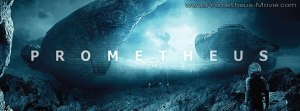 My impressions of Prometheus are that the story-line in all Aliens sub-sets of movies must follow a checklist of prescribed events. The crew must be unaware of the evil lurking amongst them, and then suddenly be overcome by a strange and hideously grotesque alien life form. The theme of destruction from within is always coursing through the action sequences. We are always waiting for that horrible “thing” to come out of someone’s body. And knowing this, the good story-teller builds on the suspense. The horror is found in the evil that is like a plague surrounding the crew.
We know from the “get-go” that this crew is doomed. We are along for the ride to find out the “how” and the “why” and the “when”. The what and the where are all givens.
So…this movie is pretty good. Notice that I refrain from using the word “Great”. There could have been, as is the case with the cowbell, “more Charlize Theron”. She is one of the most interesting characters and is under-utilized. Guy Pearce is all but unknowable under the surprisingly fake looking old man makeup.
The captain, of the Prometheus ship, played by Idris Elba,plays his role perfectly and is also under-utilized. Michael Fassbender is wonderful as David, the Robot. He dominates the first scenes, which are a clever little homage to 2001: A Space Odyssey. The cinematography in the opening shots is truly beautiful. The movie slides from here.
One of the strongest characters in the Alien trilogy of films is always the woman who must battle the Alien. This was masterfully played by Sigourney Weaver in two of the three Alien films. In Prometheus, the scientist/astronaut Elizabeth Shaw, played by the unknown actress Noomi Rapace, is the least memorable or interesting of all of the major characters. Rapace is the one that is tapped to carry the weight of much of the latter part of the film. Apparently this role was the one Charlize Theron had intended to play originally. It was a big mistake, in my opinion, to switch the parts.
There are some interesting sequences, but the choice could have been better if Charlize Theron’s rather vapid character was given more heft. The Robot is an interesting character study, and that promising psychological fission is left largely unfulfilled as the action progresses predictably onward.
This is a good idea for a movie. The BladeRunner sequel that Director Ridley Scott is reportedly working on also sounds like a fantastic idea for a movie. But sometimes a great notion sounds better on paper. In this case, there is an okay movie about some forgettable characters that could have been something other.

Summer Movies List
 Summer movies denote so many wonderful memories for many of us. It was a carefree time when we had little responsibility and less need for practicalities of everyday life. The movies that many of us remember with fondness are movies we saw when we were young and our hearts were full…. Or not. The types of movies that I long to see when summer strikes are not always the best quality pictures. Sometimes, we may want to see a picture that doesn’t necessarily want to make us “think too much”. That’s the key to the Summer Movies list. Best not to “overthink” it.! My picks for top summer movies: **Grease-when I was young, Grease was a hit and we saw it over and over again. The music still holds up after all these years. Perhaps because the fifties were long gone by the time “Grease” made it to the big screen! *Jaws: At the beach, or in the surf, the boat, the water. We remember the drama, the music, the good plot-the good stuff…still one of Spielberg’s best. * Bad B’s: Beach Blanket Bingo, Where the Boys are, Gidget Goes Hawaiian….if the main character is called, “Moon-doggie”-that is enough to lure you in. There was the fake painted backgrounds while they surf, and the memorable lyrics from the title song, “Cause when the Gidget goes Hawaiian, she goes Hawaiian all the way!” The denouement in “Gidget Goes Hawaiian” occurs when Moondoggie gives the mean girl her come-uppance. She starts making fun of the hick back home that Gidget dates….who is called Moon-doggie. She gets her just rewards when Moon-doggie really lets her have it. He smoothly and suavely pronounces, “By the way, all the guys back home call me, “Moondoggie”. Now, in any other film, the fact that you were called “Moondoggie” would not be something you boast about…but it turns the tide for Gidget in this great classic summer fare. Disney movies are always favorites: The original Parent Trap is wonderful summer fun. Ghostbusters I & II plus Meatballs and Stripes, in other words, ALL the movies Bill Murray made before he went avant garde Then there is Caddyshack-a classic for summer viewing. You don’t have to play golf to appreciate the humor when Bill Murray runs from the golf course after the man of God he’s caddying for is struck by lightning after playing the perfect round in the middle of a torrent of lightning and rain. Classically quotable Bill Murray moment, “I don’t think the heavy stuff’s comin’ down yet…” *Lawrence of Arabia- There is the music, the desert, the unspoken irony, the nuance and subtlety, the drama, the beauty, and the romance of the Far East, There’s a mystery never to be solved, namely, who was this man, Lawrence? *Cary Grant-Doris Day-any fifties summer movie…those of us “of a certain age” can remember starring either Cary Grant or Doris Day. That Touch of Mink combined all the rare elements of canned comedy with two genuinely talented comics. Although the material is dated, Day and Grant are still funny after all these years. I confess to a fondness for some quirky summer movies. I really like, “The Russians are Coming, The Russians are Coming!” – Carl Reiner and Jonathon Winters are hilarious. There are newer movies for younger generations. There is: Dirty Dancing, Endless Summer, Sixteen Candles, Ferris Buehller’s Day Off, Fast Times at Ridgmont High, and Bill & Ted’s, Excellent Adventure. You can’t leave out “Star Wars” or any subsequent release from the Star Wars movie factory that is Lucasfilms! Some people remember musicals, some remember action adventure fare. The newest rage is comic book films. The movies of summer are the ones we remember from high school, from college, a first date, or just a Big Night out on the town. That’s the allure of summer movies. We remember them fondly, especially when summer rolls around again.

Capsule Review: Battleship
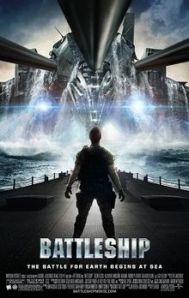 In a nutshell, the story of “War of the Worlds” set at sea. The small details of why a tiny, inflatable boat could withstand tsunami force waves from a catastrophic event are minor inconsistencies in the story line. Liam Neeson is onscreen less than ten minutes. The star, actor Taylor Kitsch, is the hotshot, upstart, younger, ne’er do well brother of a Naval Captain. He somehow manages to rise through the ranks and wins the heart of the Admiral’s daughter within the first half hour. The rest is War of the Worlds revised. There is comic relief, a brave soldier, a team of scrappy misfits who are the only ones left in a position to battle the monsters [aliens] and save the planet. Oh, there is an Achilles Heel that is found to work to kill and disable the enemy. In the 1957 sci-fi movie, “The Monolith Monsters” the town is saved when they blow the dam and the secret ingredient that will destroy the murderous rocks is… water. Superman is vulnerable to Kryptonite. Movie writing rule of thumb: There is always something out there, sometimes found in your kitchen cabinet or glancing out the window, that will work to destroy the enemy invaders from another world. All it takes is some gumption, some good ol’ American know-how, and millions upon millions of dollars spent on hi-tech special effects to keep the audience in their seats for two hours. The strange brew to make a Blockbuster these days always hinges on the mammoth special effects. The ships are getting bigger, the monsters more deadly, and the heroes are much more ”buff” with a prerequisite of washboard abs.
The Jazz Singer: An Excerpt from 6 Degrees of Film
Here’s an excerpt from the book “6 Degrees of Film” talking about the landmark film that started the demand for Talking Pictures in 1926. If you watch “The Jazz Singer” (it was on Turner Classic Movies this month) you’ll realize it’s in fact a silent movie with around six segments of sound that all include musical numbers. There’s no spoken dialogue. It’s all typed as sub-titles exactly as any other silent film before it. The exception was the music, and that’s the point where sound breaks the barrier. The dawn of a new age begins with “Mammy!” Excerpt: Then in 1916 or 1917 along came talking pictures, affectionately known as “talkies.” The first movie to use sound was not The Jazz Singer, but a movie called Don Juan, starring John Barrymore. Talkies didn’t catch on at first. The sound quality was poor, the cameras large and unwieldy, and the audiences couldn’t accept that their favorite heroes had squeaky voices and the heroines were nasal and whiny. But The Jazz Singer was a pivotal turning point in the evolution of film. It was a talkie with an exceptional star—Al Jolson. The nation fell in love with a short Jewish man singing “Mammy” in blackface on his knees on the edge of a stage. “America was always quicker to spot the commercial possibilities of the movies, to decide what the bulk of the audience really wanted to see (not art as a rule) and to invest its money accordingly.” The advent of talking pictures, like many aspects of the film industry, was a phenomenon that came on so suddenly that most studios didn’t know how to handle the huge change. From the beginning, silent pictures had been made in a casual atmosphere, with a lot of laughing and talking going on as the cameras whirled. But the advent of sound changed everything. The first reactions by most of the seasoned Hollywood filmmakers were similar to Harry Warner, who said, “Who the hell wants to hear actors talk?” ….. The facts were that films were already in a slump in 1926. Radio, the first of the mass media giants to hit the average American household, had already started to make a dent in box office attendance. But, Warner Brothers decided to take a chance on sound. They gambled on the new phenomenon and went ahead with The Jazz Singer at considerable cost. The problems from the outset were 1) It cost a lot of money to convert the studio to sound: $25,000 was a lot of money in 1926; 2) The sound equipment had to be installed in theaters-at $25,000 dollars per theater. So by the end of 1927, about 200 cinemas in the United States were equipped for sound. Some interesting facts about The Jazz Singer were that there were only about four actual talking segments in the entire film. There were singing portions, but it wasn’t all that easy to reproduce sound in those days. Warner Brothers had taken a huge gamble in making The Jazz Singer and ended up paying a heavy price. One of the brothers, Sam Warner, died 24 hours before the premiere of the film after suffering a massive cerebral
The nuances and timeless appeal of Lawrence of Arabia

What can I write that hasn’t been written before about the timeless appeal of “Lawrence of Arabia” and the performance of Peter O’Toole? It is bound to pop up on a “Best Films of all Time” list just about every year. This is the kiss of death for most films. Casablanca and Citizen Kane, then Wizard of Oz and then Lawrence…that is how it goes. But in the case of “Lawrence”, it is a timeless film made in a timely fashion. The retread is never bare. We are in the Middle East in a big way in our immediate lifetime and Lawrence speaks to us of the problems we face. It posits the questions and underlines the insurmountable problems that will never be solved as we try even now to brave the desert sands. There are so many brave souls that have perished for the cause of war in our country. Lawrence speaks to us of the timelessness, the inevitability of our destiny, saying, NOTHING is written… That was one of the main themes of the film. Nothing is written. And it has been a mantra for our American Destiny as we forge ever onward. O’Toole/Lawrence’s face and demeanor spoke volumes of his bravery and yet his naïveté in dealing with a culture he could never fully understand. Our naïveté and bravery in the face of insurmountable odds are facing us again in Afghanistan. This film should be a primer for anyone who dares to try and speak the truth about the muddle of the Middle East. There are some things that are not meant to be known entities and the East and the Desert are two of those things. T.E. Lawrence is a man for all seasons and Lawrence of Arabia is a film for all time. See this movie if you haven’t done so. Put it on your bucket list. This is one that will not disappoint.
 Six Degrees of Film