The Birth of a Nation and Black History Month

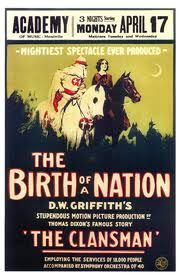
The Birth of a Nation 1915 2015The masterful camerawork and the brilliant direction of D.W. Griffith made The Birth of a Nation the first blockbuster movie. It was for many years the highest grossing film in Hollywood until  the advent of sound and films like Gone with the Wind made this film appear obsolete.

The Birth of a Nation has long been viewed as a dated and deeply flawed cinematic masterpiece. D W Griffith and his cameraman, G.W. Billy Bitzer, made film history with the techniques they established. But the subject matter has long been viewed as openly racist. Yet how ironic that the debut of this film, 100 years ago this month, coincides with our celebration of Black History Month.

Black History Month is a celebration to be marked with pride. It’s one way we as Americans can say: We have come so far. Therefore, a film that glamorizes the Ku Klux Klan and demonizes the enslaved race of black men and women is a film that is no longer seen to be “in vogue.” Instead, we try and focus on more positive things such as the fact that 12 Years a Slave was the winner of Best Picture in 2014.

While it’s true that there are still barriers to keep people of color from being acknowledged on par with their white colleagues, we at least have made note of the discrepancies rather than simply sweeping the evidence under the carpet. Women are still, to a large degree, second class citizens in Hollywood’s upper echelons. That fact has been noted, along with the percentage of white, older, male members of the Academy of Motion Pictures that votes.
All these things still give us hope and cause to celebrate. The actual birth of the nation that we now live in took longer than we would have liked to end the shameful practice of slavery, but the Civil Rights Movement, the election of Barack Obama, and recent films like Selma and 12 Years a Slave, are celebrations and reminders for our society about how far we have come.

Some of the best films about race in America and the Civil Rights Movement have been directed by African-Americans. I consider John Singleton, director of Boys n the Hood from 1991 and Rosewood in 1997 to be superior to Spike Lee, but both are acclaimed for their work. Spike Lee is perhaps most famous for Do the Right Thing, yet he also did an excellent job with Malcolm X in 1992 which starred Denzel Washington.

Other outstanding films dealing with Civil Rights are Mississippi Burning, starring Alec Baldwin as an attorney working with the widow of the slain civil rights leader Medgar Evers. The film focused on the true story of the determined efforts of Evers’ widow to re-open the case and bring his killer, Byron De La Beckwith, to trial almost thirty years after the crime had been committed.

Ghosts of Mississippi, directed by Rob Reiner and released in 1996, was another very good film with Willem Dafoe highlighting the true account of three Freedom Riders killed by Klan members while attempting to organize AfricanAmericans in a small town in Mississippi in the early sixties. Dafoe plays one of the FBI agents sent down from Washington to investigate the disappearance of the young men.

Steven Spielberg has a great movie, not well known, called Amistad, released in 1997, which deals with another true story. The story is not about the Civil Rights movement but it deals with African Americans on board a slave ship called the Amistad. The film centers around the actual trial held in 1839 to determine if the men who had mutinied on board the ship were free men or slaves.

Rosewood, from 1997, and directed by John Singleton, starred Don Cheadle and was based on another real-life event centering around a small town in Florida where the African-American population was completely wiped out in 1923.

There are a few very good films on Nelson Mandela, one being the 2013 Mandela: Long walk to Freedom. But to glean some understanding of the scope of the Civil Rights Movement in our own country, the acclaimed documentary, Eyes on the Prize, released in 1987, is the gold standard by which all other films are held. This 14 hour documentary takes you from the beginning of the movement, with Rosa Parks and the quiet and determined actions of an entire generation of young men and women of color, then on to the triumphs and charismatic leadership of  Martin Luther King which ended with the ultimate tragedy of his death.

All of these films are testaments to Hollywood and independent filmmakers who were determined to make us open our eyes to a subject we still grapple with in the modern era. It’s a fitting tribute to end Black History Month with a nod to some of our great films and filmmakers who have also grappled with the subject of race in America.
Bringing Up Oscar by Debra Ann Pawlak-A Book Review

I have nothing but praise for the amazing amount of research in Debra Pawlak’s book, Bringing Up Oscar. She has a wonderful ability to bring the stories of Hollywood legends to life. Her accounts from her blog of early silent stars like Mary Pickford and Fatty Arbuckle were detailed and fascinating portrayals that humanized the stilted celluloid figures we had come to know.

Having read Ms. Pawlak’s blogs on early Hollywood, the book strikes a similar tone, yet lacks the concise bite and flavor that a shortened blog piece conveys. Somehow the flow is not as cohesive or immediate as the blog accounts, but the information imparted is still fascinating to read.

The book begins with an interesting account of the meeting and concept behind the establishment of the Academy of Motion Picture Arts and Sciences. The first ceremony and the events leading up to it are all part of a fascinating narrative thread which underscores the theme of Oscar and the events surrounding its creation.

But the scope of the larger story often bites off more than it can chew. It almost calls for a two or three book series. The book runs 348 pages and is filled with the background and life stories of all 36 founding Academy members.

As a side note, it’s telling that the original group of founders was made up of 34 white males and just 2 women. (Mary Pickford being one of them). Debra Pawlak’s great strength as a writer lies in her ability to take these stories of long-gone executives and lifeless names on a plaque and to bring them back to life with accounts of their exploits and very human foibles.

Her storytelling abilities make the characters come alive. But my wish is that the book would have narrowed the scope and told the accounts in perhaps more manageable chunks of text. There are so many gems and tidbits buried in paragraphs full of exposition about the circumstances leading up to the meat of the matter, whether it be Irving Thalberg’s weak heart or Mary Pickford’s fatal attraction to Douglas Fairbanks, all of these tales are told within the longer expansive story of the formation of Hollywood itself.

Some editing with sub-heads may have been needed, but one suggestions to readers which was helpful to me was to read the story as it was intended. That is, to read the Preface, which lists all 36 founding members, and then to read through the book and simply find the material surrounding each member which is featured within the chapter listings.

Bringing Up Oscar is a valuable treasure trove of material, but like any good treasure hunt, you must find the treasure buried within. Ms. Pawlak is one of the best of the best researchers who writes about early Hollywood history. For those who love film, and those who love a challenge, take up the book and find the treasures buried inside.

6 Degrees of Film: Oscar News

6 Degrees of Film
6 Degrees of Film


This is the time of year for movie awards. Best of the year past, the best directors/writers, the greatest hits, the biggest losers. But let’s face facts. 2014 was not a great year in film. And yet, there were some innovative films made and some pretty good films released at the end of the year. So it wasn’t a complete wash, but one of the most telling statistics was the fact that films pirated, or bootleg films, were the 2013 films. They were the most watched or stolen films. 2014 was so bad they couldn’t even give the films away to bootleggers!
One of the most interesting conversations on television recently was one Chris Hayes, the host of All in, had with a film critic regarding the film industry’s need to heavily criticize so many historical dramas that have the potential to win Oscars. The Oscar race is so politicized that stories are often planted denigrating the historical accuracy of a film based primarily on the need for a rival studio to trash their competition in the race prior to the nominations coming out for the Best Film of the year.
This should not shock anyone, as my book, 6 Degrees of Film, points out so many times in the history of Hollywood the political nature of the entire industry. From the outset, Thomas Edison lobbied to keep a monopoly on the fledgling motion picture industry.

Exhibitors across the country, in small towns and large cities, were informed that they could operate only at the pleasure of Edison’s newly formed General Film Company.

There was a court case in 1915, exactly one hundred years ago this year, in which the Supreme Court declared the motion picture industry was a business, pure and simple, and therefore not afforded the protections under the First Amendment.
And on and on. Another famous ruling from the Supreme Court in 1949 effectively ended the Hollywood Studio System. And we are all aware of the McCarthy hearings which encompassed so many of Hollywood’s great directors and writers in a witch hunt to root out the infiltration of “communists” in our movies. Then there was Jack Valenti, the head of the Motion Picture Academy for many years, who was a top aide to LBJ. The current head, Chris Dodd, was a prominent senator who once ran for President. He was a co-sponsor of the Dodd-Frank banking bill. Politics and Hollywood have often gone hand in hand. This is Hollywood, then & now.

cropped-6degreeslogo.jpg


Movies Premiering in March 2015:
Unfinished Business: Vince Vaughn stars in this comedy about a small business owner who travels to Europe to close an important deal. Tom Wilkinson co-stars in this quirky variation of Planes, Trains and Automobiles. The trailer is funny, and the theme seems to be whatever can go wrong, will go wrong.

Cinderella 2015

Cinderella: A feel-good movie from Kenneth Brannagh? This updated version of the classic fairy tale got great reviews when it premiered at the Berlin Film Festival. A chick-flick or date night type film definitely, as a lot of the buzz surrounding this film has to do with the beautiful costumes on display.

Run All Night: An aging hitman (Liam Neeson) is forced to take on his brutal former boss (Ed Harris) to protect his estranged son and his family. This one could be a big improvement from the tired Taken formula Neeson has been milking of late.

Get Hard: A comedy from Will Ferrell. Need we say more? Those who love Ferrell will get a good dose of laughs from the plot centered around Ferrell, as millionaire James King, sent to jail and then turning to a seasoned pro(Kevin Hart) to help him learn the ropes when he’s on the inside. Not PC, but probably funny anyway.

Serena 2015

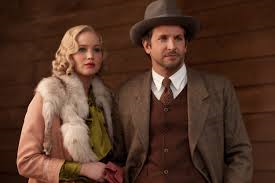
Serena: Lots of buzz about this one as the two stars involved are Bradley Cooper and Jennifer Lawrence. One of the reviews started, “I tried desperately to like this film…..” which is not a good sign. Cooper stars as the heir to a timber empire in this period drama and Lawrence is his young bride.

Premiering in April:

Ex-Machina: A sci-fi story about a computer programmer selected to participate in a breakthrough experiment involving a beautiful robot female. Bladerunner part 2, or 3 & 4….?

Child 44
Child 44: Tom Hardy stars in this thriller about a disgraced member of the Stalinist military police who is investigating a series of murders involving children. Anything with Tom Hardy in it is worth watching.

Paul Blart: Mall Cop 2: Kevin James returns as the hapless security guard on vacation in Las Vegas. Here’s hoping that he has more success than those involved in recent comedy sequels Dumb & Dumber 2 or Hot Tub Time Machine 2…the list goes on!

The Age of Adaline: A young woman, played by Blake Lively, is rendered ageless after an accident.

Also coming in 2015:

Mad Max Fury Road

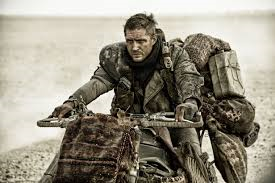
Mad Max: Fury Road: A return to the successful Mel Gibson series with Tom Hardy starring as Max and Charlize Theron as Imperator Furiosa, a woman of destiny who crosses the path of the iconic hero while traveling across the desert. This might be good, but then again, it might be purely camp.
Tomorrowland: This film, billed as an adventure, mystery and sci-fi, stars George Clooney. A teen bursting with scientific curiosity and a former boy-genius inventor (played by Clooney), embark on a mission to unearth the secrets of a place somewhere in time and space that exists in their collective memory. This plot just screams for the phrase, “you’re trying too hard” to be used.

Jurassic World
Jurassic Word: The much awaited sequel occurs twenty-two years after the events of the first film. A new attraction is added to spark visitor’s interest…what could possibly go wrong?

In the Heart of the Sea: This film is directed by Ron Howard and stars Chris Hemsworth. Based on the actual events from the whaling ship that inspired Herman Melville to write the classic, Moby Dick, it’s set for a December release.

***********************************************************************************************************
”There’s nothing new under the sun. Critics frequently complain about the lack of originality in film. Another high-profile superstar that constantly used reworked material . ..William Shakespeare

Mortdecai the Movie

MortdecaiI thought Mortdecai was funny. So shoot me! After reading several reviews and seeing the dismal box office numbers, I wasn’t looking forward to seeing this film. But I can honestly say, it was pretty funny.
The problem, in my opinion, is that Johnny Depp’s loyal followers are clueless as to the identity of Peter Sellers or, for that matter, the Pink Panther series of movies that this film strongly pulls from. And the type of foppish British gentleman that Depp is poking fun at is not known to young adults or Western audiences in this day and age.

I’m wondering who “green-lighted” this project? Perhaps the same one who thought it was a good idea to make the Lone Ranger with Depp as Tonto or the Exodus film about Passover that was released just in time for Thanksgiving. All these and similar missteps (The Interview?) give me reason to doubt the intelligence of the Marketing departments at some of the major Hollywood studios.

I predict this film will do well on video. Perhaps overseas it will find a more favorable market. Maybe not in Britain, but in France and other European countries, this type of humor based on the stupidity of the Englishman may have a following.

Gwyneth Paltrow is quite good as the sophisticated wife running rings around her shallow husband, Mortdecai. Paltrow’s natural insouciance and excellent comic timing give her an edge in this light romp about a stolen Art masterpiece. Ewan McGregor is fine as the third wheel, but the entire film rests with Depp. He is funny and fairly physical in this retro role of a foppish and perpetually foggy caricature of an elitist British Lord complete with manservant.

The plot is not as sophisticated as the original Pink Panther with Peter Sellers, nor is it as uniquely zany as the Monty Python films. But it does have its moments, and there are enough among us who will remember with fondness the Pink Panther series and the bumbling style of comedy perfected by Sellers.

If you are looking for some light entertainment and are over the age of forty, Mortdecai may be worth seeing on the big screen. This film does justice to some of the lesser outings in the Panther series. But the problem is, none of Johnny Depp’s fans would remember or care about a rather insipid series of films from the past. Therein lies the rub…Mortdecai may flourish once it moves to Video on Demand, but apparently, it’s not destined to be a hit film.

Inherent Vice-The Age of Aquarius

SpInherent Vice imageeaking for myself, this story would not be my first choice of Pynchon’s work to be brought to the screen. The Crying of Lot 49, in my opinion, would be so much more interesting in the hands of a great director. Perhaps that will happen someday, but with this book, Inherent Vice, so many characters are thrown out there and the convoluted nature of the story is so confusing that it just doesn’t add up to anything resembling a linear plotline. Thus, the film version of “Inherent Vice” is a thin thread filled with hidden meanings and some subtle and not-so subtle references, all of which may be easily overlooked by viewers not familiar with Thomas Pynchon’s work.

But Joacquin Phoenix is wonderful as the canny and refreshingly laid-back character of Los Angeles detective Larry “Doc” Sportello. Doc is the quintessential hippie who works hard to seemingly not fit in with the majority of society’s norms. And Josh Brolin is wound wonderfully tight as the completely un-ironic caricature of a button-down cop with the chip on his shoulder and a long-standing grudge against hippies.

Although I’ve always been among those who strongly feel that the medium of film is separate and apart from the printed material of the author’s original book, this film does try to follow the story Pynchon wrote in a fairly faithful manner. It’s not easy to tell if the translation was entirely successful, because some of the visual elements are the funniest parts of the film. Phoenix haplessly walking into the crowd of stuffed shirt cops and being bounced onto the pavement and later, being unsuccessfully hauled by Brolin into the back of a police car are some of the more hilarious scenes in the film. And the least effective portion was the narrated voice-over lifting some of the passages of Pynchon verbatim. It came across as a bit of an over-reach, because the characters and layers of plot should have been enough, without adding Thomas Pynchon’s written words.

The bad news is this film goes long, almost two and a half hours, and could have used a good ten to fifteen minutes of editing to condense some scenes. Many of the cameos and performances by the likes of Eric Roberts, Martin Short and Benicio del Toro are brilliantly cast and spot-on, fitting in perfectly with the absurd nature of the story. The times we lived in and the social commentary on the society we have become are the best take-aways from this sometimes raunchy, sometimes funny film. It’s a must see for all Pynchon devotees, and a good fit for those of us who are “of a certain age” and feel a twinge of nostalgia for the now gone but never forgotten Age of Aquarius.

The Imitation Game

the imitation game Fall 2014The acting of Benedict Cumberbatch is one of the reasons to go see this film. Another reason is this. The Imitation Game is a movie about ideas and how they are incubated.  The notion to invent modern day computers didn’t just pop out of Alan Turing’s head. The film emphasizes the amount of  hard work and the blood, sweat and tears of many people who fought to create something extraordinary. Ideas such as the ones that made the machine that broke the Enigma code possible only came about when some were willing to fight for their visions.

My one criticism would be the part of the film that dealt with Alan Turing’s homosexuality. It seemed to be slapped together to complete the story somehow. But the more interesting part of the film deals with the culmination of the brain child of Alan Turing and the accompanying risks and responsibility the knowledge of the code entailed.

The men and women who worked on this project were not able to speak of it for decades. There was no glamour or glory for these people. It was a hard fought slog of a war, and the action of this film, quite naturally, takes place within the confines of a quiet town in the English countryside. The dramatic license found in all works of Hollywood fiction make up a small portion of the action, but there really is no melodramatic dilemma found within the story of the Enigma code breakers.
The fascination is found within the confines of the mind of the visionary Alan Turing character.

Which is why only an actor such as Cumberbatch could play such a man. Some of the unlikeable elements of his quicksilver-tongued Sherlock appear in the Turning character at times. But the bulk of the film is carried by Cumberbatch’s focus on the single-minded dedication to detail seen in the makeup of Turing.

Out of a very poor season, and frankly a stunningly slow year for movies, this film stands out in the crowd. Now up for Best Picture, as well as Best Actor for Cumberbatch and Best Supporting for Keira Knightley, this is one film that easily wins my vote. Go see this movie.

Taken 3-Capsule Review

Liam NeesonIn order to complete this review, let’s game this out logically. What should you do with a hit movie theme that needs a spark of imagination and creativity to move the characters development along?

Plot # 1 would have Liam Neeson, a man with “a special set of skills” but also one with a softer side when it comes to his grown daughter and his ex-wife, doing something different this time around. You could pick up the action by tacking back to the history of his friendship and loyalties with his military buddies in special-ops. And expand from there. Like James Bond, you might pit his wits and expertise against a formidable foe- a Dr. No or a version of  Professor Moriarty, as found in Sherlock Holmes.

 Or, you could just write a plodding and fairly pedestrian story about some thugs who killed your ex-wife. And waste the talents of a good actor like Liam Neeson in a very run-of-the-mill re-hash of the same story. What should you do?

In the case of Taken 3, the easy way out was the road taken in this forgettable film. Only Liam Neeson die-hards need apply for this outing.

The End of the Interview

The interview pixThis has to be one of the least funny comedies I’ve ever seen. This film should have gone straight to video, but not for the same reasons it did become controversial. There is really no point to the plot. And for that matter, the plot points that supposedly flow from scene to scene make this a jumbled mess of a story without rhyme or reason.

There is no need to bring in the CIA in the early stages of the story to act as the straight man for the initial plot to kill the leader of North Korea. For that matter, why not make it a fictional country or just change the name of the real leader? This is not a deep film. Nor is it one that is well planned or executed.

It’s a genre that is known as juvenilia. I suppose that the target audience would be twelve to fourteen year old boys. Lots of butt jokes and juvenile humor combined with some gory scenes round out the hilarity.

Seth Rogen and James Franco are better than this mess. I would be embarrassed to think the President of the United States and other leading statesmen might waste their time watching this piece of you-know-what. It’s not worth a trip to the movies, or even a download. This is…so bad it’s not worth even talking about-or writing about! End of story.