 Bill Murray’s Vincent doesn’t want to know his neighbors. And when Melissa McCarthy, his neighbor, finally becomes laden with pain and misery, she knows better than to tell her crabby neighbor Vincent. “It’s a long story” is all she volunteers, knowing he couldn’t be bothered with the details of her sorrow. Yet he reaches out to her in the most telling and cursory way. It’s a pivotal moment, yet a quiet one in an uneven film. “What’s the punch line?” he asks. For this character to even ask is a major breakthrough.
The film, St Vincent, is a dramatic one with occasional touches of the signature comic relief we’ve come to expect from Bill Murray. The showstopper is the child that binds the curmudgeonly character to the rest of the plot. Without him, the film becomes unworkable. The knocks on this plot come from critics pointing out the fable elements of the story which are introduced late in the film. But there’s not enough saccharine sweetness to throw off the rhythm of the basic premise-St. Vincent is no saint. However, looking beneath the dark surface, there is also light. That is the point. This is Murray’s film, and he plays the part well. No one else would attempt this unique role, or be able to pull it off as Bill Murray does.
The dark side of Murray has always been on display. It took St. Vincent to shine the light on a gifted actor born to play the role of this particular curmudgeon with a heart of gold buried deep inside. There are some 6 degree elements when you consider Jack Nicholson’s take on the funny miser in “As Good as it Gets”. But for the most part, this is simply Bill Murray, warts and all, on display as we’ve never seen him. There were some hints of the dark side in “Scrooged”, but Murray was simply too young to play a full blown bore. And we’ve always known he’s had it in him to play this darker version of himself. Without holding back, he is spot on, hitting all his marks with humor and bad grace.
If you love Bill Murray, you should complete the circle and see this film. We’ve known him as the wise guy, the talk show persona, his Saturday Night Live characters, the comic hero & legend, and then there’s the dark side of Murray. Here is the maverick who doesn’t give a damn, but we like and admire the honesty on display. The wit is still there, without the charm. Don’t be fooled by the previews, this is not one of the early Murray comedies. This is more a dramedy, perhaps. But it’s well worth the effort for those who’ve loved the characters that Bill Murray has portrayed through the years. St. Vincent is one that completes the circle.
Category: Uncategorized
Bogey’s F. U. Money
 Bogart was an original. A truly complex individual, his background encompassed the sophisticated world of New York Society in which he was born and raised all the way through to his gritty life in the Navy and onto the uncertain life of a Hollywood actor. After leaving the Navy, Bogey started his acting career on the stage and was even credited with popularizing the effete term, “Tennis, anyone?’ early in his stage career.
He eventually went to Hollywood and landed roles as a gangster “heavy”. Although not traditionally good-looking, he finally managed to break free of his stereotyped villain’s image and became a leading man in romantic roles in his later years. His deep voice, tempered by years of heavy smoking, and his ultra-cool persona finally worked to establish him as a credible actor and then transform him into a major star.
But Bogart worked in the era of the Studio Bosses. His boss, Jack Warner, held an iron-grip on his employees, which included all the actors who worked at Warner Brothers.
Bogart frequently found himself in disputes with Warner and the Studios over his salary and his schedule. Big studios were notorious for lending actors out to other studios, even if the parts were fairly minor. Bogey balked more than once. And in order to back up his threats to walk, he would often speak of his F. You Money (In Bogart’s case, he would fill in the blank where the F is!) This money was his hedge, a special fund set aside that would enable him to make good on his promise to leave.
This was also part of the ongoing fight between management and labor over forming a union. The studios fought tooth and nail to prevent actors, writers, and other film workers from unionizing. In the end, unions prevailed. In the fifties, the studios caved in to government pressure when faced with the threat of a shutdown during the McCarthy hearings. They fired and black-listed many talented artists of the era after their names appeared on Joseph McCarthy’s list.
Bogart was one of the voices that was front and center in the group traveling to Washington to protest the House Un-American Committee. Bogey was a Maverick throughout his life. He fought in one form or another against the studio bosses and against many other forms of discrimination, oppression and injustice.
Would that we had more Bogey’s these days. Those men and women, like Bogey, with the courage of their convictions to stand up against the powers that be, whether in Washington or globally. It’s not a bad idea for anyone to set aside their own personal F. U. Money fund. It’s a nice thought that you may have a special fund to help you walk away when you know the time is right and you need to back up your rhetoric with action. In Bogart’s case, the F.U. Fund was real and so was he. As is often heard, they don’t make ‘em like that anymore!
Critics’ Note: Waxing Nostalgic on the era of the Big Screen Movie
I walked into the latest AMC movie to be presented with yet another price hike for everything from movie tickets to popcorn. This is no surprise, as prices have steadily been rising at the AMC Theatre movie chains for several years. As a movie critic, I will watch a lot of movies during the course of a year, and cost becomes a pretty big deal. The solution? At times, I’ve seen movies at the early show to beat the price jump, or I’ll go to a lesser chain-not as plush as AMC but the movies only cost 5 bucks.For many movies, that’s more than they’re worth! As far as the concession stand prices, most people know by now that this is the way theatres make their profits. So everything is incredibly marked up.
And at AMC, they have taken full advantage of the price-gouging in this new era. The good news (for AMC) is that there exists a new generation of movie-goers willing to pay the prices without question. But there’s another sub-set of the viewing public that largely stays away from the big screen movie. This is a shame, as so many great and classic films are meant to be viewed in a theater and on the Big Screen.
Yet more and more talented writers and directors are taking their talents and heading to cable outlets. As the audience moves to the smaller screen, so does the talent. There’s no immediate solution to this growing problem, but my prediction is that if the trend continues, we may be waxing nostalgic on the bygone era of the Big Screen Movie, sooner, rather than later.
The Equalizer-Capsule Review
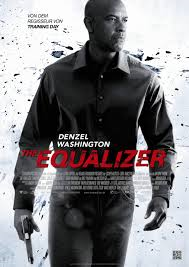 Denzel Washington has chosen a character driven narrative in this story. The character of Robert McCall is from a TV series, but in this film, he’s seen living in his own meticulously crafted world. And though the action is edge of your seat, nerve-rackingly violent in parts, it’s tempered with the knowledge that Robert McCall (Washington) is trying not to be seen as a crazed killer. McCall is a caring friend, a dedicated and hard-working employee, a good listener, and a man of honor and integrity. …Who just happens to be good at killing people. That’s the take-a-way.
As for the acting, I thought Denzel Washington was excellent in this role. It seemed to suit him very well. (Stop reading if you are worried about spoilers!)And there were hints that perhaps they may continue the character of The Equalizer in a series of remakes. Shocking as that seems, it looks to be a suitable candidate as it contains a storyline that begs for a sequel.
The funniest part of this movie, (which has no comic relief, by the way), is the fact that the villains are Russian. In fact, the last two films I’ve seen featured ruthless Russian killers. Apparently, Russians are the new Nazis. They are the latest thing in good/bad villains. This film may be too violent for some, but the action is intense and the storyline is gripping enough to warrant a viewing. For those who love action/adventure films, and Denzel Washington movies in general, this would be a must-see.
On The Roosevelt’s
 The best part, for me, remains the section on FDR. He was a loveable man. No wonder so many men & women pledged their lives, their full measure of devotion, to his care & well-being. His faithful cousin, his secretary Missy Lehand, Harry Hopkins, Louis Howe, Harold Ickes, his old love Lucy Mercer, his children who literally supported him as he spoke to the nation and helped care for him, ..
The other two Roosevelt’s, Teddy & Eleanor, were not easy people to know. Even in documentary form, their restless energy comes through in leaps and bounds. They are to be admired, respected, and even revered. But to be loved, that task belongs to Franklin. His smile and sunny, engaging personality, his commanding presence compounded with the touching vulnerability of a man bound for life to a chair, all of that commands not just deep and abiding respect but love.
There is love for a man so willing to be pushed and pulled without admitting defeat. There is love for a man who so wanted to be loved by others. There is a great and abiding love for a man who cherished his country, his ideals, his values, and pushed himself literally to the limits where no man had gone before. The pain he must have suffered, and the cheery optimism he brought forth to deal with the pain and suffering, those are the marks of a great man living his life as if in a Greek Tragedy.
He dealt with the pain and found a path forward. He led the nation through the Depression and into the last part of the Great World at War with a confidence and determination no other could have mustered. He did die in service to this country, and those who say that he could not be elected in this day and age, well, I’m not so sure. Many said a black man would never be President. A woman could not have served as President in FDR’s time. But now, things are different.
If a man with the grit, the determination, the optimism and brilliant mind of an FDR appeared in a wheelchair, determined to run for office, I doubt the wheels would bind his wit and style to the earth. The age of mass media, plus the idealized way we treat our Presidents, would serve as both a plus and a minus for a man with physical challenges. But, after seeing what FDR did, and how his determination drove him to great heights, I greatly doubt a little thing like a wheelchair would ever have stopped him.
Tom Hardy stars in The Drop
 The twists and turns in this movie also appear in so many current films that come to the same concluding theme: nothing is as it seems….The Drop was adapted from a short story by Dennis Lehane, the writer of Mystic River and Gone Baby Gone. Lehane’s short story was entitled, Animal Rescue, which allows for one of the more refreshing twists I’ve seen in a movie lately.
The story involves the use of a dog in the framework of the film. One of my pet peeves is the awful cliché in films where the dog dies off-screen and we hear the obligatory aarf or find the animal lying dead as a portent of doom. This one works against the awful type. Although it’s not a huge spoiler for the plot, this one is simply refreshing in that the puppy that is used as a plot device, and is the basis for the short story upon which the film is derived, is not seen or used in the same, tired mold as so many canines that have gone before.
The twists and turns in this one are something we see as a slow moving train wreck. We know that violence is bubbling up as it simmers beneath the surface throughout. Although there is some violence displayed, it is understated for the most part and not used to propel the plot into oblivion. That is another pet peeve of mine in modern films. There is so much gunfire, and so many bodies flying in martial arts mode in films, we don’t ever soak up dialogue or develop character. The plot just moves (or plods) along.
James Gandolfini fills in the gaps in this other-wise quiet film. He supplies humor where it is needed, and is the lynchpin for the premise of this gangster-themed film. The action occurs when a robbery takes place at the bar where Bob ( Tom Hardy) and his Cousin Marv (Gandolfini) work. The robbers make off with money belonging to the Chechnyan mob guys. They, naturally, want their money back.
The story revolves around the mob and the threat of violence against Bob & Marv, but also includes Bob’s new-found friendship with Nadia. The two meet when he rescues a puppy from her trash-can late one night. They form a friendship around the care of the animal, while Bob continues to plod through his workdays at the bar. The Drop is the bar itself, used as a money-laundering station for the mob. The Drop is also a metaphor for the slowly simmering undercurrents surrounding the two men from the bar and the underclass of bad guys closing in on them. When the other shoe drops, we are not completely surprised. It’s a relief when the circle begins to close.
James Gandolfini creates a fitting end to his celebrated career that soared with his spot-on portrayal of the mob boss in The Sopranos. Tom Hardy is one of the most interesting actors working today. His British accent is lost in the Bronx twang he adopts for this part. Bob is a slow-moving, slow-talking and methodical thinker. The pace of the movie deliberately follows him along the trail of a methodology which arrives at the correct conclusion within the necessary time and space. Although this one is too violent for the whole family, it’s a good start to a fall line-up after a summer of terrifically mediocre films.
James Garner-the Peacemaker-Man without a Gun
 James Garner’s biography revealed a lot about the man. He was a complex individual, not a cookie-cutter Hollywood type. Like all of the most successful television stars of the past, Garner was able to achieve the kind of rapport with the audience that revealed how much of an ordinary guy he could be. Johnny Carson, Jack Benny, Lucille Ball and James Garner all had that ability. They were able to connect with people. They had a kind of everyman quality and appeal that was universal.
Sorely missing in the television line-up is the type of laid back character that Garner portrayed. Rockford kept his gun in the cookie jar and he didn’t seek violence as much as he was thrown into violent situations. He loved the thrill of the chase, which was all powerful when he began making The Rockford Files. And yet his character, JIm Rockford, didn’t crave fame and fortune. He loved simple things like fishing with his father Rocky, and living by the beach in a trailer. He was a kind of grown-up version of your favorite eccentric uncle, or perhaps an aging hippie/surfer dude. And Rockford went after information using his wits, his humor, and a style of private detective work that seems to have died with him.
It’s interesting that they tried to revive The Rockford Files a few years back and scrapped the entire project before it aired. It turned out that James Garner was Rockford incarnate. There is talk of a feature film with Vince Vaughn, who may be able to pull it off. But James Garner was also the original Maverick in Hollywood and he became the one and only Rockford. No-one could replace this man with the common touch. Rockford was a man who knew how to fight using the power of his lungs and feet, and not the power of a semi-automatic gun. That was who James Garner was and why he was beloved.
The Grand Budapest Hotel-Capsule Review
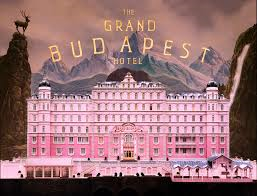 Though I’ve not been a huge fan of Wes Anderson’s work in the past, The Grand Budapest Hotel stands out from the rest of his work. My love of independent films doesn’t extend to simply art for pseudo-art’s sake, or in Anderson’s case, a grindingly slow and bizarre plot or a set of circumstances staged with a cast of bizarre characters littering the landscape. But in Grand Budapest, there seems to be a wink and a nod to the type of extremes seen in most indy films and Anderson’s in particular. There is a running cast of A-list actors peppered throughout that reminds one of Hitchcock’s placement in all of his films. Again, a wink and a nod to an earlier era in filmmaking.
Ralph Fiennes is a pleasant surprise as the lead, playing a fastidiously effeminate type of leading man…Not just anyone could carry this character off. Fiennes is surprisingly funny and poignant at the same time as the eccentric head concierge M. Gustave in the mythic Grand Budapest Hotel. The plot centers around the death of an older patron of the hotel, one that Fiennes character knew well. (Tilda Swinton in a small gem of a role)
Most of the parts are small gems set in the jewel of the Budapest hotel setting. The artistic placement of each shot is not lost on the viewer. Each scene is set as if in a storyboard with an imaginary artist’s palette framing the scene. It works wonderfully to convey the image of a lost time and the type of individual isolation used to describe most of the characters. There is a chase scene leading fittingly to a museum, where the characters are shown with individual shots of the museum pieces entering into the spirit and the framework of the film and becoming an integral part of the plot.
This is a film I would recommend for anyone to see at the movies. But now that it is released on DVD, it’s still worth the time it takes to savor the artistry of the film and drink in the scenery. This is a beautifully shot and artistically crafted piece of work
Magic in the Moonlight-Capsule Review
 Magic in the Moonlight is Woody Allen’s newest film. His choice of leading man, Colin Firth, is an inspired one. Firth’s ability to channel the cynicism and power of the rant that Allen perfected is shown in the opening sequence. But the film is paced rather too slowly, and it seems to fizzle in the second half. However the cinematography is gorgeous, with scenes from the South of France and Provence region overtaking most of the thin gruel of a plot.
Allen has been fascinated with magic in film in some of his more successful screenplays-Shadows & Fog comes to mind. In Magic, the central plot deals with a magician attempting to defraud and expose a medium. The idea that a character, Colin Firth’s magician, is attempting to expose this young medium, played by Emma Stone, is not enough to carry the 100-minute film. In the past, Allen has used various sub-plots in the same way that Shakespeare would weave his complex plots together to create artistic masterpieces. The interest of the main characters was always supported by the props of colorful characters surrounding even the thinnest of plots. In this case, the action is carried by the one story line of the medium and Firth’s attempt to expose her.
The sets and characters are gorgeously presented, and like a banquet laid out before us, we expect to dine on one of Woody Allen’s classic comedies. In this case, to those of us who have followed his career, it’s painfully obvious that Woody Allen’s bag of cinematic tricks is definitely on the decline. This is not his best work, yet there are some glimpses of his former glory within the film. Firth’s Aunt Vanessa, played by Eileen Atkins, is one delightful surprise.
Go and see Magic in the Moonlight only if you love Woody Allen comedies. Or better still, rent Shadows & Fog to see Allen working at the top of his game
Hollywood reports worst box office numbers in over a decade
 I hate to say “I told you so” but….the evidence is clear. Hollywood is reporting the worst box office numbers in over a decade. The reason? You don’t have to be a genius to figure that out… the movies aren’t very good. Most of them are downright awful. The remakes aren’t good either, and some of the original films were not worth re-making. But the projects are given the green light based solely on what sells tickets overseas. The writers with original ideas are now working for cable shows on the small screen. That is the wave of the future.
My recommendation continues to be: Watch classic films on the small screen or look for cable programs to see new and innovative content. I’m excited about Director Steven Soderbergh’s latest project coming to Cinemax-The Knick with Clive Owen. I’m still waiting to see Calvary, which has gotten pretty good press. The other success story of the summer is , a film that took ten years to create. Not much chance of a sequel on that one anytime soon! The films in the latter part of the summer that I’ve seen and reviewed continue to be classics from the vaults of Hollywood.
 Six Degrees of Film