Ridley Scott: A Champion of Women, from Prometheus to Alien-Guest blogger Krystyna Hunt

The recently released Prometheus, directed by Ridley Scott is a strange and baffling mix of deep questions, sublime art direction and set design, superficial plot and amateurish screenplay and casting.  It is yet another riddle of its director.  Ridley Scott has created both great wonder of cinema and great clunkers, sometimes both in the same films.


At first glance Ridley Scott seems to be a man’s director.  He is interested in manly subjects like outer space, horror, ferocious bloody death, war and conflict, action and mayhem. He has a large and devoted following in the male sphere, probably only third after The Star Wars and Star Trek sagas.


But he has shown an astonishing sensitivity towards women.  You could say that with Alien in 1979, he broke the mold of women never being cast as action heroes, or having the courage and vitality of a man.  He proved that a leading lady did not have to be glamorous but could still be riveting and sexy.


Except for Carrie Fisher’s Princess Leia, in the Star Wars series, (which was still kind of a girly role), women were in action adventure films merely for sexual titillation.  Usually, because of their physical weakness or penchant for glamour the woman was either caught by the villain and had to be rescued by the hero, or sprained her ankle when running and had to be carried by the hero.  Women in adventure films were either trouble or boring.


The two women in Prometheus played by Noomi Rapace and Charlize Theron are the strong, vibrant, tough survivors we now take for granted in adventure films.  No more sprained ankles or lost earrings. 


In Alien, Ridley Scott cast the sublime Sigourney Weaver.  She played Lt. Ellen Ripley, a sweaty, hard-working, hard-fighting foil to the Alien invasion – the only one who could take the creatures on. She went on to appear in all the Alien sequels and had herself major stardom and an important career.


Ridley Scott’s next film in the history of women’s evolution was Thelma and Louise in 1991.  The leads were 2 wounded-by-men women, who in their flight from men across the country became heroes to male and female audiences alike. The stars, Susan Sarandon and Geena Davis were both nominated for Best Actress Oscars.


Next was G.I. Jane in 1997, starring Demi Moore as Lt. Jordan O’Neil. This had a mixed box office and critics’ reaction.  Although ground-breaking in its story of a woman training to be a Navy SEAL, the film may have been too much for audiences to take.  Demi Moore was renowned for her beauty and asking an audience to pay to see a film with a shaved head while she struggles to compete for a place in a military unit that most men would not be able to get into was not very appealing.  Ripley was forced by circumstances to react to the Alien.  No one could blame her for dropping her femininity.  But Jordan O’Neil chose to compete with men directly, to out-man them so-to-speak, on their own terms, for no specific reason other than she wanted to.  Audiences were uncomfortable and stayed away.


Ridley Scott went on to greater things with his best-received movie, Gladiator.  He sank to his greatest low with Robin Hood, oddly enough starring the same actor, Russell Crowe.  However,Hollywoodcaught on to what he innovated and women stopped being portrayed as empty-headed distractions for guys doing guy things – at least in films that want to be taken seriously.


And now Prometheus, launched in 2093 is responsible for a woman and a robot going on to search for the origins of mankind.  Lt.Ripley on the Nostromo is set to follow Prometheus’s path and discover the Alien some 10 years later.


Krystyna Hunt is a film critic who explores how women are portrayed in the movies on her blog, Cherchez La Female

 http://www.cherchezlafemale.com/


Summer Movies List

HollywoodsignSummer movies denote so many wonderful memories for many of us. It was a carefree time when we had little responsibility and less need for practicalities of everyday life. The movies that many of us remember with fondness are movies we saw when we were young and our hearts were full…. Or not. The types of movies that I long to see when summer strikes are not always the best quality pictures. Sometimes, we may want to see a picture that doesn’t necessarily want to make us “think too much”. That’s the key to the Summer Movies list. Best not to “overthink” it.! My picks for top summer movies: **Grease-when I was young, Grease was a hit and we saw it over and over again. The music still holds up after all these years. Perhaps because the fifties were long gone by the time “Grease” made it to the big screen! *Jaws: At the beach, or in the surf, the boat, the water. We remember the drama, the music, the good plot-the good stuff…still one of Spielberg’s best. * Bad B’s: Beach Blanket Bingo, Where the Boys are, Gidget Goes Hawaiian….if the main character is called, “Moon-doggie”-that is enough to lure you in. There was the fake painted backgrounds while they surf, and the memorable lyrics from the title song, “Cause when the Gidget goes Hawaiian, she goes Hawaiian all the way!” The denouement in “Gidget Goes Hawaiian” occurs when Moondoggie gives the mean girl her come-uppance. She starts making fun of the hick back home that Gidget dates….who is called Moon-doggie. She gets her just rewards when Moon-doggie really lets her have it. He smoothly and suavely pronounces, “By the way, all the guys back home call me, “Moondoggie”. Now, in any other film, the fact that you were called “Moondoggie” would not be something you boast about…but it turns the tide for Gidget in this great classic summer fare. Disney movies are always favorites: The original Parent Trap is wonderful summer fun. Ghostbusters I & II plus Meatballs and Stripes, in other words, ALL the movies Bill Murray made before he went avant garde Then there is Caddyshack-a classic for summer viewing. You don’t have to play golf to appreciate the humor when Bill Murray runs from the golf course after the man of God he’s caddying for is struck by lightning after playing the perfect round in the middle of a torrent of lightning and rain. Classically quotable Bill Murray moment, “I don’t think the heavy stuff’s comin’ down yet…” *Lawrence of Arabia- There is the music, the desert, the unspoken irony, the nuance and subtlety, the drama, the beauty, and the romance of the Far East, There’s a mystery never to be solved, namely, who was this man, Lawrence? *Cary Grant-Doris Day-any fifties summer movie…those of us “of a certain age” can remember starring either Cary Grant or Doris Day. That Touch of Mink combined all the rare elements of canned comedy with two genuinely talented comics. Although the material is dated, Day and Grant are still funny after all these years. I confess to a fondness for some quirky summer movies. I really like, “The Russians are Coming, The Russians are Coming!” – Carl Reiner and Jonathon Winters are hilarious. There are newer movies for younger generations. There is: Dirty Dancing, Endless Summer, Sixteen Candles, Ferris Buehller’s Day Off, Fast Times at Ridgmont High, and Bill & Ted’s, Excellent Adventure. You can’t leave out “Star Wars” or any subsequent release from the Star Wars movie factory that is Lucasfilms! Some people remember musicals, some remember action adventure fare. The newest rage is comic book films. The movies of summer are the ones we remember from high school, from college, a first date, or just a Big Night out on the town. That’s the allure of summer movies. We remember them fondly, especially when summer rolls around again.

Capsule Review: Battleship

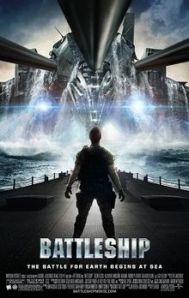
battleshipIn a nutshell, the story of “War of the Worlds” set at sea. The small details of why a tiny, inflatable boat could withstand tsunami force waves from a catastrophic event are minor inconsistencies in the story line. Liam Neeson is onscreen less than ten minutes. The star, actor Taylor Kitsch, is the hotshot, upstart, younger, ne’er do well brother of a Naval Captain. He somehow manages to rise through the ranks and wins the heart of the Admiral’s daughter within the first half hour. The rest is War of the Worlds revised. There is comic relief, a brave soldier, a team of scrappy misfits who are the only ones left in a position to battle the monsters [aliens] and save the planet. Oh, there is an Achilles Heel that is found to work to kill and disable the enemy. In the 1957 sci-fi movie, “The Monolith Monsters” the town is saved when they blow the dam and the secret ingredient that will destroy the murderous rocks is… water. Superman is vulnerable to Kryptonite. Movie writing rule of thumb: There is always something out there, sometimes found in your kitchen cabinet or glancing out the window, that will work to destroy the enemy invaders from another world. All it takes is some gumption, some good ol’ American know-how, and millions upon millions of dollars spent on hi-tech special effects to keep the audience in their seats for two hours. The strange brew to make a Blockbuster these days always hinges on the mammoth special effects. The ships are getting bigger, the monsters more deadly, and the heroes are much more ”buff” with a prerequisite of washboard abs.

The Jazz Singer: An Excerpt from 6 Degrees of Film

Here’s an excerpt from the book “6 Degrees of Film” talking about the landmark film that started the demand for Talking Pictures in 1926. If you watch “The Jazz Singer” (it was on Turner Classic Movies this month) you’ll realize it’s in fact a silent movie with around six segments of sound that all include musical numbers. There’s no spoken dialogue. It’s all typed as sub-titles exactly as any other silent film before it. The exception was the music, and that’s the point where sound breaks the barrier. The dawn of a new age begins with “Mammy!” Excerpt: Then in 1916 or 1917 along came talking pictures, affectionately known as “talkies.” The first movie to use sound was not The Jazz Singer, but a movie called Don Juan, starring John Barrymore. Talkies didn’t catch on at first. The sound quality was poor, the cameras large and unwieldy, and the audiences couldn’t accept that their favorite heroes had squeaky voices and the heroines were nasal and whiny. But The Jazz Singer was a pivotal turning point in the evolution of film. It was a talkie with an exceptional star—Al Jolson. The nation fell in love with a short Jewish man singing “Mammy” in blackface on his knees on the edge of a stage. “America was always quicker to spot the commercial possibilities of the movies, to decide what the bulk of the audience really wanted to see (not art as a rule) and to invest its money accordingly.” The advent of talking pictures, like many aspects of the film industry, was a phenomenon that came on so suddenly that most studios didn’t know how to handle the huge change. From the beginning, silent pictures had been made in a casual atmosphere, with a lot of laughing and talking going on as the cameras whirled. But the advent of sound changed everything. The first reactions by most of the seasoned Hollywood filmmakers were similar to Harry Warner, who said, “Who the hell wants to hear actors talk?” ….. The facts were that films were already in a slump in 1926. Radio, the first of the mass media giants to hit the average American household, had already started to make a dent in box office attendance. But, Warner Brothers decided to take a chance on sound. They gambled on the new phenomenon and went ahead with The Jazz Singer at considerable cost. The problems from the outset were 1) It cost a lot of money to convert the studio to sound: $25,000 was a lot of money in 1926; 2) The sound equipment had to be installed in theaters-at $25,000 dollars per theater. So by the end of 1927, about 200 cinemas in the United States were equipped for sound. Some interesting facts about The Jazz Singer were that there were only about four actual talking segments in the entire film. There were singing portions, but it wasn’t all that easy to reproduce sound in those days. Warner Brothers had taken a huge gamble in making The Jazz Singer and ended up paying a heavy price. One of the brothers, Sam Warner, died 24 hours before the premiere of the film after suffering a massive cerebral

The nuances and timeless appeal of Lawrence of Arabia

Lawrence of Arabia 1962 2014


What can I write that hasn’t been written before about the timeless appeal of “Lawrence of Arabia” and the performance of Peter O’Toole? It is bound to pop up on a “Best Films of all Time” list just about every year. This is the kiss of death for most films. Casablanca and Citizen Kane, then Wizard of Oz and then Lawrence…that is how it goes. But in the case of “Lawrence”, it is a timeless film made in a timely fashion. The retread is never bare. We are in the Middle East in a big way in our immediate lifetime and Lawrence speaks to us of the problems we face. It posits the questions and underlines the insurmountable problems that will never be solved as we try even now to brave the desert sands. There are so many brave souls that have perished for the cause of war in our country. Lawrence speaks to us of the timelessness, the inevitability of our destiny, saying, NOTHING is written… That was one of the main themes of the film. Nothing is written. And it has been a mantra for our American Destiny as we forge ever onward. O’Toole/Lawrence’s face and demeanor spoke volumes of his bravery and yet his naïveté in dealing with a culture he could never fully understand. Our naïveté and bravery in the face of insurmountable odds are facing us again in Afghanistan. This film should be a primer for anyone who dares to try and speak the truth about the muddle of the Middle East. There are some things that are not meant to be known entities and the East and the Desert are two of those things. T.E. Lawrence is a man for all seasons and Lawrence of Arabia is a film for all time. See this movie if you haven’t done so. Put it on your bucket list. This is one that will not disappoint.

Capsule Review: Lockout

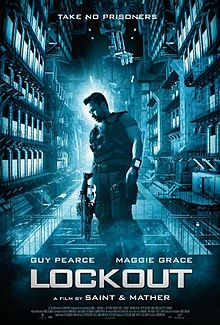
Lockout“Lockout” is a strange brew that is formulated much as “Cowboys and Aliens” seems to have been mixed last summer. The concoction includes one wisecracking “Die Hard” hard-nosed and cynical cop who has seen it all. There’s a beautiful blonde that needs rescuing, there’s a space station that is stranded, and oh, yes, there’s some terribly politically incorrect Irish gangster types who are the bad-ass criminals intent on murder and mayhem. There are a few mob scenes during the course of the film that show the whole criminal prison gang but they have almost as much character development as the mob from “Frankenstein” sans torches. Hollywood is stuck on formulaic models. They say: “Let’s do what’s worked in the past over to the nth degree and add on everything including the kitchen sink ‘just to make sure’ it’s a hit”. So in this one, just for insurance, there’s a scene right out of “Star Wars” where the pilot flies into the heart of the space station to destroy it… The film is fairly entertaining at times, and doesn’t move at a slow pace. But most of the critics seem to be insulted by the lack of effort made to even try and make it look like something other than what it is. What it is is a “hodge-podge” of ideas that have worked in the past that are baked together to brew a script that will make money. That is the oldest trick in the book, and sometimes in Hollywood, it does work!

About Doris Day

Note: Originally Published in 2012

Doris Day

Her roles have been stereotyped and her acting dismissed for decades. She has become a parody of herself, with songs like “Look at me, I’m Sandra Dee, Lousy with virginity…” and the famous Oscar Levant quote, “I knew Doris Day before she was a virgin”. But she is part of the mythos of Hollywood and is indelibly linked with the fifties persona of the American Dream. She was a major part of Hollywood box-office business for almost two decades and she was a powerhouse who shaped her image and influenced many women who have followed in her footsteps. She knew how to craft an image and to give the public what they wanted. And in the fifties, after two World Wars and the Cold War in progress, America wanted to be entertained. They wanted to be “bathed in banality” at times, the way Marshall McCluhan described the newspaper we “slip into” in the mornings. People often go to the movies to absorb nothing more than beautiful images and to relax in much the same way one goes to get a massage. That is the point of the Doris Day era. She was better than a relaxing massage at times and the public loved her. She was definitely “cornball” and “hokey” and “banal” and eventually syrupy sweet, but she did have talent and made the most of it and some of her films were quite good.

My picks for the best of Doris Day:

1. Love Me or Leave Me: With Jimmy Cagney, she plays the real-life Ruth Etting and she is never better belting out the bluesy theme song, “Love Me or Leave Me”.

2. Pillow Talk: She made several movies with Rock Hudson, and this is the best of the lot. Rock Hudson makes fun of himself in this and that is usually a good thing with movie stars. Day plays a strong, determined woman who in the end, will always “get her man”. Her image is shaped from the first frame to portray a “modern” female who works as an interior decorator and doesn’t like the way the smooth-talker on her party line treats women. That, in a nutshell, is a good reason for women to champion Doris Day’s characters.

3. Calamity Jane: A favorite of mine, she is a frontier woman who is portrayed as a loveable tomboy. Her quirks and comic turn as a rough and tumble pioneer with a characteristically feminine side is one of her best roles

4. Please Don’t Eat the Daisies: Doris Day is surprisingly good with David Niven in all of their scenes together. She doesn’t ham it up as she tended to do in later years. And the sophisticated Niven was equally effective as her mate in this adaptation of the popular bestselling book of the same name. There is a touch of schmaltz that went into overload in her later projects, but in this film the couple is believable and her part as a wife and mother who is navigating the sophisticated world of New York Theater is a nice touch.

5. That Touch of Mink: No self-respecting critic likes this movie. It does look like Cary Grant, the lodestar for all sophisticated male leads, is simply walking through and collecting a paycheck in this part. However, the role suits him and there are some great comic turns. Doris Day is working at one point in the film at an early-fifties era computer company and the size of the computer is so outdated and hilariously large that it, by itself, is enough to make anyone laugh! But the comic overtones tend to wear well even in this day and age. This film almost has the feel of one of those British sex comedies that someone like Terry Thomas would have played in. John Aston has a small but extremely funny part as the “louse” that is used to make Grant jealous. This is not intended to be rocket science, therefore, if you see this on the small screen, it is not to be dismissed so lightly. Day made many pictures far worse than this piece of fluff.

Other films worth seeing with Doris Day are her one Hitchcock film, “The Man who Knew Too Much” with Jimmy Stewart and the James Garner film, “The Thrill of It All”. The scenes in the latter are funniest when they spoof commercials and mass marketing early in the film. And with Hitchcock, Day is never allowed to run away with the syrupy goodness that was a trademark element and a fatal flaw in her later films. Today, some of the actresses linked to Doris Day by 6 Degrees are Renee Zelwegger, of Bridget Jones fame, plus Drew Barrymore, who has her own production company. Goldie Hawn, who shaped her image as the loveable and kooky ditz used that image to carry her to many successes at the box office. And there’s also Sandra Bullock, who has shaped an image, formed her own successful production company and starred in many light comedies that should make Doris herself proud!

Americana in American Films

There are three films that capture the “essence” if you will, of Americana. The films are “The Wizard of Oz”, “It’s a Wonderful Life” and “To Kill a Mockingbird.” In the characters and stories these films introduced to the American public in general and to the psyche of audiences worldwide, the definition is evident of what is best in American life and in the American spirit The Wizard of Oz is a film about a little girl and her dog as they travel through a fantasy world called Oz looking for a way back to her home in Kansas. This is a fantastic story but also a coming-of-age movie for many generations of Americans. Yet this children’s film has been shown in so many countries and to so many different children that it has become an iconic image representing America. There is so much hope and promise in the performance of Judy Garland and her face radiates with so much youth and innocence that she becomes the representation of a beacon of light for all ages. We see in her a promise of something better, something that she is striving for as she sings about a vague Utopia that is “somewhere over the rainbow.” In the vision that was created in that greatest of Hollywood dream factories in the Greatest of film years, 1939, we see an image of Hollywood at its finest. There are wonderful performances found here with a string of character actors that pop up in so many movies from years past. There is Bert Lahr, the old Vaudevillian, and Billie Burke, the veteran from the silent era. There is Margaret Hamilton, who gives us this iconic image of a villainess that is forever ingrained in our minds as she becomes the embodiment of the Archetypal Wicked Witch. There is Jack Haley as the Tin Man and Frank Morgan in a variety of roles. Then there is the mythos surrounding the cast of little people-the Munchkins-but the entire story is woven around the character of a young Judy Garland. Her fresh face and innocent but earnestly quivering voice have stayed with us for almost a century now. She is the stuff that dreams are made of. That is the greatness of the film. When it was introduced to those of my baby boomer generation, it had not been shown for many years and Danny Kaye introduced it in the sixties with a reverent pitch to his voice that gave a new spin to the never-forgotten scene where Dorothy opens the black and white door to a gloriously Technicolor Oz. This is almost a metaphor for the life we had lead in the fifties. It was an era of black & white television and a simpler time before technology brought us to the moon and then brought us lots of gadgets that we learned we could not live without. This was our introduction to a different life, a life where we have all “Gone Hollywood” so to speak. In It’s A wonderful Life, Capracorn is invented. It’s the type of film that Frank Capra believed in, and he believed in it enough to “bet the farm” that Jimmy Stewart was the one to play George Bailey. This movie was not a big hit at the time of release. That is to be expected as it’s a long film, an involved story, and it’s one that needs to be digested after several viewings. It’s the type of film that many people cannot imagine spending Christmas without viewing. There’s a great secular quality to it and yet there’s also a Spiritual dimension to this film. And like Americana, there’s a lot of “hoke” built into it-hence the term: Capracorn. Critics don’t often like to see emotive sequences consisting of God and Mom and Apple Pie. In this instance, George is not always a “goodie two-shoes”. He’s a cynic, at heart, but he’s fallen in love with a small-town girl and he’s fallen into the shoes of an inherited business that depends on his presence for its survival. In other words, this is not the life he chose, but rather one that was foisted upon him by others. He has many burdens to bear and the weight of his life is telling as the strands are becoming unraveled. The theme of religion is never overt but always interwoven in the fabric of our American existence. The story of George Bailey culminates with one of the most moving epiphanies of faith seen in American film. The moment on the bridge when George asks God “Please God, let me live again. I want to live again.” is an affirmation of faith that is declared by all who identify with the character of George Bailey in this movie. We are all buried underneath the yolk that is our lives; the yolk of debt, or of other burdens, and obligations plus family responsibility sits heavily on our shoulders at times. This is perhaps why his character can resonate so forcefully with so many that watch this film. George’s life is a litany of lost dreams and broken promises that are a part of his persona and make him the lovable yet sometimes cynical man that he becomes. In To Kill a Mockingbird we see the elements of Americana throughout. The goodness of the main characters, the innocence of the children, the racism and bigotry in the small town are all interwoven and held up as a mirror for our changing lives and changing society….. The movie is also a coming of age film within a courtroom drama. There is a life or death quality to it at times and the stark reality of small town America and the bigger dreams of the triumph over evil and the fight that Atticus wages as one man alone against a sea of bigotry and hatred represents a large part of our collective American story. We can identify with George Bailey for the dreams he has lost. But we identify with Atticus on a different level. Atticus is the embodiment of so many hopes and dreams that we aspire to in this country. The character of Atticus, as portrayed with quiet dignity by Gregory Peck, becomes someone we see in the same light to be found within the mythical beacon of light in Reagan’s “shining city upon the hill”. When we fight for the rights of the downtrodden and help the poor we are embracing the values that are an intrinsic part of Atticus’ makeup. He is the best in all of us and the person that we aspire to become. In the same movie, we see Scout as someone that many of us can identify with. She is curious and completely innocent of guile and vitriol, yet she has a temper and is easily swayed by many things that she sees and hears. We, the viewing audience, are all gullible to a certain extent and need to have boundaries set to guide us at times as we seek the truth in our ever-changing, fast-paced media savvy culture. Of the three films of Americana, perhaps the most innocent of all the characters is Dorothy, someone who is simply on a quest to come home. She is someone that we all have known and her life in part parallels our own. As a larger symbol of Americana, we are the innocents abroad that refuse to believe the world is the dark and menacing place that it is for so many people who live without our freedoms. Yet, we are a big-hearted society and we do open our hearts to many cultures, many beliefs and many different places throughout the globe. As Dorothy helped others to achieve their dreams, so are we a culture that still believes that helping others up is the only way we will survive. Yet always, in our heart of hearts, we have a great longing for our homes. When the troops were overseas in World War II, one of the top songs of the day played, “I’ll be home for Christmas, if only in my dreams.” And another hit song spoke to the belief that “There’s no place like home for the holidays”. There’s no place like home is the mantra for the American abroad. We are all vested in the dreams and hopes found in these three films. They have shaped our lives and described our shared destinies. They are a part of Americana and are arguably some of the best parts of our separate yet interwoven and uniquely American stories

Centurion vs The Eagle

One of the things Hollywood likes to do at times is to make several movies on the same subject and release the two {or three} which are basically about the same themes. “Country” and “Places in the Heart” were very similar films released in almost the same year. Two Wyatt Earp/Doc Holliday movies were done at the same time-the endless stream of Batman and Superman comics-all run together. They are about to release two stories of “Snow White”, one with Julia Roberts as the Evil Queen, one with Charlize Theron. In 2010 they chose the heartwarming story of the lost Ninth legion of Rome. The two films were “Centurion”-critics rated this one the better of the two, and “The Eagle” with Channing Tatum. Personally, I thought “The Eagle” was the better of the two for several reasons. “Centurion” was overtly violent in spots where it was pointless and needless to exhibit gore. When a corpse has no head, do we need to see more blood gushing from the body? I think not. The culprit, I suspect, is the world of gaming videos that show violence as a part of a game and it rises to the level of a cartoon. I would add this on the subject of violence in film. When grizzled, elderly, World War II veterans gather together, they don’t want to talk about the gore that was on the battlefield. Sometimes understatement works best. When Hitchcock made “Psycho” he understood the chilling effect of blood circling a drain to underscore the horror of the violent murder of Janet Leigh in a shower. “Centurion” also featured a chase sequence that, at first, vaguely reminded me of the classic chase from, “Butch Cassidy and the Sundance Kid”. The tag line for the movie poster from “Butch Cassidy” was, “Who are these guys?” and they used a paraphrase of this same dialogue in the new film. A vague reference or subtle homage is expected. But I knew they wouldn’t end the chase by having the group jump off the cliff. That would be too much. But not, it seems, for the makers of “Centurion”. By damn if they didn’t end the chase with a leap off of a mountain cliff. That means that the last gasp of original thought has left the building for the makers of this movie. Recently, “The Grey” used a similarly too-close for-comfort sequence from another film. This was so close in detail to the moving episode in “Sometimes a Great Notion” where Paul Newman attempts to keep a man from drowning and fails that I couldn’t help but wonder if they would be fined for lifting material so blatantly from the original storyline. Where is the line drawn in films when the sequences begin to look more than vaguely familiar? Just askin’

Why I’m not going to see "The Hunger Games"

Why I have no desire to see this film: I won’t go see “The Hunger Games”. I’m glad people, especially young people are reading about a post-apocalyptic world. They should be the ones to discuss the consequences of our actions as a government. They should be thinking and talking about reasons we need to stop and think about the consequences of our actions as a nation, and as moral and ethical human beings. Perhaps they will change the culture we live in for the better. The book “1984” was the Orwellian vision of a totalitarian future. I’m reminded also of the infamous “War of the Worlds” broadcast that had some nervous folks out in the streets fearing a real alien invasion. But the movie that “Hunger Games” brings to mind for me is “Spartacus”. The climactic end scene was a fight to the death between the characters played by Tony Curtis and Kirk Douglas. It underscored one of the main themes, which was that Greater love hath no man for another than to sacrifice his own life. The twist, if you will, was that the two friends who loved each other as brothers were slated to fight each other to the death. The winner would be crucified so the “loser” actually is the one who wins the fight and kills his beloved friend, thus sparing him from the pain and torture that will inevitably be inflicted on the winner. The brutality that was Rome is a recurring theme of Spartacus. But it is man’s nature to be brutal and violent that is an unspoken theme, as it gives us the metaphor in Spartacus for the sacrifice which Christians see in Jesus Christ. There are films that use violence to make a point about man’s inhumanity to man that are greatly effective. But in this age, I do wonder when enough is going to be enough. Spartacus was made in 1960. The film was about the Roman Gladiators, who were killing machines created to satisfy the public’s love of gore and violence. The Gladiators would fight to the death and were surrounded by cheering mobs. In “Spartacus”, the same horrific death that Rome inflicted on Jesus Christ is given to Spartacus. The barbaric nature of crucifixion is a constant reminder throughout the film of the violent brutality that lies in each of us and makes up the darker parts of our human nature. This reminder seems to be a theme of “The Hunger Games”. The violence is something we are immune to and we are accepting of it and we watch as jaded spectators watched the Gladiators. Such is the consequences of creating a world of video gaming, perhaps? One good point to make in this film’s favor: This IS a fictional movie. And like novels, films are representations sometimes depicting small segments of the human condition. So Harry Potter and Lord of the Rings and The Hunger Games are one part entertainment, one part protest and one part morality tale interwoven into an entertaining story. That explanation for the popularity of this film I can live with. Because I would posit that a certain man from Avon could fall into that category. I would bet that William Shakespeare, were he alive today would be out there on the cutting edge. In his own words he put it best, “The Play’s the Thing.” Thoughts on violence and the world of video gaming: One of the main differences in action films that were made twenty years ago and ones made in the twenty-first century is the amount of violence that is not only expected, but expected to be graphic. The concern is that there will be a kind of benign acceptance of pain and suffering taken to the extreme level. To convey the horrors of war and of death, sometimes less is more. Hitchcock proved it in ‘Psycho” with the shower scene and in ‘Torn Curtain” where Paul Newman has to kill a man with the help of a young peasant woman by using nothing more than his hands and the two of them manage to asphyxiate the Russian after a tortuous struggle. Hitchcock wanted to illustrate that it’s not easy to take a life. Another chillingly effective death struggle was seen in “Saving Private Ryan” where the two men fight to the death and it takes on the aura of a sexual encounter as the German slowly plunges the knife in to the chest while telling his victim to be quiet and accept the inevitable. Hopefully, there may be a pendulum swing back to the era of using film to illustrate actions without graphic violence and large amounts of blood and gore. **One other aspect covered in “The Hunger Games” is the public’s insatiable appetite for entertainment. Again, we are reminded of Rome and the Gladiator contests. I suppose if people are watching inordinately large amounts of cooking or exercise shows to the exclusion of all else-or staying on Facebook for more than eight hours-there is a real danger of losing focus and balance in your life. Personally, I don’t watch “Dancing with the Stars” or “American Idol”. But some of my best friends do and they are wonderful people with full and engaged lives. As boring as it may seem, moderation is the key to all things. So…people, especially young people, seem to be worried about a post-apocalyptic world. So do we all-and hope and wish and fervently pray that it will not come to pass. There are those who work every day to stem the tide of apathy and bigotry and hatred and ignorance that leads us to a path of destruction. I,for one, worry that I’m not doing enough to prevent Armageddon every day of my life. But then again, the point may be that there is hope yet for a generation that has role models willing to sacrifice themselves for others, as is the case with the heroine in “The Hunger Games”.