The Highest Grossing Film of all time…adjusted for inflation is…

Gone with the wind


6 Degrees of Film recently listed the 100 highest grossing films of all time. But the highest grossing film, adjusted for inflation, would be Gone with the Wind.  Just to confuse the issue, the top grossing film of all time, as it stands today, is disputed. It was Titanic when we last reported on the numbers some months ago, although current lists name Avatar. But in the 60 years since Gone with the Wind was made, it held the record of biggest grossing box office film for the longest period of time.

The most successful US films of all time according to their box office receipts would be:

1. Gone with the Wind
2. Star Wars
3. The Sound of Music
4. ET The Extra-Terrestrial
5. The Ten Commandments
6. Titanic
7. Jaws
8. Doctor Zhivago
9. The Exorcist
10.  Disney’s Snow White and the Seven Dwarfs

At the time of its premiere, Gone with the Wind was a big deal. It had seen lots of publicity surrounding the making of the film. Director David O Selznick was the consummate showman, and the casting of Scarlett O’Hara and Rhett Butler were the equivalent of the modern casting of the beloved characters from Harry Potter and The Hunger Games. Everyone had an opinion, but Clark Gable was universally approved to play Rhett Butler.

The English actress cast as Scarlett, Vivien Leigh, was a relative newcomer to US audiences and her casting was considered controversial in its day. But the premiere and the subsequent release proved to be a universal success and the rest, as they say, is history.

There are some controversies swirling now about the Political Correctness, or In-Correctness, of some of the sequences and the stereotyped characters of the plantation slaves in the Old South. But compared to a film with true racist overtones like “The Birth of a Nation”, the pushback has been relatively mild for Gone with the Wind.

The film is beautifully shot and definitely worth seeing if you have never experienced it. Gone with the Wind is being shown this Sunday at Tampa Theatre as part of their Summer Film Series.

The Armchair Film Festival: Recommended Summer viewing

168816805 FOR 6 DEGREES COVER PHOTO SHOT

The Bad B’s of summer come later. But for now, you can enjoy the ambience of a slower time and put your feet up to enjoy a well-deserved vacation. For many of us, that means movies. I would recommend some great summer films like the trilogy that begins with The Little Shop around the Corner and continues with In the Good Old Summertime. The third & final film in the trilogy of remakes of the same story is You’ve got Mail with Tom Hanks & Meg Ryan. What’s next up…? The Little Tweet around the Corner?

My Brill career

Fem Flicks: The Harvey Girls, My Brilliant Career and I Know where I’m Going.

Meet me in St Louis is another summer film with Judy Garland singing a few of her most famous songs like “The Trolley Song”, The Boy Next Door” and “Have yourself a Merry Little Christmas.” Garland was one of a handful of women in Hollywood with the talent and the clout to pull off the portrayal of a young girl in a film like Meet me in St Louis, and yet carry the lead with the depth and maturity of a much older character. Judy Garland is also featured in a remarkable film with one memorable scene, where the women who are working as waitresses battle the saloon girls. The movie is The Harvey Girls one of the Fem Flicks recommended in July. If you have never seen it, it’s definitely worth it to set your VCR to tape.

Also another notable Judy, Judy Davis, in her brilliant 1979 screen debut aptly titled, My Brilliant Career. A film out of Australia and also featuring a young Sam Neill, it’s the story of an independent young woman living in a time where to be single was the least desirable status for any female of marriageable age, it’s a triumph for women who have always wanted to be known by other titles than simply wife or mother. (Not that there’s anything wrong with those titles!

The third recommended Fem Flick is one lesser known British film with Wendy Hiller called I Know where I’m Going. A remarkable film for its day, it’s also a study in independence for women of all ages who yearn for something more at some stage of their life journey.

shirley temple

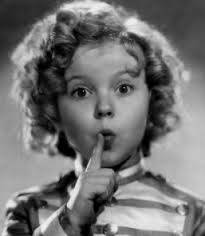
Shirley Temple…who would group Shirley Temple with the independent minded ladies starring in films on Turner Classic in July?  Yet Ms Temple was one of the most talented young ladies to ever grace the screen. She had it all-she sang, she danced, she was adorable, and she hit her marks and knew her lines and everyone else’s by all accounts. There really has never been a child actor to equal Shirley Temple.

Although certainly not a traditional feminist, Shirley Temple did pave the way for many child actors who came after her, and certainly opened many doors of opportunity in Hollywood for young, talented females. Perhaps that didn’t always turn out as well, as many child actors, including Temple, didn’t grow into adults with the same depth of ability and charisma. But there were a few exceptions, such as Elizabeth Taylor and Natalie Wood.

JDeanstamp

Summertime always makes me think of James Dean’s Legacy in film. He really did spark a generation of young, perpetually misunderstood men who longed to be “The Rebel.” The Bad Boy image was cemented with the forever youthful and tortured performances of James Dean, who starred in just three films, and was slated to appear in Somebody Up There Likes Me when he died tragically in a car crash at the age of 24. Paul Newman replaced him in that film, and in my book, 6 Degrees of Film, I’ve often compared the arc of Newman’s career in connection with the death of James Dean and the inherited mantle of the Rebel without a cause.

Newman went on to star in Hud, played Billy the Kid in The Left Handed Gun and had hits playing the outlaw rebel Butch Cassidy and finally, an older version of the James Dean rebel in The Verdict. James Dean didn’t live a long life, but his aura inhabited the screen for many performances that followed in the tradition of The Rebel on film.

The films of Les Blank: Short films, documentarians and independent filmmakers owe something to the superb short films that director Les Blank made. In a time when there was no such thing as Youtube or even a DVD, Blank made independent films. For many who are tired of constant remakes and re-hashing of old plots, Blank is like a breath of fresh air. He made original films about unique people and places and the documentaries hold up well in this era of Computer Generated graphics and comic book plots.

adv of robin hood 38

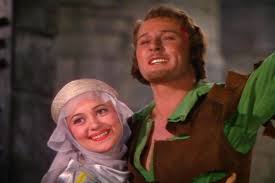
The Adventures of Robin Hood, still the greatest of the Robin Hood films and it starred a young Errol Flynn. Flynn was known for doing his own stunts, and he was and remains one of the most physical and athletic leading men Hollywood ever produced. “Giving it his all” went to new heights with Flynn . A native of the island of Tasmania, Errol Flynn was set apart from so many others of his day who were great actors, yet not believable in the period pieces that Flynn excelled in.

Many of these films are available on DVR and Netflix, and they are highly recommended for summer viewing and the Armchair Film Festival. See you at the movies!

Breakfast at Tiffany’s and other successful adaptations


brkfst at tiffany's

The Godfather, To Kill a Mockingbird, Gone with the Wind, The Wizard of Oz… From the beginning, films have used other mediums and art forms, everything from plays and classical literature to best-selling books and even comic books for adaptations on screen.

Shakespeare and Jane Austen have proven to be exceptionally well suited to film adaptations. There have been countless movie versions of the Bard’s famous plays and Jane Austen and Charles Dickens have created a cottage industry around their many successful film versions of the most popular re-telling of their works.

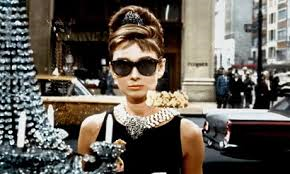
Breakfast at Tiffany’s was adapted in 1961 from author Truman Capote’s best-seller of the same name. In 1958, Norman Mailer’s controversial novel, The Naked and the Dead,.was also made into a film starring Cliff Robertson. It didn’t fare as well as the Audrey Hepburn film.

One reason could be that Hepburn adapted the material to her style, and though it was reported that Capote had Marilyn Monroe in mind for the character of Holly Golightly, the screen version did convey some of the frenetic art scene that was prevalent during the turbulent sixties. Audrey Hepburn’s glamour and waif-like screen presence brought an undeniable sense of grace and mystery that would not have been possible had Capote’s wishes been realized.

When writing a novel and subsequently adapting the material, there is a vision of a story that every author has and it follows that the reader of any novel is able to envision his or her own reality when imagining a story and the characters. The same applies for the director and the cast of any film that has been adapted from an original story source.

The Harry Potter series and the ensuing screen adaptations followed the authors’ original vision fairly closely and the results were wildly successful. And so it goes that in each case, the original material is the source of the inspiration and the resulting film product may veer slightly or deviate wildly from the writer’s original concept. That is and always has been part of the nature of film. And it’s the visions that often turn what might have been just an ordinary film into a piece of art! It’s the “stuff that dreams are made of”.

Breakfast at Tiffany’s will be screened on Sunday, July 19th at Tampa Theatre as part of their Summer FIlm Series.

Defining Screwball Comedy: Top Hat this Sunday at Tampa Theatre

top hat 2

Screwball Comedy is defined as a “principally American” genre of comedy. Born out of the Great Depression, these comedies originated in the early thirties and continued into the forties. Many of the films created some of the best “Battles of the Sexes” duos ever seen on film. Cary Grant shoving Katherine Hepburn backwards in “The Philadelphia Story” is just one example that comes to mind.

Some of the best of the genre were films like It Happened One Night, The Awful Truth, The Thin Man, My Man Godfrey, Nothing Sacred, Bringing up Baby, His Girl Friday and To Be or Not to Be. Cary Grant, Carole Lombard, and Katherine Hepburn all made their mark in this genre. The women were characterized as being flighty and vapid, but the times they were living in called for characters looking for instant gratification and immediate results. Thus the formula included cases of mistaken identity, lots of complications and constant motion with frenetic hand gestures and plenty of light comic relief. Anything to take the audiences mind off the depressing conditions outside the movie theatre.

Top Hat was made in 1935, and definitely qualified as a screwball comedy. Yet it was not only a screwball comedy, it was a musical as well. And it was one of the best films that Ginger Rogers and Fred Astaire made together. It included all of the necessary conditions that comprised a screwball comedy, and to top it off, the beautiful set decorations and costuming synced perfectly with the effortless dancing of Fred and Ginger. The icing on the cake for this film would be the Irving Berlin tunes that included the famous “Cheek to Cheek” number. Top Hat was nominated for four Academy Awards, including Best Picture of 1935.

Top Hat is showing this Sunday at Tampa Theatre at 3:00 pm as part of the Summer Film series. After the film, University of South Florida film professor Harriet Deer will be leading a discussion about the movie. The session is free and open to the public.

Michael Eisner is….right?

mgm-1943 stable of stars
Mr. Eisner, can you pick out the beautiful, funny women in this picture?

The Former CEO of Walt Disney, Michael Eisner, is so right. It’s almost impossible to find beautiful, funny women to star in major motion pictures. Just ask: Carole Lombard, Mae West, Jean Arthur, Irene Dunne, Jean Harlow, Ann Sheridan, Myrna Loy, Ginger Rogers, Marilyn Monroe, Maureen O’Hara, Doris Day, Jane Fonda, Lucille Ball, Judy Garland, Katherine Hepburn, Kim Basinger, Michelle Pfeiffer, Sandra Bullock, Meryl Streep, Tina Fey, Drew Barrymore, Julia Roberts, Amy Poehler, Meg Ryan and a whole host of women, living and dead, who have starred in and sometimes produced hit comedies.

The list is incomplete, but the point is that while Mr. Eisner was trying to heap praise upon Goldie Hawn, another name on this list, he decided to make a statement that speaks volumes for the way women are valued in Hollywood groupthink. They are commodities, traded like baseball cards (actors are treated this way too if they don’t have enough clout to take creative control of their projects).

Being an actor is tough, but being a female actor, much less a person of color, is even harder. These days, there are less “good ol’ boys” in the room to slap you on the back and wink and nod. There’s the rub, Mr. Eisner. Save those comments for the Palm Beach Country Club rub down and let these talented women with their volume of work speak for themselves. In other words, leave the intelligent TED talks to the big girls, ok?

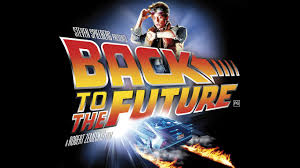
Back to the Future & The Future on Film in 6 Degrees

Backto future 2015

October 2015 will be the 30th anniversary of the premiere of  Back to the Future. Some of the films portrayals of a future world have been remarkably accurate. Other things were missed, but that’s the nature of predictions. Here are a few of the major things the film got right (and a few things missed):


 Nike Self-tying shoes: The shoes they came up with look remarkably like the type that Nike sells.
  Hoverboards: The technology is there for a few elites, but not for the general public.
 Drones & Robot Technology: The drones were imagined with uncanny accuracy.
  Biometric Scanners-for eyes/Fingerprint ID’s: This is current state of the art technology
 Google glass specs: Although they aren’t flying off the shelves, we do have Google glasses
  Flying cars: Nope. Not yet.
  TV Screens and video chats: Predated Skype and FaceTime with their imagined version.
  No Internet! Probably the biggest omission is the scope of the internet and how much it affects our daily lives
Back to the Future will be screened as part of Tampa Theatre's Summer FIlm Series this Sunday at 3:00 pm at Tampa Theatre.

Star wars logo


In the beginning, there was George Melies’ A Trip to the Moon in 1902. By 1939, The Wizard of Oz came along. But there were no real “cutting-edge” special effects on film for the first fifty years or so. Until Stanley Kubrick made 2001: A Space Odyssey in 1968 and gave audiences a glimpse into just what the filmmaker can do with a superior imagination and a large budget.

From Forbidden Planet and The Day the Earth Stood Still, to Star Wars and Jurassic Park, futurist sci-fi has advanced technologically to the point where the Special Effects completely dominate the action and the plot. Star Wars, released in 1977, was the game changer, in terms of special effects and the way the future was portrayed on film. Audiences were no longer satisfied with a flying car held up by string or a giant enlarged lizard. They wanted to see and to experience something extraordinary. And George Lucas and his Industrial Light & Magic studios delivered. They were the game changers in charge of the newly minted Cinematic Universe of the 21st Century.

Industrial Light & Magic (ILM) became so adept that the end result made one of the principal managers say, “The only thing that limits films these days are the budget and the scope of the director’s imagination. “We’re helping directors previsualize their films. Our designs are becoming more specific to the actual look of the film.”

One veteran from Industrial Light & Magic speculated of a future where film becomes an interactive experience, enabling participants…”to explore virtual worlds or even inhabit the form of computer graphics characters, controlling the action with a joystick. Players from all points on the planet could be linked through TV screens, computer modems, or game pods in arcade settings.”
.
When asked if films will become obsolete, ILM Visual Effects Supervisor Dennis Muran said: “Eventually…..theaters will be able to use an electronic or laser-light projection system, which is not a new thing; it’s been around for a long time. The hard part will be getting the thousands of movie theaters around the country to upgrade and install a new $200,000 projection system

And the man with the vision, George Lucas, who created the Cinematic Universe we now live in, said this about futuristic film :

“I see true environments being created and combined with a lot of biotech things going on, in terms of manipulating people’s sense through drugs. This combination will have the most powerful effect on the kind of storytelling we’re doing today. It’s too far off for me to worry about, and I’m no interested in virtual reality at its current level, because it’s just too crude. But if you can program virtual reality or simulator rides with biotech, you will have a very interesting non-world. The first step would be to take the simulator ride part of the environment…where you can just implant the story in a pill and live it.
That’s not outside the realm of possibility. You’d take the pill and go to sleep. It’d be like a dream and you’d have an actual, real, physical experience of something completely imaginary. What that’ll mean for society, I have no idea, and how you’d get there from here is way beyond me, but I know enough to know it’s within the realm of possibility. Because they’re already going there, creating images without actually making them, just as you create them in a dream.”

This experience would not be standard movie theater fare as we have come to know it. It would be a reality far removed from our own near future world. As long as humans aspire to dream and to create, we will be interested in watching movies in whatever form that might be.

Excerpt from 6 Degrees of Film: The Future of Film in the Global Village-ML Johnson 2013

Montgomery Clift and the LGBT Connection

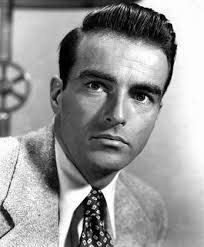
Mont cliftIn light of the recent Supreme Court decision regarding same-sex marriage, it comes to mind that many younger people have no idea who Montgomery Clift was. He was a tortured soul and a fearless actor. He was also before his time in so many ways. He was loved by both men and women, who saw the vulnerability that shone out of his eyes. He made us love him for the man he was, not the Hollywood pinup that was presented to the world at large.
His performance in films of the fifties made him a worthy contemporary and competitor of Marlon Brando. Montgomery Clift was also bi-sexual, and because it was the fifties in America, Clift was forced to live his life in the closet, never openly acknowledging his sexuality. Perhaps it even made his acting more intense, but for whatever reason, his films are still gripping and highly recommended viewing.

A tragic car accident sidelined his career while he was still at the height of his fame, and the aftermath and recovery made him face those inner demons. Addicted to pain killers and alcohol, Monty Clift suffered an inner torment along with his outward pain in his final years.

Yet his body of work is remarkable. Clift is superb in so many films, beginning with the adaptation of a Theodore Dreiser novel called A Place in the Sun with Elizabeth Taylor. He then manages to make a boiler-plate B movie, The Search, somehow become one of the most heart-rendering stories of suffering that came out of the post-World War II era. He was able to convey onscreen what was felt by millions of displaced families living in the ruins of Europe at the end of the second World War.

Clift went on to give stellar performances in The Young Lions, Red River and Miss Lonelyhearts, and with each part he played the vulnerability and the pathos are on full display. A man who lived ahead of his time, each performance was in the moment and spot on in conveying the torment and inner angst that so many in the LGBT community have known and felt for so many years.

Those who have not discovered Montgomery Clift and his body of work, I would highly recommend an intensive session for the “Armchair Film Festival”. Don’t delay in screening some of Clift’s classic performances found on DVD or shown on Turner Classic Movies.

Hitchcock’s Vertigo plays Sunday at Tampa Theatre


Vertigo 1

Vertigo was released in 1958 to a mixed reception. It was later heralded as one of Hitchcock’s greatest works. It’s a complex, psychological thriller starring the venerable James Stewart, a Hitchcock favorite along with Cary Grant and Grace Kelly. Vertigo was part of a nine-picture deal that Hitchcock made in the fifties that included many of his most famous films like Rear Window, North by Northwest, Psycho and To Catch a Thief.

*Hitchcock was an early master in the art of Marketing a Movie. He marketed Pyscho brilliantly, and refused to allow reporters to see advance drafts of the film. He had a trailer for the film where he teases audiences by taking them on a tour through the Bates Motel and he followed that up with his famous decree to theatre owners stipulating that patrons were not allowed into the theatre once the film began. This unusual practice both intrigued and piqued the moviegoers interest.

Hitch’s TV Show “Alfred Hitchcock Presents” was further proof of his marketing savvy. He not only designed the signature silhouette of himself, he even picked the opening music for the series. The now familiar strains of Gounod’s“The Funeral March of the Marionette”are forever associated with Alfred Hitchcock Presents….

When the idea of a television show was first proposed to Hitchcock, he was hesitant. But he agreed after he was allowed to introduce each episode and also given script supervision. Not only was Hitchcock given a platform to promote his upcoming films, but he also was allowed to make fun of television and advertising, which further delighted both him and his audience.

Hitch highlighted his own paranioa in films like Vertigo and North by Northwest. He had a fear of being stopped by the police and therefore he didn’t drive a car.

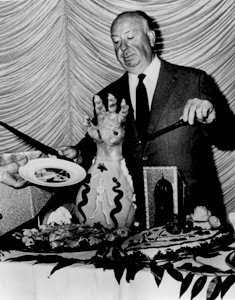
hitchhandcake Hitch & Blue Food 2015

*Hitchcock had a sense of humor that was highly unusual. His favorite dinner party was one where the food was entirely blue. Hosted in the thirties for the actress Gertrude Lawrence. Hitchcock said of the dinner, “”Even when you broke your roll. It looked like a brown roll but when you broke it open it was blue. Blue soup, thick blue soup. Blue trout. Blue chicken. Blue ice cream.”…..

6 Degrees Armchair Film Festival

168816805 FOR 6 DEGREES COVER PHOTO SHOT

It’s summertime at the movies! That means vacations and lighter fare and blockbusters and perhaps lots of different memories for many of us. Beach movies and films from our high school years and summer fun.

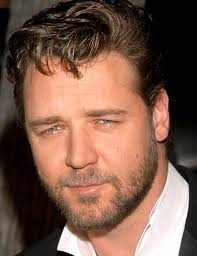
There are so many different film festivals out there it’s hard to keep track. One thing in this age of video that is definitely a bonus is the discovery of so many great films and great performances that you can see on demand and on video. For instance, I fell in love with Russell Crowe and Peter O’Toole and Clive Owen at the movies and subsequently became a fan after watching so many of their older films that were available on video.

Russell Crowe

Russell Crowe, before he became a big star, was in some great movies like Proof from 1991, The Sum of Us (1994), Virtuosity (1995), and his big break into A-list films in 1997’s L.A. Confidential.

Clive owen
Peter O’Toole’s best performances were often in films not widely seen today like Joseph Conrad’s Lord Jim or the comedy, How to Steal a Million with Audrey Hepburn. Clive Owen, who has suffered (and made me suffer) through some real clunkers in recent years, was brilliant in the movie based on the play Bent (1997), the made for TV movie Second Sight (1999), Greenfingers (2000), Robert Altman’s Gosford Park (2001), the film noir movie I’ll Sleep when I’m Dead (2003), and Beyond Borders with Angelina Jolie also in 2003. He was best known to audiences in the 2004 King Arthur film and then was nominated for Best Supporting Actor in Closer, also from 2004.

All of these actors and many more are seen in what I call the “Armchair Film Festival”. If you are a fan of Film Noir, then you’re in luck.  TCM shows some of the greatest film noir classics and is even offering a class online that’s free and open to the public!

Mont clift

Turner Classic Movies has a featured star each month and will show many of their greatest films. For example , the work of actor Montgomery Clift can be seen on TCM as he is featured this month in A Place in the Sun and Hitchcock’s I Confess.

If you are interested in the history of the Civil Rights Movement and films dealing with Human Rights issues, then you should watch A Gentleman’s Agreement and To Kill A Mockingbird, both starring Gregory Peck, and Judgment at Nuremberg with Spencer Tracy.

annie hall

**Woody Allen at the Movies: Woody is worthy of volumes and is definitely recommended for Armchair Film Festival viewing. His early comedies and transition from comedy to drama would give any film lover enough material for several retrospectives on his work. TCM is showing showing Annie Hall and Hannah and her Sisters  this month.

s mcqueen bulllitt

**Steve McQueen, another actor worthy of an Armchair Film Fest retrospective, is featured in Bullitt and The Sand Pebbles. Bullitt is one of my favorite films. It’s one of McQueen’s best, and the car chase sequence is probably the granddaddy of all those car chase scenes featured in countless pictures for generations. Bullitt set the standard and it added a touch of authenticity to the screen just knowing that Steve McQueen loved to race cars and was known for doing many of his own stunts.

Sound of Music

Fans of The Sound of Music may recognize some of director Robert Wise’s trademark work in the Film Noir classic, The Set Up. If you can appreciate Wise’s use of shadows and light in The Sound of Music, you’ll know he was attuned to the process from his history with so many film noir features.

**6 Degrees readers, stay tuned as we look at a star or a film genre to recommend each month in the Armchair Film Festival.

On the making of Caddyshack and the definition of Gonzo

Caddyshack

Here in Tampa, the Tampa Theatre Summer Film series continues this weekend with a showing on Sunday, June 21st, of Caddyshack at 3:00 p.m. One of my favorite comedies, I was surprised to uncover a few factoids I didn’t know about the making of Caddyshack. Here they are:

1) Harold Ramis co-wrote Animal House and due to the strength of that hit movie, he was given the go-ahead for Caddyshack. Bill Murray’s brother, Brian Doyle Murray, also co-wrote the script. Brian was a caddy at one time, as was Bill Murray.
2) Don Rickles was the first choice for the Rodney Dangerfield role of businessman Al Czervik. Dangerfield had never had a major role in a film until Caddyshack and reportedly, he was nervous throughout the shoot.
3) Caddyshack was Ramis’ directorial debut in 1980. Harold Ramis, who died in 2014, went on to direct many hit comedies such as National Lampoon’s Vacation with Chevy Chase and Groundhog Day with Bill Murray.
4) Caddyshack was filmed in Davie, Fl at Rolling Hills Country Club. Rolling Hills was one of the few clubs to allow movie production on the grounds.
5) Bill Murray’s role of groundskeeper Carl Spackler was planned as a quick cameo appearance, but he stole the show improvising his scenes! His famous lines, the Dalai Lama speech and the Cinderella story speech were improvised on the spot. The Cinderella speech was written as “Carl cuts the tops of flowers with a grass whip”.
6) Caddyshack quickly evolved from a coming-of-age story featuring actor Michael O’Keefe as Danny Noonan into a Marx Brothers style ensemble film. According to director Ramis, he thought of Dangerfield as Groucho, Murray as Harpo and Chevy Chase as Chico.
7) The Caddyshack Gopher was an after-thought. It was expanded to tie the sequences together and bring some cohesion to the plot. Star Wars veteran special-effects master John Dykstra created the gopher imaging after principal photography ended. The Gopher’s voice was supplied by the same sound-effects used for Flipper in the TV series!
8) The New York Times called the film Caddyshack “immediately forgettable”.
9) About Bill Murray: After leaving SNL, where he replaced Chevy Chase in Season 2, Bill Murray went on to become a huge star with hits in Stripes, Ghostbusters 1 & 2, What about Bob?, & Groundhog Day. He’s known in Hollywood for his eccentric behavior.
Murray has no agent, only a phone number where you must leave a message for him to get in touch.
In 2003, Murray scored a hit with Sofia Coppola’s Lost in Translation and subsequently transitioned into a career appearing in “Indie” films. Since then, he has collaborated with independent director Wes Anderson in the past decade, appearing in some capacity in most of Anderson’s films.
His latest films of note include Hyde Park on Hudson, in which he played President FDR, the critically acclaimed St. Vincent from 2014, and the highly anticipated upcoming  Rock the Kasbah.

B murray cartoon

10) Many have described Bill Murray as a “Gonzo Comedian”. The definition of Gonzo states it is “a strange or unusual quality-bizarre; freewheeling or unconventional, to the point of outrageousness”.