The Night Bonnie & Clyde shut down the Oscars

168816805 FOR 6 DEGREES COVER PHOTO SHOT
6 Degrees of Film


After last night’s mix up at the Academy Awards for Best Picture, it illustrates the perfect metaphor for the type of arrested development mentality that has gone into the entire short-sighted thinking of the Academy virtually since its inception. There are so many chances for the group as a body to do the right thing and shake things up. But they continue to stumble their way into the future wearing blinkers.

To illustrate the point, here is a list of the winners for Best Picture from the past 17 years:

 Gladiator- 2000; A Beautiful Mind-2001; Chicago-2002; The Lord of the Rings:The Return of the King-2003; Million Dollar Baby-2004; Crash-2005; The Departed-2006; No Country for Old Men-2007; Slumdog Millionaire-2008; The Hurt Locker-2009; The King’s Speech-2010; The Artist-2011; Argo-2012; 12 Years a Slave-2013; Birdman-2014; Spotlight-2015

And within that list, there are a few notable exceptions (a couple of years were skipped because they had such forgettable films). My list would include:

Gladiator: 2000; A Beautiful Mind; 2001- ?2002 who cares: Lost in Translation-2003; The Aviator: 2004; Capote 2005; The Departed-2006; No Country/Juno/There will be Blood- 2007: Slumdog Millionaire-2008; The Hurt Locker-2009; The Social Network-2010; The Artist/Moneyball-2011; 2012: Les Miz or Lincoln; 2013: Gravity/12 Years/Her; 2014: who cares?; 2015: Spotlight/The Big Short/The Revenant

Some of the years had more than one winner. I may simply see this year as a who cares? category. But the overarching theme of the Academy seems to be trying to pick the film with the least long term impact. Since Titanic, there haven’t been too many great films picked.

For films in the 21st Century, I would pick A Beautiful Mind, No Country for Old Men, There will be Blood, Slumdog Millionaire, The Hurt Locker, Lincoln, Gravity, 12 Years a Slave, Her, The Big Short, Moneyball & The Blind Side. as films that make a lasting impact from Hollywood.

One standout performer isn’t really an actor or actress. It’s the author, Michael Lewis. He has written three of the films in the past 15 years that have made an impact on our society. The Big ShortMoneyball and The Blind Side are all films made from his books. Spotlight, the winner last year, is an important film in this sense. We are now facing an era where journalistic integrity and truth are questioned from the highest echelons of our society. Therefore, the film that emphasizes seeking the truth at all costs is one that we should continue to promote. It tells us why we should care about journalists getting to the bottom of the story.

Lincoln, although a good and not a great film, was one that Spielberg has said was almost made for the small screen. That is the trend that continues, and perhaps there will be categories in the future for films released in venues other than traditional theaters. That is the wave of the future. There is a changing dynamic in Hollywood and globally, and the Academy is going to have to acknowledge it someday.

The films Inception and The Matrix gave us alternative visions of reality. We saw in Her a film about the very real challenges that isolation of the individual causes in our society. And Juno, about a teen pregnancy, spoke of the changing mores we face. It gave us a new voice as a screenwriter, Diablo Cody, a much needed voice for women. The Hurt Locker broke barriers as Best Director Oscar was given for the first time to a woman, Kathryn Bigelow. And when 12 Years a Slave won for Best Picture, it was an indication that the “Indians were finally fighting back”. Meaning that the concept of the brave white men and women who conquered the West and all of America was given to be a myth that needed to be deflated. There needs to be a new way to understand Hollywood and the concept of movie making in general.

Lost in Translation is a ground-breaking film, also speaking of isolation and giving voice to a different vision, one created by another female director, Sofia Coppola, daughter of Francis.  The two films released in the same year, There will Be Blood and No Country for Old Men both dealt with violence and subjects where the film had no hero or anti-hero. The Departed and The Wolf of Wall Street also were nihilistic visions, where society is darkly honest, a black hole at times, and the reality is often frighteningly evil. This may be a commentary also of our times, and a way of pushing the audience to the brink of no return. Another commonality in these two latter films is the presence of a great American actor, Leonardo Di Caprio. Only a truly great actor could pull off the nihilistic and dark visions he has given us with any amount of credibility.

Of course, the sequels and serial films, the comic book genres, and all other mass media concepts for film-making still go unacknowledged by the Academy. They seem to be stuck in some time warp where Elizabeth Taylor and Clark Gable may somehow reappear, courtesy of CGI, and attempt a coup where all the trends and realities of the future are somehow set aside. This is the alternate reality that we see played out yearly with the Academy Awards show.

And although there were some attempts to acknowledge things like “diversity” and globalism, there is a real blinker-visioned reality to the types of awards given out still. Movies ABOUT movies still win a lot. The Artist and Birdman are self-congratulatory vehicles for the most part.  But the Independent filmmakers, the ones honored at Sundance every year, are forging ahead and creating their own paths inHollywood. Why they don’t recognize this and somehow carve out a niche for them is part of the tunnel visioned, short-term thinking that has gone into the Hollywood mind-set for the past forty to fifty years.

It seemed fitting that Warren Beatty and Faye Dunaway committed the ultimate faux pas by shutting down the stage where usually trite and mundane speeches are trotted out to the sound of bored applause that is routinely bestowed on the lackluster winner of Best Picture. It may be the ultimate for the renegades who brought us “Bonnie and Clyde” in
the sixties. Perhaps its best to say that the films with the greatest
impact have to be seen and then understood even a decade out from their initial release. It’s the shock of the new that sometimes cannot be understood.

We still have great actors working to make movies. Di Caprio is our greatest American actor. Philip Seymour Hoffman was one of the greatest of our actors, now deceased. Michael Keaton has made a real comeback as a significant American actor in vital roles from The Founder to Birdman. Tom Hanks has done some good work in Captain Phillips and The Bridge of Spies, and some of his roles have been just mediocre. The call is out for actors who are still here. De Niro, Nicholson, Di Caprio, Tom Hardy, Benedict Cumberbatch and others working still, need to challenge themselves with roles that Michael Keaton and Denzel Washington have taken on of late. There are parts out there that will interest us and will live on as we look back and see what our society has become as we go further into the 21st Century.

Oscar Selfie pix

Oscar News: Part II

168816805 FOR 6 DEGREES COVER PHOTO SHOT
6 Degrees of Film

I rarely agree with Joe Scarborough(from “Morning Joe”) on anything, but this morning I did.

The films of 2017 that are up for Oscars are, for the most part, films that would have been considered good, solid, “Indie”films and they wouldn’t have gotten as much press in other years. There are some years that have great films up for contention.

This is not one of those years….

The films that we remember, and the films that made the biggest impact on our society and our psyche have all been films that stay with us. It’s hard to know in the long term which films will be lasting ones, but there are plenty that we know as forgettable.

The biggest impact films from the past thirty years include the following: Films from before 2000 include:

Schindler’s List; Forrest Gump; Pulp Fiction; The Shawshank Redemption; Apollo 13; Braveheart; Fargo; Jerry Maguire; One of the biggest box office blockbusters was Titanic from 97…. The Full Monty was a term that entered the Lexicon. LA Confidential boasted perhaps one of the greatest ensemble cast ever assembled. Saving Private Ryan is iconic,as is The Matrix.: Most of these were up for Academy Awards, and a few won.

***
After 2000, the list includes
Gosford Park-Robert Altman’s last film; Lost in Translation; The Aviator; Brokeback Mountain; Juno; Capote; Munich; The Departed; No Country & There will be Blood; Slumdog Millionaire ;Avatar; The Blind Side; Inglorious Basterds; Up; Inception; The Social Network; Moneyball; Les Miserables; Lincoln; Gravity; Her; The Wolf of Wall Street; The BIg Short; The Imitation Game; Bridge of Spies; Mad Max Fury Road & The Revenant;

 These are all films that were nominated or have had some lasting impact on our society. as a whole.  From the list of nominations, this year, perhaps Arrival & Fences reach that threshold.

As I have stated in the past, there should be new categories for films. Indie films, Classics, and they should drop the foreign film category and let them all compete for Best Picture. They have way too many films in the one category, and they should have some specific designations, as Best film adapted from source (plays, books) and Best Original Film; Best “Indie” Film, etc. A category for best new talent or Best Actress under 30; Best rising talent…whatever…to make it more interesting:

Or just the Old White Guy category-Best performance for the Bucket List Brigade…something like that. Because we all know that the way that the Academy has been run is much like the political parties in our country. There has been a stranglehold on power within the hierarchy of the studios and the Academy that actually picks the nominees,and that has limited the choices for a long time….

Tomorrow I’ll put out the list of films that have won Best Picture since 2000 vs. the list of my personal picks.Those two will never jive…

Oscar Selfie pix

Red Flags in Movie Trailers: A Guide


6 Degrees of Film
6 Degrees of Film

When you go to the movies these days, they still show loud and explosive trailers between commercials and other promos that are guaranteed to eventually make you forget which movie you came to see. But the striking thing, at least to me, is how few movie previews really make me want to see the upcoming film. That is supposed to be the idea, right? To make the audience salivate to see these new films they’re promoting. But the opposite seems to occur these days. Here’s a few reasons I suspect.

My list of Red Flags in Movie Trailers:

* Any and all films using the words “Vampire” or “coven” during the promo. This is an idea that has been not only done to death, but stabbed and stomped into the ground, and, forgive me, had a stake driven through the heart.

*All movies based on video games. Period.

*The Overuse of CGI (Computer Graphic Imaging) in all scenes… The advent of CGI was an exciting chapter in film history. It lasted for about the usual fifteen minutes of fame until, as with all things Hollywood, the overuse of CGI has pretty much made most of the production sequences again look contrived and about as phony as anything the legendary bad director Ed Wood came up with. Example: See the new “improved” Ben Hur.

*Films that obviously exploit any and all Hollywood Demographics. For example, scenes depicting groups of kids/teens/young adults battling monsters/robot cars/aliens or any combination thereof. To add to the awful mess, throw in some hip/hop with faint humor and martial arts interspersed with shots of vampires plus an army of what appears to be models from Vogue magazine. These create some real red flags to me. If a film is forced, the ideas aren’t believable and nobody gives a damn.

*The comic book variations on a theme. There are so many back stories, origin stories, and stories of how the origins of the origin story began, that unless you begin building charts with spreadsheets, no one can keep track of the super hero hierarchy. See above. The same theory applies. If you force it, nobody gives a damn anymore.

I try not to be overly cynical about film. When you get too old to be excited about new ways of looking at the world, then you need to hang up your film credentials and walk away. So this is not something that has just popped up overnight. The world of film criticism is assaulted by all kinds of hurdles such as the over- emphasis on box office numbers as opposed to the actual quality of a film, the shrinking journalistic standards in writing about film, and the constant barrage of online bloggers and the sheer daunting quantity of film that is out there waiting to be reviewed. All of these things are part of the dilemma that we, as film critics, face daily.

But there was a time when the trailers for films made you sit up and take notice of what the filmmakers were trying to say. We saw new avenues of exploring culture, and new ways of looking at age old problems. Some of these new films are breathtaking and unique, but most of the time I find myself having to separate the wheat from the chaff. There’s a lot of smoke blowing around that somehow gets in the way of the originality and creativity found in artistic cinema. The artists are lurking, but you have to face a field of dreadful duds as you plow through the turf.

The next time you decide to actually go to a movie and sit through this field of dreadful, keep the above-mentioned checklist in mind. It may help if enough of us decide to just stay home and wait for the release.-ML

6 Degrees: The four basic plots

6 Degrees of Film
6 Degrees of Film


There is much talk of the remakes in Hollywood, and the fact that nothing is new under the sun. Well, there’s a lot of truth to that, but then again, Shakespeare used mostly re-hashed material to fashion together some of the greatest works of literature.

So, there’s a lot of “meat on the bone” when you talk of the simple nature of the most basic of storylines. Here are four of the most widely known:

Spartacus


  1. Man vs Man: Here we find many variations on a theme, as the plots may tend to run together. But some of the greatest stories deal with adversity between two people or two countries. Spartucus is the story of one man’s rebellion against the Roman Empire. Exodus deals with men and women fighting to establish a home for the Jewish people in the Middle East. Shakespeare’s Henry V deals with men battling to establish who will be the rightful King of England.The Poseidon Adven
  2. Man vs Nature: Jack London was a writer who often dealt with this subject. The Call of the Wild and White Fang are two of his works. But in dealing with the basic elements of nature, we find so many great stories. In Hollywood, there was a whole industry around the “disaster” films such as The Poseidon Adventure, where a huge storm overturned a ship. And The Towering Inferno where man had to face the elements to survive.

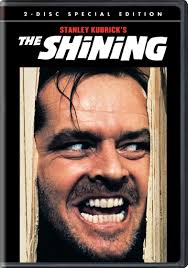
The Shining3. Man vs Himself; One of the most complex and intriguing storylines deals with the psychological nature of man. In The Shining, the horror of the story turned inward as we saw the main character slowly go mad. In The Lost Weekend and Leaving Las Vegas, we witness the ways that men can slowly “burn out” with alcoholic binges and start to implode. In Shakespeare’s great works, Hamlet and King Lear, the soliloquies provide a passage into the internal workings of the minds of his most famous characters.

Adams Rib

4. Man vs Woman or The Battle of the Sexes: In this, we spot so many things we can identify with in our own lives. This proves true even in past decades where women were not accorded equal rights under the law, but still were able to hold their own against men based on their intelligence and logic. In Adam’s Rib, we see two lawyers, played by Spencer Tracy & Katherine Hepburn, arguing cases on opposite sides and struggling to maintain their marriage.In Shakespeare’s play, The Taming of the Shrew , the comedy deals with the battle of the sexes. In Elizabethan England, women were not afforded many rights, however, there was one strong example of leadership seen in Queen Elizabeth I. Good Queen Bess was a strong ruler for many years, and Shakespeare would have had this example before him as he was marketing and tailoring much of his work to please her! There are other examples of stories and plot lines, but it seems the most basic plots are at times the best ones to use when delving into the psyche of a human being, or looking at the quiet desperation and isolation of our lives in the 21st Century. The next time you read a good book or watch a movie, take a moment to reflect on whether it follows one of the basic plots used by the masters. Chances are, if it’s a really good work of art, the story will break it down to the basics.


6 Degrees of Film: Notes from the Global Village

168816805 FOR 6 DEGREES COVER PHOTO SHOT

After seeing more than one story from a critic complaining about the volume of films and the impossibility for a single film critic or film website to adequately cover all of the existing material, it seemed to be a good idea to try and sort out some of the mass data dump we are all receiving on a weekly basis.

Here’s a listing from 6 Degrees of all the news that’s fit to print. Alright, perhaps that’s an overstatement but at least here’s a stab at the top news from the world of film-makers and Hollywood, with a healthy dose of 6 Degrees skepticism tossed in for good measure.

Features will include:

1) Top Stories: From Hollywood and global markets.
2) Critics choice: Good buzz. What the critics are saying about films.
3) Coming soon: What looks good in Upcoming Features
4) The Armchair Film Fest: Recommended viewing of classics plus streaming and on-demand/DVD
5) Of Note: Future events and Hollywood trending…

Jurassic World

1) Top stories of this week include the colossal success of Jurassic World. That’s no surprise considering that Jurassic Park is still high on the list of top-grossing films and it has been over twenty years since its debut. On the other hand, it looks like Disney and George Clooney have a flop in Tomorrowland, which posted disappointing numbers.

spy
2) Critics like Me and Earl and the Dying Girl. It’s a film about a young high school boy who finds an emotional connection with a young girl diagnosed with cancer.
They also like Wolfpack, a film about a group of young Peruvian-American brothers who were socially isolated for years in their New York apartment dwelling and passed the time by watching perhaps as many as five thousand movies. I like these films because they dwell on a subject I have written on extensively, and that is the growing sense of isolation that exists in our society.
On a much ligher note, Spy has generally received good reviews for Melissa McCarthy. Also Love & Mercy, the film about Brian Wilson’s life as the creative force behind The Beach Boys, is getting great reviews.

Man from uncle
3) Some of the biggest openings coming up are Ian McKellan as a much older version of Sherlock Holmes in Mr. Holmes, and Terminator Genisys, both premiering in July, with Arnold Schwarzenegger recreating his iconic performance as the robot killing machine. Fans of the old TV series, The Man from U.N.C.L.E. will be pleased to know the film is set to open in August.


movie_pix_example
4) The Armchair Film Fest: A personal (over a year in the making) favorite of mine is the idea of binge-watching when a noted actor or star comes across the radar. For this, it’s best to contemplate your own personal “Armchair Film Festival”. In days gone by, it would be impossible, but in today’s world, there are so many great performances and actors that need the Film Festival treatment that it makes sense to create your own.
There are so many different film festivals out there it’s hard to keep track. One thing in this age of video that is definitely a bonus is the discovery of so many great films and great performances that you can see on demand and on video. For instance, I fell in love with Russell Crowe and Peter O’Toole and Clive Owen at the movies and subsequently became a fan after watching so many of their older films that were available on video. My recommended viewing includes favorite actors and genres plus what’s playing on TV.

Paul Blart MC
5) Of Note: The Hateful Eight, the Quentin Tarantino re-make of the Magnificent Seven, is set to premiere in December. Bill Murray, who has kept audiences guessing for more than a decade with his quirky performances in Wes Anderson and other indie films, is back in Rock the Kasbah. Star Wars fans are still buzzing about the trailer for the upcoming (December release date) JJ Abrams directed Star Wars picture. Chaz Ebert has released a list of the worst films of the year. Paul Blart: Mall Cop 2 is prominent, although I have to say, I have seen films far, far worse than this light and insipid comic romp.

Casablanca: Who wrote what? An excerpt from upcoming “Six Degrees of Film”

Casablanca

Script authorship of Casablanca also was disputed, only this time it was writer versus writer who vied for the lone credits. Someone said about this B movie classic, “One of the charms of Casablanca lies in its awkwardness. Not only do the politics and romance sit side by side, but that there are two or three contrasting manners of style. There’s the comic-cynical, the soppy-elegiac, and the solemn-propagandist … [It’s] not so much a story as a stringing together of great moments to remember. How, and in what order we remember them is left to us, and this is part of why we like the film so much.”[i]

Four authors claim to be the true author of Casablanca. There is Howard Koch, who claimed he was brought in “to shape the film’s politics”; the brothers Julius and Philip Epstein, who wrote as a team; and Casey Robinson. Robinson said that he had the idea for a film “out of a ‘lousy play’ called Everybody Comes to Rick’s.”

According to Koch, the story was, “So they start shooting and Hal comes to me and says, ‘We need some help. There’s a little trouble.’ Bogart had said, ‘I won’t shoot this __________’; and he had used a very nasty word and gone home.”

Ingrid Bergman on the Casablanca shoot said this: “Every day, we were shooting off the cuff; every day they were handing out dialogue, and we were trying to make sense of it. No one knew where the picture was going, and no one knew how it was going to end … We said, “Well, who are we?” … and Curtiz would say, “We’re not quite sure … It was ridiculous. Just awful … Bogart didn’t know what was going on, so he retired to his trailer … I wanted to know who I was supposed to be in love with, Paul Henreid or Humphrey Bogart?”[ii]

The Epstein brothers had gone on to another project for Frank Capra and were not available, so they sent the script in from Washington page by page. Two scripts were floating around, one from the Epsteins and one from Howard Koch. Robinson was brought in to add the love-interest angle. It was apparent that “none of them knew he was working on a movie that would turn out to be something to boast about; all the signs were that Casablanca would be a stinker.”[iii]

The facts are this: The film used some lines from the play, Everybody Comes to Rick’s, including the line “Then play it, Sam” and the song As Time Goes By. The irony was that Julius Epstein was not proud of his part in scripting Casablanca. He called it “slick shit,” and said, “Casablanca is one of my least favorite pictures. I’m tired of talking about it after thirty years. I can explain its success only by the Bogie cult … I can recognize that the picture is entertaining and that people love it. The whole thing was shot in the back lot. Furthermore, there were never any such things as letters of transit around which the entire plot revolved. The movie is completely phony.”[iv]


[i] Adaptations from Short Story to Big Screen, Harrison, S. Three Rivers Press, New York, 2005

[ii] Adaptations from Short Story to Big Screen, Harrison, S. Three Rivers Press, New York, 2005

[iii] Adaptations from Short Story to Big Screen, Harrison, S. Three Rivers Press, New York, 2005

[iv] Mank: The wit, world, and life of Herman Mankiewicz, Meryman, Richard, Morrow, 1978