Film Notes: About Oscar

The Oscar Nominees this year are once again, inflated for maximum viewing audiences and not particularly for excellence in film-making. They could have pared the list down easily: Gravity; American Hustle; Wolf of Wall Street ; Philomena & Her-12 Years a Slave possibly…

It’s time and well past it for DiCaprio to be honored for his body of work. That’s usually the thinking that goes into the Best Actor category. Amy Adams & Cate Blanchett are too close to call-they may go ahead and give the Best Actress Oscar to Dame Judi Dench simply for the aforementioned body of work.

It’s worth noting that of the films nominated, only one was in the top ten Highest Grossing Films for 2013-the film was Gravity. The films that audiences wanted to see included “Iron Man 3”- coming in at # 1. Then the Children’s movies prevail-everything from Despicable Me 2 to Frozen & Fast & Furious 6 (for big kids!).

Sequels are still the order of the day. Not only Iron Man 3, but Thor: The Dark World, The Hobbit: The Desolation of Smaug, Fast & Furious 6, plus the Wolverine, all were in the top 15 highest grossing films of the year. The Man of Steel was # 9, and Star Trek into Darkness was # 14.

There’s nothing new under the sun. Critics frequently complain about the lack of quality and originality found in movies. Many new films are remakes from comic books or rehashed storylines. And although I frequently criticize the decisions of top Hollywood producers, I’d like to point out another high-profile media superstar that constantly used reworked material. That would be William Shakespeare.

Make no mistake, I am NOT equating any of the current crop of remakes with the Master Bard. The point is that creativity is found when we least suspect it. Who knows what is lurking just around the corner?

Critics corner: Speaking of critics, some of the critically acclaimed films that are nominated include: 12 Years a Slave; American Hustle & The Wolf of Wall Street. I’ve taken issue at times with the dearth of important critical voices talking about films in recent years. With all things in the information age, there’s an up and a down-side to the dilemma. Although the web contains volumes of information, very little is original in content concerning modern film.

Filmgoers have always needed energized voices such as Roger Ebert, the late critic for the Chicago Sun-Times who provided not only clarity and knowledge to his critiques, but also a deep-rooted love of film and the rich history surrounding the art of filmmaking. That is lacking so often these days. However, there are some rays of sunshine.

As I flip through my Flipboard, (I admit I’m addicted to it), I am able to compile an interesting movie magazine consisting of several thoughtful pieces on film. The list of articles is provided at the end, if anyone cares to read through them at a later date. They include a piece about Jean Shepherd-the uniquely talented creator of the classic, A Christmas Story (I have a section about Shepherd in my 6 Degrees of Film book also).

There’s a piece in Esquire magazine on a subject that thoroughly intrigues me: namely, the ongoing book vs film debate. In this piece, the subject is James Thurber’s classic character-Walter Mitty.

In The Secret Life of Walter Mitty, the filmmakers have taken an unusual choice of material and created an interesting concept. The notion involves taking Thurber’s original material and then updating the idea of modern man being lost. Only this time around he is lost in the noise and confusion of the information age.

It’s a notion worth exploring, but perhaps better served in the film Her. Her is the story of a young man falling in love with the personal assistant voice on his phone. After reading the story of a football player engaged to a woman who apparently didn’t exist, this plot doesn’t seem too far-fetched!

Other pieces include the acclaimed science-fiction writer, Harlan Ellison, reviewing, Saving Mr. Banks (NOT favorably-I might add!)…

Coming in March: My series on the history of Science-Fiction in Film. Also, a new piece inspired for the laziest Film Festival devotees (including myself): The Armchair Film Festival: French Films are examined.
Monuments Men: Capsule Review

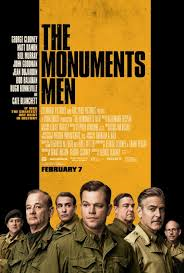
monuments menThis film plays it pretty straight. No surprises, and if anything, it seems to be a bit lacking in humor. Which is odd, considering George Clooney, John Goodman and Bill Murray figure prominently in the action. All things considered, this seems to be an earnest attempt at storytelling. The film is about the true story of how the Allied forces retrieved some of the great art pieces of Europe.

The criticism lies when people expect too much. The operative phrase at the beginning of the movie is this film is based on a true story. Therefore, all the elements of storytelling include the writers perspective, the directors point of view, a certain slant from which the story is told, etc…

And yes, there’s a bit of “hoke” in parts of the plot, but really not enough to make one wince or engage in eye-rolling. Sometimes “it is what it is” is truly…what it is! In this case, the story does involve the fact that Adolph Hitler really did try to swallow whole all of the greatest art treasures of Europe. And the Allied Forces really did do something seemingly altruistic by hunting down and returning many of the treasures of European Art Culture. These are the set of facts the filmmakers worked with and the result is an interesting if not uber-remarkable tale.

This is a war story and it does have some scenes of death and destruction across Europe. But the large part of this tale is a war story without blood and guts. It’s about some of the intangible stuff that makes life worth living and worth fighting and dying for. That really does seem to be the point.

Simply and sparsely told, the film deals with those things often lying on the periphery of the action. It’s about those unseen boundaries and the unforeseen consequences of war-and those with vision enough to live beyond their own place and time. Perhaps the takeaway from this is that such vision is still needed in places where people still feel the effects of war in their everyday lives.

The Wolf of Wall Street & The Genius of Scorcese

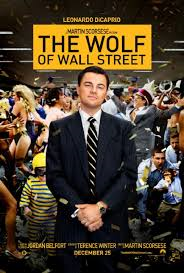
Wolf of W StreetThe first impression you take away upon leaving the theater is the need to shower…It’s a film that engrosses one in the sleaze of the moment. From the first few scenes, we are pitched headlong into the roller-coaster ride that was Jordan Belfort’s (DiCaprio’s character’s) existence.

The audience is pitched the notion that the world that existed for Belfort was an amoral one, brimming with contempt for the people they represented. As stockbrokers, Matthew McConaughey is seen in a small but crucial role where he explains why the stockbroker doesn’t care to make money for the client, only to be able to pitch the idea of the brass ring-there’s more where this came from…

The opening of the movie feels more like “Goodfellas” and has some of the intensity of Raging Bull. When you witness the sex scenes, they come across as sleazy rather than erotic. These people have no redeeming qualities. Basically, the men are idiots, and the women only slightly less so. The first wife of Belfort comes across as a kind of prophet, one who is doomed from the start. And when the characters behave with contempt and a total lack of concern for the rest of humanity, there’s still a tendency to laugh. Why are we laughing at these idiots? This is the genius of Scorcese

The genius of Scorcese is highlighted beautifully in the very last scene. It’s shot in the relative quiet space of an ordinary subway car. Yet, in the context of the story, the scene is pregnant with unspoken angst and disillusionment. That is the beauty and the genius of Scorcese. He has turned the story of yet another corrupt Wall Street prodigy into a Greek tragedy, and left us, the audience, in the role of the Greek chorus.

We now must fill in the blanks with meaning. That is the takeaway from this…Yet another Wall Street bad boy, one who flew too close to the sun. And yet, we are taken inside the bubble to witness the seduction of capitalism and its lingering after-effects. There is no cure in this microcosm of Corporate Greed and Excess. But in most cases, we see that there is never a wish for a cure, and not even a call to pull the plug.

The denouement is a quiet end in this very wild (and long) ride. And that may be the final take. Scorcese shows his genius for understating the obvious and casting DiCaprio outside the boundaries of our daily lives….The Great Gatsby on crack cocaine Is Jordan Belfort….There is no irony in the takeaway. We see it and it is what it is. That’s the genius of Scorcese.

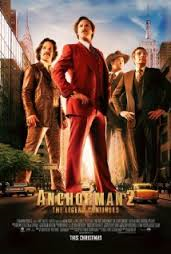
Capsule Review: Anchorman 2

Anchorman 2If you liked the LAST Anchorman movie, chances are….you’ll find this one funny too. Fans of Ron Burgundy will know the legend continues…Someone remarked that this film runs too long. Yes, because most comedies run out of steam and the “bits” are just fillers to somehow wind down the plot. That is the nature of comic films.

It has been said that Dying is easier than Comedy. Comedy is hard. However, the bottom line remains: this film does have some funny bits. The notion that Ron Burgundy came up with some of the ideas that are floating through the newsrooms of all current 24 hour news networks is hilarious in itself. And there is a definite jab at all the networks as the makers of this film lambast the idea of what “real” news is, as opposed to the idea that we are simply chasing the bright, shiny objects that flash before our eyes in each 24 hour news cycle.

With that point out of the way, it’s good to note that the underlying thread running through this film is the idiocy of Ron Burgundy, the man. He is hopelessly politically incorrect, improbably lucky in his choice of jobs, and a veritable guide for the “what not to do” of life regarding personal and ethical relationships.

His storyline is correctly followed with the inevitable line-up of all-stars that helped bring him to life. Steve Carrell, Paul Rudd, Christina Applegate and a cast of cameos by Harrison Ford, Jim Carrey and Liam Neeson make this film worth watching. Yet none of it is possible without Will Ferrell. His great talent lies in conveying the blankness behind the eyes and is followed with the extreme utterances of a man with “no one home”.

One of my personal favorites is the scene in the RV with the gang heading into New York. Just the notion of getting the old “gang” together again is funny. But the humor is carried through in their choice of “day jobs” outside of local news. Not to give anything away, but the film moves along quite well from here, with the predictable making way for the ridiculous about half way through the film.

See this film for light laughs and a chance to further the legend…By all means, it’s worth a chuckle or two.

Capsule Review: Notorious-The Greatest Cut of all…


Notorious

Notorious is one of Hitchcocks best films. Why? Not because of the well-known movie stars that grace the film. Cary Grant and Ingrid Bergman are at the top of their game, but ironically, it’s not their performances that stand out in this movie.

In Notorious, Cary Grant’s character is that of a cynical and slightly skewed personality. He comes off as a tad less than his characteristically perfect self. The Ingrid Bergman character is one of a fallen woman. She’s the girl who’s “been around the block”. She’s seen it all, done it all and is not a candidate for the illusion of true love.

Yet, one of the most memorable lines in Notorious is delivered by an obscure Austrian actress named Leopoldine Konstantin. She plays the well-developed Hitchock-ian role of the obsessively dominant mother figure. Not only does she delivers one of the greatest lines in all of Hitchcock, it could be considered as one of the definitive cuts of all time

While the portrayal of Mothers in film usually conspire to be in a nurturing and protective role, as was so often the case with Hitchcock, the image of Mom is turned on its head. In this instance, “Mother” is someone who might give Lady MacBeth reason to pause, as the mom in Notorious is by far the more ruthless and calculating of villains in the piece. . That’s saying a lot, as the characters in the film are part of a group of Nazi sympathizers.

Hitchcock was well known for the type of woman/mother figure portrayed by Madame Sebastian. In Marnie., the character of Tippi Hedrin’s mother was responsible for her young daughter’s psychotic behavior. In The Birds, Tippi Hedrin was again plagued by the domineering and darkly possessive mother figure. Then comes Psycho, with the most famously disturbed mother/son duo since Oedipus. In so many Hitchcock classics, we see a different image of  a Mom; one who is less than sweet as apple pie in most cases. Such was the world of Hitchcock.

The line Madame Sebastian delivers is to her own son, Sebastian/Claude Rains, who comes to her in anguish over the discovery that his new wife, Alicia/Ingrid Bergman, is in fact a spy. Frightened of the ruthless gang of Nazi cohorts he is entwined with, he comes to ask his Mother, Madame Sebastian, for advice.

Madame Sebastian pauses a moment to light a cigarette, the perfect bit of “business” that lends credence to her next statement. She then tells her son that all is not lost. Why? Because, she says, “You are protected by the enormity of your stupidity-for a time .” It’s then up to dear old Mom to come up with the idea of slowly poisoning Alicia.

The line works so well because it is played in such a matter of fact manner and given just the right amount of understatement to make the subsequent actions so completely evil.

And now, so many years later, I am reminded from time to time of the cool and utterly ruthless cut given to Claude Rains. Most of the time, it’s a self-deprecating phrase I use to put myself in my place. And it’s a saying that works every time.

“No worries, my dear, you are saved by the enormity of your stupidity” It translates to mean that no-one could possibly fathom the thought that such a colossal mistake could be made. The Peter Principle in effect applies here. The notion that one almost always rises to the level of their complete incompetence. Of course no-one believes you are THAT incompetent! That is your saving grace…

It is the type of clever cut that never fails to make its mark. Perhaps, as put-downs go, it is one of the truly great ones.. In the end, we are all protected by the enormity of our stupidity!

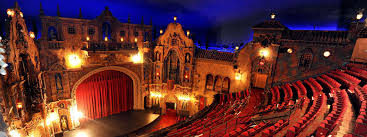
Notorious is playing at Tampa Theatre this Sunday, July 10th at 3:00 pm.


Tampa Theatre


It’s a Wonderful Life: Christianity + Americana 101!

Everything you need to know about the Christian religion is found in this movie. For that matter, everything you need to know about American values is also found in this film…It’s such a wonderful film, simply because of the simplicity that Frank Capra was able to bring to this sweet story. Of course, the film could never have survived the charge of “Capracorn” (excessive hokey-ness and cornpone), without the brilliant acting of Jimmy Stewart.

Not only did Stewart portray the Everyman that was George Bailey to the point of perfection, he was also able to bring the audience with him in his epiphany that began and ended on the bridge where he contemplated taking his own life.

Everyone has suffered from failures and setbacks. It is the art of learning how to deal with life’s frus-trations and our own sorrows that sets us apart. The definition of “Success” is seen in this film as the person who learns to live in a community of fellow men, caring for others and sharing the opportuni-ties we create together. The struggles seen in this film are often overcome by the sheer will power and “can-do” spirit that was typically identified as part of the American persona.

One of the lessons learned from this film is that the collective “we” could triumph, as our country did in World War II, if only we stuck together. Sadly, we see this trait often lacking in the psyche of younger Americans these days. This film was about as basic as you can find regarding the idea of community and the ties that bind us together to form the modern society.

Here then is the short list from “It’s a Wonderful Life”- Christianity/Americana 101:

Community: George Bailey’s Savings & Loan has been the lodestar of salvation and largesse for a sizable portion of the working class men and women living in
Bedford Falls. Before George took over, his father had run the savings & loan
business.

The Good Samaritan: Probably the most recognized story in the Christian
religion, is a parable, a fable told by Jesus to illustrate just who should be
considered our neighbor. the answer lies in the man who shows compassion to a fellow traveler, one who has been beaten, robbed, and abandoned by the road. the Good Samaritan is the one who cares for a stranger in need, regardless of his religious affiliations or the color of his skin.George epitomizes the Good Samaritan’s role as he takes Clarence under his “wing”.

Every person is equal in the eyes of God: George is a small-town banker, not a
rich man, but his pleas are heard.God hears our prayers: In the film, we see Him at work in “strange and sometimes mysterious” ways!

Angels are among us: Everyday we walk among those who protect and shelter the needy and the downtrodden. We see these ” better angels of our nature” all the time, and we sometimes ignore them. Yet they are working among us even now, as illustrated by the fumbling goodness of Clarence.

Everyday, ordinary lives matter: Our lives matter more than we know. There is a domino effect, a causal ripple in the fabric of time created by the void made if
we simply didn’t exist. That is a major theme of the film.No matter how mundane our lives feel.or how inconsequential we feel at times, our lives matter to God.

People are basically good: Even those people that we see behaving out of
character have some reason to be hardened or cynical. But we know these people for who they really are, and they are the best versions of themselves. Each of us has a dark side, and we choose to live lives that matter to others-for the most part…

Evil does exist in the world: Mr Potter knew exactly what happened, as we, the
audience, see him furtively glance at the money Uncle Billy accidentally gives
to him. He could have easily rectified the problem, but instead chose, by his
own free will, to act in a way that only helped himself and could very likely
have destroyed another man’s life. Such is the true nature of evil.

Finally, No Man is a Failure…in the eyes of God. we see this manifested not
only by the completion of Clarence’s final thoughts to George, but also with the
full circle of actions leading us to the same conclusion.

No Person is a failure when he or she is part of a community. No one is a
failure when they lead a full life, working and sharing in a community. and
finally, No Person is a failure where there is Love.

This was Christ’s message, short and simple. No one has managed to deliver this message on film in a fuller, or more complete way, (with just a hint of American Exceptionalism thrown in for good measure).

Long Live Capracorn! Mr Capra, No Man (or woman), ever feels like a failure
after seeing this classic film.

Excerpt from “6 Degrees of Film”-The Rise of TV

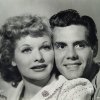
At Christmas, the networks are planning to air some classic episodes of “I Love Lucy”…the extraordinary appeal of the TV series is unparalleled and began soon after the sitcom first aired. Here is an excerpt about the early Screen Gems studio…

The Rise of TV

This is one medium that I don’t believe Hollywood can give the old run around.
—Hedda Hopper

The studios learned to cope with the impending death knell as the old order passed. Formulaic movies, such as the Abbott and Costello and Ma and Pa Kettle movie series, were big draws. Science-fiction films were the order of the day in the 1950s. Some of the low-budget studios like Republic had retooled with telefilm productions by the late 1940s, and began selling their old features and shorts to television.

In 1949, Columbia created Screen Gems, a Hollywood-based telefilm company, that started actual productions for television in 1951. Desilu also came into its own in the early 1950s. The story was that Lucille Ball did not want to work in New York. She also wanted her husband, Desi Arnaz, to star with her. When they didn’t get what they wanted, Desi created Desilu to produce the pilot himself. They worked out of a Hollywood rental facility called General Services Studio.
After the pilot for I Love Lucy was shot, Arnaz and Ball convinced CBS to back the series. They signed for thirty-nine episodes, and the rest is history. Premiering in September 1951, the show was a runaway hit.
CBS wanted a live audience that seated three hundred spectators. Each episode of I Love Lucy was created essentially as a stage play, and theirs became the format for the modern-day situation-comedy or sitcom. The show was filmed with three cameras running at once, and cut through three editing machines. The thirty-minute show could also be rebroadcast, creating the idea for the rerun.
Lucy drew two-thirds of the viewing audience and was the first show to reach ten million households. What’s more, Desilu Productions could create 350 half-hour episodes at a fraction of the cost at which the major Hollywood studios could crank out films. The sitcom, a wonderfully profit-driven business opportunity, firmly nailed the lid on the coffin of the outdated studio system.
1955
Three major events in 1954 cemented the inevitable fall of the studio era and its eclipse by the age of television. First, Screen Gems, a subsidiary of Columbia Pictures, premiered Father Knows Best using a former MGM star, Robert Young. Second, the legendary David O. Selznick made a comeback of sorts and made television history when he produced a two-hour TV spectacle celebrating the anniversary of Edison’s invention of the light bulb. The program was simulcast on all three major networks and drew the largest viewing audience of the era . The third event was the premiere of Walt Disney’s anthology television series.
Disney, a master marketer and promoter, realized the potential in television in marketing his films, plus promoting Disneyland, his new theme park, and advertising the Disney brand. He could recycle all the old Disney film productions like Davy Crockett on television. The show was an instant hit.
With the potential of television now being realized, the studios unloaded sizable portions of their back-lot vaults. The studios had to adapt and transform themselves into distribution companies. The studio era was over, becoming something we all like to remember and marking the end of Hollywood’s Golden Age of Film.

Bullitt and the Evolution of Cool

In Bullitt, we see the final revolution from the rebellious character of James Dean in “Rebel without a Cause” carried through to the seedy and corrupt world of organized crime and politics. The plot of ‘Bullitt” takes the Rebel character to a different level. In this film, the Rebel character, played in Bullitt by Steve McQueen, is hand-picked by a smooth and smarmy politician to basically take the blame for botching the case of a mobster turned snitch who is under police protection in a high profile court case.

When the witness is killed early in the movie, Steve McQueen is still at the hospital when Robert Vaughn, the politician who hired him, begins to chew him out in front of everyone. Most would take this dressing down in silence or choose to fight back, which would have been utterly pointless in this case. The character of Bullitt, quietly but firmly asks the right question at the right moment.

“Who else knew where this man was?” Robert Vaughn is visibly taken aback and pushes aside the query, contending that it hardly matters at this point. This is where the greatness of a truly cool character permeates the screen. With a complete lack of hyperbole, McQueen says, “It certainly does matter….My men were shot too”. He proceeds from this point to unravel the thread of a complex case which leads him all over San Francisco, with a quiet but deadly determination to discover the truth.

One can only look at an existential novel or play by Pinter to find the type of character willing to risk all, without thought for career or glory, simply to discover the truth behind the initial act of violence. This is the heart of “Bullitt” and the reason it stands up so well even a half century later.

These films tend to leave you asking questions about the character long after the film is done.
It’s not the revolutionary car chase sequence, although that is remarkable in itself. It’s the existential element of the character of Bullitt, the loner quality in him that takes the plot to a different level. We don’t see endings in Film Noir or the Rebel character films that are neatly tied up without leaving a trail of questions. That is the point.

There is a quote about Steve McQueen in Bullitt that is telling. He is standing under a clock, waiting for someone. Yet, even though he is not facing the camera, we know the underpinnings of impatience and curiosity eating at him. Thus, the critic says, ‘McQueen can act with the back of his head.” The point being this- we are anxious to know because he is. The wave of coolly controlled anxiety is something that is unique to the character of the Rebel.

Few actors have been able to master this curious balance of coolly controlled anger with the right amount of righteous indignation and poetic justice. Something that is found at the core of the characters is the ability to balance the emotion and to bring the audience with them on their journey. A delicate balancing act, for sure, and one we have not seen in many years on film. McQueen got it right in Bullitt, and the film still stands as a testament to his unique gift. That is the ability to represent the epitome of cool in all its understated glory.

6 Degrees of Film now available!

6 Degrees of Film now available!

6 Degrees of FIlm: An abbreviated history of film, easy-to-read and hard to put down! This book takes you through the past one-hundred years of movie-making through “six degrees” of connections in related stories about films and the people who made them…A summary includes the future direction of the film industry with a special emphasis on the last quarter century that includes the age of Blockbusters and the advent of the era of Special Effects…