6 Degrees: Friday Flix

6 Degrees of Film

Continuing with the thoughts about which films most impact our lives personally, I have re-posted here on 6 Degrees one of my older pieces that talks about films such as The Sound of Music, The Wizard of Oz and Roman Holiday-all of these films that encompass the times we live in and moments in our lives. One thing that has been lost in recent years is the millennial need to see films in color. Granted, it is at times a dated process to watch silent films, and some films don’t hold up well, but there is so much to be seen and heard in our rich history of the movies that would be lost if we shunned the superb examples of film making in black and white.

The films of Hitchcock, of Chaplin and Laurel & Hardy, of Harold Lloyd and Buster Keaton, and the films of Bogart and Gary Cooper were primarily black and white ones. In fact, almost the entire genre of Film Noir is gone if you don’t watch the films in their original black & white format. It’s just a point of personal privilege and it sounds like some old fart ranting about how the good ol’ days of film were really the best ones, but there is a history to film-making that would be lost if we shunned the black & white treasures of the past.

Moving on: The end of March brings openings of The Boss Baby– the animated feature with the voice of Alec Baldwin (most reviews are not favorable); reviews for Life, Wilson, Atomic Blonde with Charlize Theron; an interview with director Danny Boyle about Trainspotting 2 and a Film Comment article on this one also.

Other films of note coming out are The Zookeeper’s Wife, with Jessica Chastain, based on a true story of Warsaw zookeepers who saved the lives of Jews in World War II.

There’s a Film Comment piece about Paul Newman’s work as a director in our 6 Degrees magazine. And RogerEbert.com features a book review of “Talking Pictures” by Washington Post critic Ann Hornaday.

There’s also an interesting post about a relatively new phenomena, the re-emergence of 1984. The book by George Orwell has had a rebirth in this era of Trump, and the film version of the same has also been showing in several major cities.

One of the interesting aspects of the recently released Natalie Portman film, Jackie, is the portrait of Camelot that Jackie helped to create after the assassination of JFK. RogerEbert.com discusses this interesting backstory behind the legend of Camelot.

Of Note and under the heading-Fem Flicks: ALL of the content found on rogerebert.com during this last week in March has been written by women. The site also features examples of female-driven storylines in Hollywood with a video interview of Jessica Chastain and Niki Caro from The Zookeeper’s Wife.

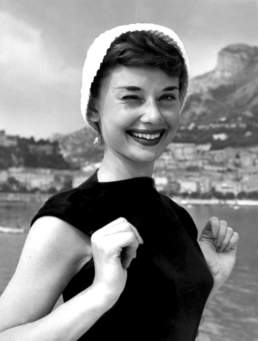
We might be headed for a writers strike in Hollywood, according to CNN. But the Writers Guild of America must renegotiate their contract by May of this year, so stay tuned. We’ve also featured in our 6 Degrees magazine a piece (also from Roger Ebert) on the black and white classic from director Francois Truffaut, The 400 Blows. As well there’s a beautiful article on one of my favorite actresses of any era, Audrey Hepburn, who starred in “Roman Holiday” (both of these films were shot in black & white).
Also noteworthy is a piece in Rolling Stone on “Five Came Back” which has been called by some the best documentary ever made on the subject of Hollywood and wartime. As we move into April, there’s a list of movies to stream in the coming month

One Last Thing: One of my favorite reviewers, my good pal from Australia, Jason King, also has a wonderful movie magazine that’s found on Flipboard and it features great reviews. In fact, one of the highest reviewed posts on 6 Degrees was from Jason’s site-his piece on Kong: Skull Island. Check him out if you have a chance!

Next week we’ll feature some of the Turner Classic films and the accompanying reviews. Write or Comment if you can on some favorite films that have impacted your own lives. Looking forward to spring and seeing you at the movies!

6 Degrees of Film: Who wrote Casablanca?

Authors Note: 6 Degrees of Film: The Future of Film in the Global Village is soon celebrating three years of print! Still available on Amazon.com- here’s an excerpt from the book about the authorship of the film Casablanca-where a hodge-podge of ideas and egos resulted in one of the most iconic films ever made!

Casablanca

Script authorship of Casablanca also was disputed, only this time it was writer versus writer who vied for the lone credits. Someone said about this B movie classic, “One of the charms of Casablanca lies in its awkwardness. Not only do the politics and romance sit side by side, but that there are two or three contrasting manners of style. There’s the comic-cynical, the soppy-elegiac, and the solemn-propagandist … [It’s] not so much a story as a stringing together of great moments to remember. How, and in what order we remember them is left to us, and this is part of why we like the film so much.”
Four authors claim to be the true author of Casablanca. There is Howard Koch, who claimed he was brought in “to shape the film’s politics”; the brothers Julius and Philip Epstein, who wrote as a team; and Casey Robinson. Robinson said that he had the idea for a film “out of a ‘lousy play’ called Everybody Comes to Rick’s.”
According to Koch, the story was, “So they start shooting and Hal comes to me and says, ‘We need some help. There’s a little trouble.’ Bogart had said, ‘I won’t shoot this __________’; and he had used a very nasty word and gone home.”
Ingrid Bergman on the Casablanca shoot said this: “Every day, we were shooting off the cuff; every day they were handing out dialogue, and we were trying to make sense of it. No one knew where the picture was going, and no one knew how it was going to end … We said, “Well, who are we?” … and Curtiz would say, “We’re not quite sure … It was ridiculous. Just awful … Bogart didn’t know what was going on, so he retired to his trailer … I wanted to know who I was supposed to be in love with, Paul Henreid or Humphrey Bogart?”
The Epstein brothers had gone on to another project for Frank Capra and were not available, so they sent the script in from Washington page by page. Two scripts were floating around, one from the Epsteins and one from Howard Koch. Robinson was brought in to add the love-interest angle. It was apparent that “none of them knew he was working on a movie that would turn out to be something to boast about; all the signs were that Casablanca would be a stinker.”
The facts are this: The film used some lines from the play, Everybody Comes to Rick’s, including the line “Then play it, Sam” and the song As Time Goes By. The irony was that Julius Epstein was not proud of his part in scripting Casablanca. He called it “slick shit,” and said, “Casablanca is one of my least favorite pictures. I’m tired of talking about it after thirty years. I can explain its success only by the Bogey cult … I can recognize that the picture is entertaining and that people love it. The whole thing was shot in the back lot. Furthermore, there were never any such things as letters of transit around which the entire plot revolved. The movie is completely phony.”

Capsule Review: A Little Less Conversation-a little more action please

The Ape’s the Thing

In Kong: Skull Island, the denouement is the whole deal. If you could condense it, or fast forward through to the end-The Ape’s the Thing. By that, I mean that the characters, the back story, all prove to be extremely uninteresting and poorly fleshed out in this latest version of King Kong.

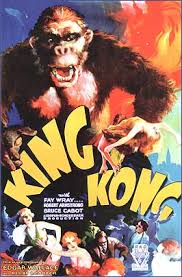
One of the original concepts surrounding the classic 1933 version of “King Kong” (BTW: -David O. Selznick himself reportedly came up with the “King” moniker to add to the Kong), was the big fight to be staged between the giant ape and a dinosaur (A Komodo Lizard, actually).

The Good Kong-holding Fay Wray

This is the takeaway. In Kong: Skull Island, if only we could fast forward from a tedious, plodding two hours of nothing to see the ape fight a giant lizard. There is no Fay Wray, no Empire State Building to distract or interest us. Just waiting for Godot…in this case, the big fight. There’s no need for Oscar caliber actors to waste their time and talent on this. My recommendation: Wait for the small screen and fast forward through to the fight scene.

6 Degrees of Film: Friday Flix


6 Degrees of Film

This week there are mixed reviews out for the new live-action Beauty and the Beast starring Emma Watson as Belle the Beauty and Dan Stevens as the Beast. The knock on this is that it’s a CGI version of the exact story that was made so well back in 1991. So now they are re-creating it with live actors and CGI. A remake that falls shot of the original, but isn’t really terrible…hmm, that is not an original story in Hollywood.

There are reviews for not only Beauty & the Beast, but also Kong: Skull Island and Get Out featured in the online 6 Degrees of film magazine. I have a short review of Kong: Skull Island set to preview this week, but in case the suspense is killing you, know that it is recommended to wait for the small screen where you may safely scroll through to the big fight scene.

On this St. Patrick’s Day, they always trot out the predictable Irish film list. It’s a fairly short list, but The Quiet Man, from 1953, is usually at the top of most of them.  And I agree, it’s a great film about Ireland, filmed on location and is a beautiful movie both in storyline and visuals. One of the missing points rarely mentioned is the strong female lead from Maureen O’Hara. She plays a young bride who is torn between her brother and loyalty to family and her love for her new husband, played by John Wayne. And even though she is literally dragged kicking and screaming to the final resolution, she is seen as a strong, funny, smart and never cowed Irish woman with a mind of her own. This was quite a feat for the time period when this film was made and Director John Ford brought out all the best elements of O’Hara’s character to create this unique early model of feminism and strength. There’s a review from Filmsite on 6 Degrees that details much of the background of the making of this film.

One other thought about St. Patrick’s movie madness for my Armchair Film Devotees-rent the film, “The Playboys” with Aidan Quinn, Albert Finney, and a young and beautiful Robin Wright. Made in 1992, the film is a romantic drama surrounding a group of touring actors who descend on a quiet Irish village and disrupt their normally placid lives. This is one to add to the usual list of Irish must-see films to break out on St. Patrick’s Day.

From the Past: The Origin stories-a term of late for back stories that are fleshed out and made into feature films. Turner Classic is showing some of the great ones through the month of March. The term “to Gaslight someone” or to cloud someone’s vision of reality is taken from the film, Gaslight starring Ingrid Bergman and Charles Boyer. Directed by George Cukor, it’s still a classic tale.

Frankenstein & The Mummy, both with Boris Karloff, are shown this month. The original vampire story, Nosferatu, a silent film directed by the legendary F. W. Murnau, is shown. The Cabinet of Dr. Caligari was remade recently by Martin Scorsese and starred Leo DiCaprio (Shutter Island).

Humphrey Bogart became a film star, a gangster, after starring in the play, “The Petrified Forest” and then the film version with Leslie Howard, who declared he wouldn’t make the film without Bogart. Bogey was so grateful he named his daughter Leslie, after his friend. And years later, after laboring for many years pigeon-holed as a tough guy, Bogart got his big break in a leading man role starring in Casablanca, in 1942, with Ingrid Bergman.

The original Pink Panther film, that launched so many terrible sequels and a few funny ones, starred not only Peter Sellers but also David Niven, and was directed by Blake Edwards. King Kong was made in 1933 and made a star of Fay Wray. It is still probably the best version of the story.

Bonnie & Clyde was a huge hit for Warren Beatty and Faye Dunaway, and it also made the career of the noted film critic Pauline Kael, who loved the film and was hired by the New Yorker during this time period. Kael was ascending as a critic at the same time as the New York Times fired their long-time movie critic Bosley Crowther, who hated the film, and had vehemently panned it. Bonnie and Clyde was considered hip, and a product of the new age of film makers coming into their own in the sixties. Violence and sex were still taboo subjects for the mass audience, and Director Arthur Penn’s edgy production was considered cutting edge for its day.

Finally in March for TCM, there’s two films that routinely make the top ten lists for film critics- The Wizard of Oz from 1939, and 2001: A Space Odyssey, made in 1968. These two are definitely on my personal list.

There’s a biography in 6 Degrees magazine paying tribute again to the TCM host Robert Osborne, who died this past month. Some film legends and critics are irreplaceable. Robert Osborne, Pauline Kael, and Roger Ebert all fall into this category. The documentary about Roger Ebert,Life Itself”, is featured in an article on Ebert.com that we highlight in 6 Degrees.

Another exciting feature on the Ebert site is the Women Writers Week, which premieres during the last week of March where they will be showcasing the work of their team of women writers and critics. As mentioned, Pauline Kael was one of the pioneers in film criticism for decades, and her voice, along with Ebert’s, is sorely missed. At a time when more and more publications and news organizations are ditching their staff, we need to focus and promote the great work done by both men and women who write for blogs, online movie sites and other publications where at times, they are paid little or nothing to continue to build up the craft of film criticism and to speak out and promote the arts.

Shout out to my good friend and colleague: Professor Futon Spoonin-who curates the wonderful Flipboard mag: Film 101: Classic Cinema to Celluloid…. Prof: I tried to write to you and couldn’t get thru the maze of Flipboard tech-so here it goes….I plead guilty to the charge and simply add that the nature of the beast: Content Curators-means we are always “ripping off” other people’s content! I think even the New York Times conceded they cannot review all of the films out there…so therefore, we must find great and informative content from all sources available.

This week, on St. Patrick’s Day, wishing everyone the best and hoping that the road will rise to meet you and that you find yourself in heaven, one half hour before the Devil knows you’re Dead!-See you at the movies-ML

6 Degrees: Friday Flix


6 Degrees of Film

This week, there’s still some controversy about the Oscars show that
somehow managed to crash land the ending of a perfectly decent show. And then we found out that the ratings were abysmal, so perhaps it’s better to just go back to the drawing board and be glad more people didn’t see the fiasco at the end of the evening! And on a sad note, the beloved figure for movie buffs, Robert Osborne, a man who was the urbane and dapper host of Turner Classic Movies for many years, died recently. He will be missed. Here’s some of what’s happening atthe movies, found in the magazine-Six Degrees of Film online:

The Upcoming Dates for Festivals: Noir City: Will be held March 24
to April 2 in Hollywood- Two of the best Noirs featured: This Gun for
Hire & Ministry of Fear.

For the Armchair Film Fest: The Annual TCM Classic Film Festival:
April 6 to April 9th: Make ‘Em Laugh: Comedy in the Movies: Born
Yesterday, The Graduate; High Anxiety, Postcards from the Edge, What’s
Up, Doc? are just a few of the classic comedies featured.

Books on Film: The Way Hollywood Tells It: Story and Style in Modern Movies-Hollywood welcomes innovation, but it also controls it” is a quote from book author, David Bordwell. He writes about the fact that, although the times we are living in are extremely disruptive, the film industry has actually encouraged the Hollywood machine to remain fairly consistent in terms of the style and the production techniques used in film from the early years. Bordwell argues that the Hollywood  model of mass market theatrical filmmaking is continuing with traditions that emerged as early as 1917. The norms of the actual process of filmmaking have remained fairly stable, as the mores and styles have changed through the years. In the book I wrote in 2013, 6 Degrees of Film, many of these same ideas parallel those of Bordwell’s The Way Hollywood Tells It. The films of the modern era are very much in league with the styles and filmmaking techniques that emerged in the early classics and during the Golden Age of Cinema.

Robert Osborne: Goodbye to a genuine Good Guy. Osborne had written the definitive history of the Oscars, and was once an actor himself. But his legacy is one that made him a beloved fixture at Turner Classic Movies, where he introduced feature films for decades.

Recommended: A great piece in The Hollywood Reporter has been written on the origins of how the original King Kong came into being. It’s called, “Origin of ‘Kong’: The Unbelieveable True Backstory of Hollywood’s Favorite Giant Ape“, and it’s centered around a real life explorer and filmmaker named Merian C. Cooper, who ended up at RKO with the legendary David O. Selznick. Selznick came up with the name, King Kong, by the way.

Of Note: There’s a piece on Dr. Strangelove, one of our favorite films. At this period in our history, Strangelove seems strangely prescient suddenly. There’s more on the continuing Oscar drama surrounding “”envelope-gate”. And coming soon to the 16th Annual Tribeca Film Festival in New York, The Godfather cast members will reunite. That should be worth the wait.

What Critics are Saying About: I don’t feel at Home in this World Anymore- has been given glowing reviews by critics. The unusual choice of the worst Best Picture “Snubs” from the past two decades is another list that is interesting. There are reviews for all 9 of the Best Picture nominees for 2017 found in our magazine. An interesting, but a bit in the weeds piece, again from David Bordwell, on the early history of Cinema, is one where he explains the static camera style of the early days of cinematography, the “tableau” style. The issue surrounding this is how the techniques of storytelling developed in films in the early period-before 1920, when films were still silent. Bordwell explores the style in detail in this article from his site.

Reviews for: Get Out has been getting positive reviews; Kong: Skull Island has had many good reviews, but there are some mixed opinions on this one; Beauty and the Beast has debuted with favorable reviews; Moonlight, the best picture winner (eventually), has also garnered mostly favorable reviews. The Ottoman Lieutenant, although praised for its visuals, has been garnering poor or lukewarm reviews owing primarily to a weak script. Logan has been garnering good reviews. And finally, there’s a list in our magazine of the best Vampire movies of all time. If you’re a fan, check it out.

Best of the Web: Check out these sites on the web. Some of the best articles are found on The Hollywood Reporter, NPR (National Public Radio), the L.A. Times and Davidbordwell.net.

One of the titles that caught my eye was “Films for Intelligent Audiences“. Of course, readers, you are all intelligent, and although I don’t agree with many of the films listed, the concept is a good one. Hollywood and filmmakers in general need to make MORE films for Intelligent Audiences. Some of the films that I did agree about that were on this list include Inception and The Big Short, Fight Club, Prestige, The Matrix, GoneGirl, and Memento. The idea is that we should promote and applaud more films that make us think and take us out of ourselves by challenging our intellect. These are the films that will be remembered a generation from now.

Here’s to the films that challenge us. See you at the movies!-ML

6 Degrees: Oscar News

Bob hope oscars


Oscar Season is here. This year, the nominees are: (Should I be like Letterman’s old line, “Ah, who cares…?”) But no, there are some good solid films on the list for 2017.   Some good films were not mentioned, which is always the case. My favorite films and actors are never the ones that actually get the statue. It seems that politics even rears its ugly head in Hollywood. Shocking!

Here’s the List of Nominees:  La La Land; Moonlight; Hell or High Water; Hacksaw Ridge; Hidden Figures; Manchester by the Sea; Fences; Lion & Arrival.

From the past winners of Best Picture in the 21st Century, Slumdog Millionaire, No Country for Old Men .and perhaps A Beautiful Mind are probably the three standout films that have won the Oscar. But the most relevant films for the future of cinema are not the Oscar winners. Why? Because the Academy members don’t take into account the actual cinematic appeal of a film in any kind of intellectual capacity. If so, they would never have turned their Oscar ceremony into the mostly boring and tepid, dull as dishwater affair that it has become of late.

Another big controversy is #OscarsoWhite. This year, they’ve done a bit better about representing the population as it exists today, but there remains within Hollywood the same makeup of Old, White, Rich men who are running the show. And that has not changed.

Oscar Predictions abound in my weekly magazine of 6 Degrees of Film. The runaway favorite is La La Land, which has a rating of Wait for the small screen. Fences would get the See it at the Movies nod in this pack, as well as Arrival & LionManchester by the Sea would be a miss. One of the things I’ve argued for is to let the foreign films compete for Best Picture. Elle should be competing in Best Picture, along with others. We talk of living in a Global Village, but this is something that is still part of the politics of Oscar… We have a review of Elle in the 6 Degrees magazine also. Here’s the link: 6 Degrees of Film

*What Critics are saying about…..  Film reviews for all the Oscar nominees are on 6 Degrees.   And there’s an interesting piece, in keeping with my original premise,  about how much it costs to campaign to win an Oscar, or an Oscar nomination. Don’t let anyone fool you that this is high art-this is politics 101. There is a critics list of Best of 2016, if anyone is interested in keeping track. I’m always quite skeptical of finding even 10 films that will make the cut, but some years are better than others.

We have pieces from different critics who list their favorite past Best Picture winners, ranging from The Sting to Titanic and Gladiator. One of my favorite articles is from The Guardian, about the reasons that La La Land shouldn’t be considered a great film, even if it wins the coveted title of Best Picture. For all the reasons I’ve laid out in these articles, I agree. Some of the documentaries and short works have been the best parts of the Oscars in years past. That may be the case this year.

Reviews for I Don’t feel at Home in this world anymore, Fences, Patriots Day, the horror film Get Out, and the 1997 film, Jackie Brown are featured.  Last week we featured reviews for The Space Between Us; The Great Wall with Matt Damon; John Wick: Chapter 2; The Human Surge; The Lego Batman Movie; and the Bogart classic: Beat the Devil from director John Huston

The Best of the Web: I recommend going to the website of Ebert.com and Film
Comment for top film reviews (other than 6 Degrees, of course!)  These two top sites are usually consistent. Others I like on a weekly basis are The McGuffin, Film School Rejects and Rolling Stone, plus  Esquire. NPR and the New York Times, as well as the
Chicago Sun and the LA Times newspapers, which still have consistently solid
reviews for films and all things cinema.

Recommended Viewing: The list from the Tampa Bay Times has Fences &  Hidden Figures. Definitely see Arrival if you haven’t seen it already.

* OF NOTE: The next time Casablanca is playing at an art house near you, you should see it on the big screen. There is a piece this week on His Girl Friday with Cary Grant and Rosalind Russell. These are the Black & White classics that need to be seen at some point in everyone’s life. Look for the part in His Girl Friday, as the dialogue races by at lightning speed, where Cary Grant makes a tongue-in-cheek remark about his real name, Archie Leach.

There’s also a piece about one of my favorite films from the Australian director, Peter Weir: “Picnic at Hanging Rock” If you haven’t seen it, put it on your list to DVR. Another Aussie, the Oscar winning director Ridley Scott’s best movies are ranked also. Kubrick’s The Shining is also reviewed. I’ve read the book and seen the film many times, and they are two different animals. There’s an interesting piece in the magazine that will lay out the reasons why Stephen King still hates the Kubrick version. I recommend reading the book and seeing the film.

The best arguments for Black & White Films: Most of the great Film Noir genre, plus Hitchcock, Laurel & Hardy, and the Marx Brothers are all best experienced in their original black & white format. There’s a homage to the Marx Brothers in our magazine. If you’ve never seen “Duck Soup“put it on your list.

The Armchair Film Fest: For the month of February, the Turner Classic crew
has mixed it up by simply going through the alphabet with Best Picture
nominees from the past.  Listed here are a few of the best to tape:
Don’t worry about missing them, TCM usually repeats most of these at
some point throughout the year:

The Music Box from Laurel & Hardy;
The Music Man; Ninotchka; North by Northwest; The Nun’s Story; The
Outlaw Josey Wales; Papillon; The Philadelphia Story; The Pink Panther; A Place in the
Sun; The Quiet Man; Rear Window; Rebel without a Cause; Road to
Morocco; Roman Holiday; A Room with a View; The Seven Per-Cent
Solution; Shall We Dance; She Wore a Yellow Ribbon; Singin’ in the
Rain; Some Like it Hot; Spartacus; The Spirit of St. Louis; Strangers
on a Train; The Sundowners; The Tender Trap; The Thin Man; The Three
Musketeers; To Be or Not to Be; Top Hat; 12 Angry Men

**Film as Art: There’s a great piece about Film Posters seen as pieces
of Pop Art in the tradition of Andy Warhol. In my book, there’s a
chapter that talks about the reasons that the early days of film set
the tone for the way that film is viewed and treated to this day. It’s
never been recognized as an art form as it should be. This is a great
way to look at the overall themes that are laid out in modern
film-making.

There’s so much going on now, the Oscar News is a two-parter. Stay tuned! See you at the movies-ML


Gene Wilder in The Frisco Kid and other Films that Got Away

the-frisco-kid

Gene Wilder was unique in his temperament and physical appearance. By that I mean he was uniquely suited for the role of his life in Young Frankenstein and equally up to the task for his classic performances in The Producers and Blazing Saddles.

Screening this month on Turner Classic are some Gene Wilder gems. Some of these are on my short list of Films that Got Away. One is the 1970’s film, Start the Revolution without me. Wilder began to perfect his controlled manic style of comedy in this piece with Donald Sutherland. It’s a spoof on the classic tale of The Corsican Brothers, with the two brothers played by Wilder & Sutherland- one set of royal birth and the other of peasant extraction, and the ensuing comedy in the dual roles is comic fodder for both Wilder and Sutherland.

The Frisco Kid was a one-off type of comedy where you might “get it” or perhaps not. But there were plenty of gems for the taking in this Western, where Wilder plays a Rabbi traveling West with his cowboy companion, played by Harrison Ford. A couple of moments are priceless: Wilder as the Jewish Rabbi is trying to eat breakfast with monks who have taken a vow of silence. This proves to be nearly impossible for the amiable Jewish persona that was Wilder. And when the pair find themselves in an Indian camp, Wilder is at his comic best when he is describing how the Jewish people celebrate in similar fashion to the Indians. “Watch that Lady! I think that lady is a Jewish Indian!“… Priceless

Speaking of cult classics, Turner Classic Movies is also showing the ever-popular Strange Brew this week. Oddly enough, this 1983 film was loosely (very loosely) based on the story of Hamlet-complete with ghosts and the Elsinore tableau thrown in for good measure. The two Second City alumni, Dave Thomas and Rick Moranis of Ghostbusters fame, are perfectly cast as two hapless Laurel & Hardy-esque screwballs who are trying to make the connections and discover the secrets of the mysterious brewery. A Canadian classic, this is not for everyone, but some of the funniest bits occur when the two are seemingly just playing it loose with the off-the-cuff remarks that have been a staple for years in our household.

Start the Revolution without me, Strange Brew, and The Frisco Kid are all playing this week on Turner Classic Movies. Check your listings for the times, as most are middle of the night showings.

Capsule Review: Ben-Hur-Rated JPB for Just Plain Boring

Ben Hur 2016

This film is Rated JPB = Just Plain Boring. How could it be this boring, I wondered? The plot of Ben Hur was well-known, and the actors were for the most part, unknowns-it turns out for good reason. The one known actor, Morgan Freeman, did the walk-through of his life to pick up a paycheck. He put more emotion into the commercials I’ve seen him in than what was on display in this film.

The story line leads Judah Ben-Hur to a slave galley and then back to his hometown of Jerusalem, where he miraculously feels compelled to produce this special sword which was given to him by his nemesis, Messala, who is also his adopted brother. The problem with this is that Judah has been a slave for the past five years, with no sign of that sword tucked away. One cannot help but wonder if these small details escaped the notice of the writers and producers of this production?

The problem, I would put forth, is mostly with the shoddy writing. But it doesn’t stop there. Not only is the screenplay badly written, but the film is also sloppily edited and poorly acted to boot. Even the CGI (Computer Graphic Imaging) and Special Effects during the Climactic Chariot Race come across as looking stilted and phony.

In short, give this updated version of Ben-Hur a miss and rent the fifties classic with Charlton Heston and Stephen Boyd. That one may be corny but it’s imminently more watchable than this boring thing.

Summer Film Series at Tampa Theatre: The ones to see at the movies!

Tampa Theatre
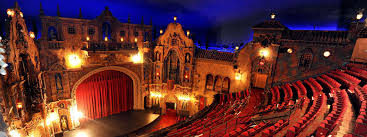
Interior of Tampa Theatre

Tampa Theatre has released their Summer Film Series. I was a bit disappointed with the selections this year, but there are a few notables coming… These are the ones I would recommend as “must see” theatre viewing for those who’ve never seen them on the big screen.
Forbidden Planet is coming in June. A campy science fiction classic,  this one was made in the heyday of fifties Golden Age studio films. The plot loosely follows the story of Shakespeare’s The Tempest, with Walter Pidgeon playing the Prospero part (Dr. Morbius) and his daughter, played by the ingénue Anne Francis. Leslie Nielson is in a perfectly straight role pre-Airplane, starring as the astronaut-hero who is out to stop the madness and woo the girl. Robby the Robot is the memorable sci-fi staple, and the movie is filmed in gorgeous fifties Cinemascope color.
Notorious is one of Hitchcock’s best films. Cary Grant and Ingrid Bergman give memorable performances in this classic thriller. One of the greatest lines in film history is delivered by Madame Sebastian, the cold and calculating mother of villainous Claude Rains. “You are protected by the enormity of your stupidity” is the classic line. Never has a put-down been delivered with such precision and flair.
The Wizard of Oz is a film that everyone should see on the big screen. There has never been anything to match it in art and simplistic style. It still easily makes the top ten lists of most of the film critics worth their salt.
Casablanca is another film that stays with you. It’s a classic B-movie, with another memorable performance from Ingrid Bergman. But this film belongs to Bogart. It’s his signature role and he achieves iconic film status in the part of the loner Rick, who hides his secrets and his sentiments from the world in his café in Casablanca.
These films were made for big-screen viewing, and if you have the time, should be seen in the theatre. It’s definitely my opinion, (which is shared by many veteran critics), that most of the films made in the modern era can’t touch these cinema classics.
Here’s the schedule for these classics at Tampa Theatre. I have to note that this is not the complete line up, but rather the line up from 6 Degrees of the films worth seeing at the movies! Drop me a line to give me your line up of films that should be seen in the theatre. I’ve got a list & definitely have opinions as to which films make the cut.

 Sunday June 26: Forbidden Planet review
  Sunday July 10: Notorious review
  Sunday Sep 4: Wizard of Oz
  Casablanca Sep 18th: Casablanca

About Robert Ryan

Robert Ryan

6 Degrees can’t let the month pass without a word on Robert Ryan. One of my favorite actors has been featured all month on Turner Classic Movies. Robert Ryan was a workhorse, a character actor, a film noir star, and at times a B movie actor with a ruggedly handsome profile that rivaled his co-star and friend, John Wayne. John Wayne was an icon, but Ryan was the stalwart trooper who worked in so many genres and cut through generations of rapidly changing film audiences with differing tastes and mores.

He was the down and out boxer in the film noir classic The Set Up, directed by The Sound of Music director Robert Wise. He was the love interest in one of Marilyn Monroe’s early hits, Clash by Night. He starred with John Wayne in. The Flying Leathernecks, a bad-B, and with Pat O’Brien in Marine Raiders, which is highlighted with the singing of the venerable Marine fight song, Bless Them All.

Ryan was a Marine in real life and he used that tough-guy persona in his performances. Moving from the film noir period, he went on to star in movies like Lonelyhearts, with Montgomery Clift, and the unique version of Erskine Caldwell’s novel, God’s Little Acre. He was the heavy in many films, most notably with Spencer Tracy in Bad Day at Black Rock and Robert Mitchum in Crossfire.

In the sixties, he was in the classic The Wild Bunch, as well as the war films, The Longest Day and The Battle of the Bulge. Ryan was friends with John Wayne, but his politics came down on the other side of the fence. He was an ardent liberal who fought for Civil Rights.

One of the lighter stories surrounding Ryan’s and John Wayne’s friendship was regarding the time Robert Ryan went on a radio program and condemned the John Birch Society. When he returned home, there was a man with a shotgun standing in his driveway. As he pulled in, he realized it was his old friend, Duke Wayne, who had dropped by just to insure that there would be no trouble for Ryan!