Authors Note:6 Degrees of Film: The Future of Film in the Global Village is soon celebrating three years of print! Still available on Amazon.com- here’s an excerpt from the book about the authorship of the film Casablanca-where a hodge-podge of ideas and egos resulted in one of the most iconic films ever made!
Casablanca
Script authorship of Casablanca also was disputed, only this time it was writer versus writer who vied for the lone credits. Someone said about this B movie classic, “One of the charms of Casablanca lies in its awkwardness. Not only do the politics and romance sit side by side, but that there are two or three contrasting manners of style. There’s the comic-cynical, the soppy-elegiac, and the solemn-propagandist … [It’s] not so much a story as a stringing together of great moments to remember. How, and in what order we remember them is left to us, and this is part of why we like the film so much.”
Four authors claim to be the true author of Casablanca. There is Howard Koch, who claimed he was brought in “to shape the film’s politics”; the brothers Julius and Philip Epstein, who wrote as a team; and Casey Robinson. Robinson said that he had the idea for a film “out of a ‘lousy play’ called Everybody Comes to Rick’s.”
According to Koch, the story was, “So they start shooting and Hal comes to me and says, ‘We need some help. There’s a little trouble.’ Bogart had said, ‘I won’t shoot this __________’; and he had used a very nasty word and gone home.”
Ingrid Bergman on the Casablanca shoot said this: “Every day, we were shooting off the cuff; every day they were handing out dialogue, and we were trying to make sense of it. No one knew where the picture was going, and no one knew how it was going to end … We said, “Well, who are we?” … and Curtiz would say, “We’re not quite sure … It was ridiculous. Just awful … Bogart didn’t know what was going on, so he retired to his trailer … I wanted to know who I was supposed to be in love with, Paul Henreid or Humphrey Bogart?”
The Epstein brothers had gone on to another project for Frank Capra and were not available, so they sent the script in from Washington page by page. Two scripts were floating around, one from the Epsteins and one from Howard Koch. Robinson was brought in to add the love-interest angle. It was apparent that “none of them knew he was working on a movie that would turn out to be something to boast about; all the signs were that Casablanca would be a stinker.”
The facts are this: The film used some lines from the play, Everybody Comes to Rick’s, including the line “Then play it, Sam” and the song As Time Goes By. The irony was that Julius Epstein was not proud of his part in scripting Casablanca. He called it “slick shit,” and said, “Casablanca is one of my least favorite pictures. I’m tired of talking about it after thirty years. I can explain its success only by the Bogey cult … I can recognize that the picture is entertaining and that people love it. The whole thing was shot in the back lot. Furthermore, there were never any such things as letters of transit around which the entire plot revolved. The movie is completely phony.”
In Kong: Skull Island, the denouement is the whole deal. If you could condense it, or fast forward through to the end-The Ape’s the Thing. By that, I mean that the characters, the back story, all prove to be extremely uninteresting and poorly fleshed out in this latest version of King Kong.
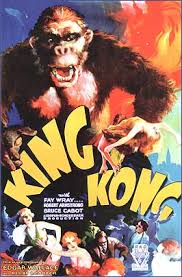
One of the original concepts surrounding the classic 1933 version of “King Kong” (BTW: -David O. Selznick himself reportedly came up with the “King” moniker to add to the Kong), was the big fight to be staged between the giant ape and a dinosaur (A Komodo Lizard, actually).
The Good Kong-holding Fay Wray
This is the takeaway. In Kong: Skull Island, if only we could fast forward from a tedious, plodding two hours of nothing to see the ape fight a giant lizard. There is no Fay Wray, no Empire State Building to distract or interest us. Just waiting for Godot…in this case, the big fight. There’s no need for Oscar caliber actors to waste their time and talent on this. My recommendation: Wait for the small screen and fast forward through to the fight scene.
This week there are mixed reviews out for the new live-action Beauty and the Beast starring Emma Watson as Belle the Beauty and Dan Stevens as the Beast. The knock on this is that it’s a CGI version of the exact story that was made so well back in 1991. So now they are re-creating it with live actors and CGI. A remake that falls shot of the original, but isn’t really terrible…hmm, that is not an original story in Hollywood.
There are reviews for not only Beauty & the Beast, but also Kong: Skull Island and Get Out featured in the online 6 Degrees of film magazine. I have a short review of Kong: Skull Island set to preview this week, but in case the suspense is killing you, know that it is recommended to wait for the small screen where you may safely scroll through to the big fight scene.
On this St. Patrick’s Day, they always trot out the predictable Irish film list. It’s a fairly short list, but The Quiet Man, from 1953, is usually at the top of most of them. And I agree, it’s a great film about Ireland, filmed on location and is a beautiful movie both in storyline and visuals. One of the missing points rarely mentioned is the strong female lead from Maureen O’Hara. She plays a young bride who is torn between her brother and loyalty to family and her love for her new husband, played by John Wayne. And even though she is literally dragged kicking and screaming to the final resolution, she is seen as a strong, funny, smart and never cowed Irish woman with a mind of her own. This was quite a feat for the time period when this film was made and Director John Ford brought out all the best elements of O’Hara’s character to create this unique early model of feminism and strength. There’s a review from Filmsite on 6 Degrees that details much of the background of the making of this film.
One other thought about St. Patrick’s movie madness for my Armchair Film Devotees-rent the film, “The Playboys” with Aidan Quinn, Albert Finney, and a young and beautiful Robin Wright. Made in 1992, the film is a romantic drama surrounding a group of touring actors who descend on a quiet Irish village and disrupt their normally placid lives. This is one to add to the usual list of Irish must-see films to break out on St. Patrick’s Day.
From the Past:The Origin stories-a term of late for back stories that are fleshed out and made into feature films. Turner Classic is showing some of the great ones through the month of March. The term “to Gaslight someone” or to cloud someone’s vision of reality is taken from the film, Gaslight starring Ingrid Bergman and Charles Boyer. Directed by George Cukor, it’s still a classic tale.
Frankenstein & The Mummy, both with Boris Karloff, are shown this month. The original vampire story, Nosferatu, a silent film directed by the legendary F. W. Murnau, is shown. The Cabinet of Dr. Caligari was remade recently by Martin Scorsese and starred Leo DiCaprio (Shutter Island).
Humphrey Bogart became a film star, a gangster, after starring in the play, “The Petrified Forest” and then the film version with Leslie Howard, who declared he wouldn’t make the film without Bogart. Bogey was so grateful he named his daughter Leslie, after his friend. And years later, after laboring for many years pigeon-holed as a tough guy, Bogart got his big break in a leading man role starring in Casablanca, in 1942, with Ingrid Bergman.
The original Pink Panther film, that launched so many terrible sequels and a few funny ones, starred not only Peter Sellers but also David Niven, and was directed by Blake Edwards. King Kong was made in 1933 and made a star of FayWray. It is still probably the best version of the story.
Bonnie & Clyde was a huge hit for Warren Beatty and Faye Dunaway, and it also made the career of the noted film critic Pauline Kael, who loved the film and was hired by the New Yorker during this time period. Kael was ascending as a critic at the same time as the New York Times fired their long-time movie critic Bosley Crowther, who hated the film, and had vehemently panned it. Bonnie and Clyde was considered hip, and a product of the new age of film makers coming into their own in the sixties. Violence and sex were still taboo subjects for the mass audience, and Director Arthur Penn’s edgy production was considered cutting edge for its day.
Finally in March for TCM, there’s two films that routinely make the top ten lists for film critics- The Wizard of Oz from 1939, and 2001: A Space Odyssey, made in1968. These two are definitely on my personal list.
There’s a biography in 6 Degrees magazine paying tribute again to the TCM host Robert Osborne, who died this past month. Some film legends and critics are irreplaceable. Robert Osborne, Pauline Kael, and Roger Ebert all fall into this category. The documentary about Roger Ebert, “Life Itself”, is featured in an article on Ebert.com that we highlight in 6 Degrees.
Another exciting feature on the Ebert site is the Women Writers Week, which premieres during the last week of March where they will be showcasing the work of their team of women writers and critics. As mentioned, Pauline Kael was one of the pioneers in film criticism for decades, and her voice, along with Ebert’s, is sorely missed. At a time when more and more publications and news organizations are ditching their staff, we need to focus and promote the great work done by both men and women who write for blogs, online movie sites and other publications where at times, they are paid little or nothing to continue to build up the craft of film criticism and to speak out and promote the arts.
Shout out to my good friend and colleague: Professor Futon Spoonin-who curates the wonderful Flipboard mag: Film 101: Classic Cinema toCelluloid…. Prof: I tried to write to you and couldn’t get thru the maze of Flipboard tech-so here it goes….I plead guilty to the charge and simply add that the nature of the beast: Content Curators-means we are always “ripping off” other people’s content! I think even the New York Times conceded they cannot review all of the films out there…so therefore, we must find great and informative content from all sources available.
This week, on St. Patrick’s Day, wishing everyone the best and hoping that the road will rise to meet you and that you find yourself in heaven, one half hour before the Devil knows you’re Dead!-See you at the movies-ML
This week, there’s still some controversy about the Oscars show that
somehow managed to crash land the ending of a perfectly decent show. And then we found out that the ratings were abysmal, so perhaps it’s better to just go back to the drawing board and be glad more people didn’t see the fiasco at the end of the evening! And on a sad note, the beloved figure for movie buffs, Robert Osborne, a man who was the urbane and dapper host of Turner Classic Movies for many years, died recently. He will be missed. Here’s some of what’s happening atthe movies, found in the magazine-Six Degrees of Film online:
The Upcoming Dates for Festivals: Noir City: Will be held March 24
to April 2 in Hollywood- Two of the best Noirs featured: This Gun for Hire & Ministry of Fear.
For the Armchair Film Fest: The Annual TCM Classic Film Festival: April 6 to April 9th:Make ‘Em Laugh: Comedy in the Movies: Born Yesterday, The Graduate; High Anxiety, Postcards from the Edge, What’s Up, Doc? are just a few of the classic comedies featured.
Books on Film:The Way Hollywood Tells It: Story and Style in Modern Movies- “Hollywood welcomes innovation, but it also controls it” is a quote from book author, David Bordwell. He writes about the fact that, although the times we are living in are extremely disruptive, the film industry has actually encouraged the Hollywood machine to remain fairly consistent in terms of the style and the production techniques used in film from the early years. Bordwell argues that the Hollywood model of mass market theatrical filmmaking is continuing with traditions that emerged as early as 1917. The norms of the actual process of filmmaking have remained fairly stable, as the mores and styles have changed through the years. In the book I wrote in 2013, 6 Degrees of Film, many of these same ideas parallel those of Bordwell’s The Way Hollywood Tells It. The films of the modern era are very much in league with the styles and filmmaking techniques that emerged in the early classics and during the Golden Age of Cinema.
Robert Osborne: Goodbye to a genuine Good Guy. Osborne had written the definitive history of the Oscars, and was once an actor himself. But his legacy is one that made him a beloved fixture at Turner Classic Movies, where he introduced feature films for decades.
Recommended: A great piece in The Hollywood Reporter has been written on the origins of how the original King Kong came into being. It’s called, “Origin of ‘Kong’: The Unbelieveable True Backstory of Hollywood’s Favorite Giant Ape“, and it’s centered around a real life explorer and filmmaker named Merian C. Cooper, who ended up at RKO with the legendary David O. Selznick. Selznick came up with the name, King Kong, by the way.
Of Note: There’s a piece on Dr. Strangelove, one of our favorite films. At this period in our history, Strangelove seems strangely prescient suddenly. There’s more on the continuing Oscar drama surrounding “”envelope-gate”. And coming soon to the 16th Annual Tribeca Film Festival in New York, The Godfather cast members will reunite. That should be worth the wait.
What Critics are Saying About: I don’t feel at Home in this World Anymore- has been given glowing reviews by critics. The unusual choice of the worst Best Picture “Snubs” from the past two decades is another list that is interesting. There are reviews for all 9 of the Best Picture nominees for 2017 found in our magazine. An interesting, but a bit in the weeds piece, again from David Bordwell, on the early history of Cinema, is one where he explains the static camera style of the early days of cinematography, the “tableau” style. The issue surrounding this is how the techniques of storytelling developed in films in the early period-before 1920, when films were still silent. Bordwell explores the style in detail in this article from his site.
Reviews for:Get Out has been getting positive reviews; Kong: Skull Island has had many good reviews, but there are some mixed opinions on this one; Beauty and the Beast has debuted with favorable reviews; Moonlight, the best picture winner (eventually), has also garnered mostly favorable reviews. The Ottoman Lieutenant, although praised for its visuals, has been garnering poor or lukewarm reviews owing primarily to a weak script. Logan has been garnering good reviews. And finally, there’s a list in our magazine of the best Vampire movies of all time. If you’re a fan, check it out.
Best of the Web: Check out these sites on the web. Some of the best articles are found on The Hollywood Reporter,NPR (National Public Radio), the L.A. Times and Davidbordwell.net.
One of the titles that caught my eye was “Films for Intelligent Audiences“. Of course, readers, you are all intelligent, and although I don’t agree with many of the films listed, the concept is a good one. Hollywood and filmmakers in general need to make MORE films for Intelligent Audiences. Some of the films that I did agree about that were on this list include Inception and The Big Short, Fight Club, Prestige, The Matrix, GoneGirl, and Memento. The idea is that we should promote and applaud more films that make us think and take us out of ourselves by challenging our intellect. These are the films that will be remembered a generation from now.
Here’s to the films that challenge us. See you at the movies!-ML
After last night’s mix up at the Academy Awards for Best Picture, it illustrates the perfect metaphor for the type of arrested development mentality that has gone into the entire short-sighted thinking of the Academy virtually since its inception. There are so many chances for the group as a body to do the right thing and shake things up. But they continue to stumble their way into the future wearing blinkers.
To illustrate the point, here is a list of the winners for Best Picture from the past 17 years:
Gladiator- 2000; A Beautiful Mind-2001; Chicago-2002; The Lord of the Rings:The Return of the King-2003; Million Dollar Baby-2004; Crash-2005; The Departed-2006; No Country for Old Men-2007; Slumdog Millionaire-2008; The Hurt Locker-2009; The King’s Speech-2010; The Artist-2011; Argo-2012; 12 Years a Slave-2013; Birdman-2014; Spotlight-2015
And within that list, there are a few notable exceptions (a couple of years were skipped because they had such forgettable films). My list would include:
Gladiator: 2000; A Beautiful Mind; 2001- ?2002 who cares: Lost in Translation-2003; The Aviator: 2004; Capote 2005; The Departed-2006; No Country/Juno/There will be Blood- 2007: Slumdog Millionaire-2008; The Hurt Locker-2009; The Social Network-2010; The Artist/Moneyball-2011; 2012: Les Miz or Lincoln; 2013: Gravity/12 Years/Her; 2014: who cares?; 2015: Spotlight/The Big Short/The Revenant
Some of the years had more than one winner. I may simply see this year as a who cares? category. But the overarching theme of the Academy seems to be trying to pick the film with the least long term impact. Since Titanic, there haven’t been too many great films picked.
For films in the 21st Century, I would pick A Beautiful Mind, No Country for Old Men, There will be Blood, Slumdog Millionaire, The Hurt Locker, Lincoln, Gravity, 12 Years a Slave, Her, The Big Short, Moneyball & The Blind Side. as films that make a lasting impact from Hollywood.
One standout performer isn’t really an actor or actress. It’s the author, Michael Lewis. He has written three of the films in the past 15 years that have made an impact on our society. The Big Short, Moneyball and The Blind Side are all films made from his books. Spotlight, the winner last year, is an important film in this sense. We are now facing an era where journalistic integrity and truth are questioned from the highest echelons of our society. Therefore, the film that emphasizes seeking the truth at all costs is one that we should continue to promote. It tells us why we should care about journalists getting to the bottom of the story.
Lincoln, although a good and not a great film, was one that Spielberg has said was almost made for the small screen. That is the trend that continues, and perhaps there will be categories in the future for films released in venues other than traditional theaters. That is the wave of the future. There is a changing dynamic in Hollywood and globally, and the Academy is going to have to acknowledge it someday.
The films Inception and The Matrix gave us alternative visions of reality. We saw in Her a film about the very real challenges that isolation of the individual causes in our society. And Juno, about a teen pregnancy, spoke of the changing mores we face. It gave us a new voice as a screenwriter, Diablo Cody, a much needed voice for women. The Hurt Locker broke barriers as Best Director Oscar was given for the first time to a woman, Kathryn Bigelow. And when 12 Years a Slave won for Best Picture, it was an indication that the “Indians were finally fighting back”. Meaning that the concept of the brave white men and women who conquered the West and all of America was given to be a myth that needed to be deflated. There needs to be a new way to understand Hollywood and the concept of movie making in general.
Lost in Translation is a ground-breaking film, also speaking of isolation and giving voice to a different vision, one created by another female director, Sofia Coppola, daughter of Francis. The two films released in the same year, There will Be Blood and No Country for Old Men both dealt with violence and subjects where the film had no hero or anti-hero. The Departed and The Wolf of Wall Street also were nihilistic visions, where society is darkly honest, a black hole at times, and the reality is often frighteningly evil. This may be a commentary also of our times, and a way of pushing the audience to the brink of no return. Another commonality in these two latter films is the presence of a great American actor, Leonardo Di Caprio. Only a truly great actor could pull off the nihilistic and dark visions he has given us with any amount of credibility.
Of course, the sequels and serial films, the comic book genres, and all other mass media concepts for film-making still go unacknowledged by the Academy. They seem to be stuck in some time warp where Elizabeth Taylor and Clark Gable may somehow reappear, courtesy of CGI, and attempt a coup where all the trends and realities of the future are somehow set aside. This is the alternate reality that we see played out yearly with the Academy Awards show.
And although there were some attempts to acknowledge things like “diversity” and globalism, there is a real blinker-visioned reality to the types of awards given out still. Movies ABOUT movies still win a lot. The Artist and Birdman are self-congratulatory vehicles for the most part. But the Independent filmmakers, the ones honored at Sundance every year, are forging ahead and creating their own paths inHollywood. Why they don’t recognize this and somehow carve out a niche for them is part of the tunnel visioned, short-term thinking that has gone into the Hollywood mind-set for the past forty to fifty years.
It seemed fitting that Warren Beatty and Faye Dunaway committed the ultimate faux pas by shutting down the stage where usually trite and mundane speeches are trotted out to the sound of bored applause that is routinely bestowed on the lackluster winner of Best Picture. It may be the ultimate for the renegades who brought us “Bonnie and Clyde” in
the sixties. Perhaps its best to say that the films with the greatest
impact have to be seen and then understood even a decade out from their initial release. It’s the shock of the new that sometimes cannot be understood.
We still have great actors working to make movies. Di Caprio is our greatest American actor. Philip Seymour Hoffman was one of the greatest of our actors, now deceased. Michael Keaton has made a real comeback as a significant American actor in vital roles from The Founder to Birdman. Tom Hanks has done some good work in Captain Phillips and The Bridge of Spies, and some of his roles have been just mediocre. The call is out for actors who are still here. De Niro, Nicholson, Di Caprio, Tom Hardy, Benedict Cumberbatch and others working still, need to challenge themselves with roles that Michael Keaton and Denzel Washington have taken on of late. There are parts out there that will interest us and will live on as we look back and see what our society has become as we go further into the 21st Century.
I rarely agree with Joe Scarborough(from “Morning Joe”) on anything, but this morning I did.
The films of 2017 that are up for Oscars are, for the most part, films that would have been considered good, solid, “Indie”films and they wouldn’t have gotten as much press in other years. There are some years that have great films up for contention.
This is not one of those years….
The films that we remember, and the films that made the biggest impact on our society and our psyche have all been films that stay with us. It’s hard to know in the long term which films will be lasting ones, but there are plenty that we know as forgettable.
The biggest impact films from the past thirty years include the following: Films from before 2000 include:
Schindler’s List; Forrest Gump; Pulp Fiction; The Shawshank Redemption; Apollo 13; Braveheart; Fargo; Jerry Maguire; One of the biggest box office blockbusters was Titanic from 97…. The Full Monty was a term that entered the Lexicon. LA Confidential boasted perhaps one of the greatest ensemble cast ever assembled. Saving Private Ryan is iconic,as is The Matrix.: Most of these were up for Academy Awards, and a few won.
***
After 2000, the list includes Gosford Park-Robert Altman’s last film; Lost in Translation; The Aviator; Brokeback Mountain; Juno; Capote; Munich; The Departed; No Country & There will be Blood; Slumdog Millionaire ;Avatar; The Blind Side; Inglorious Basterds; Up; Inception; The Social Network; Moneyball; Les Miserables; Lincoln; Gravity; Her; The Wolf of Wall Street; The BIg Short; The Imitation Game; Bridge of Spies; Mad Max Fury Road & The Revenant;
These are all films that were nominated or have had some lasting impact on our society. as a whole. From the list of nominations, this year, perhaps Arrival & Fences reach that threshold.
As I have stated in the past, there should be new categories for films. Indie films, Classics, and they should drop the foreign film category and let them all compete for Best Picture. They have way too many films in the one category, and they should have some specific designations, as Best film adapted from source (plays, books) and Best Original Film; Best “Indie” Film, etc. A category for best new talent or Best Actress under 30; Best rising talent…whatever…to make it more interesting:
Or just the OldWhite Guy category-Best performance for the Bucket List Brigade…something like that. Because we all know that the way that the Academy has been run is much like the political parties in our country. There has been a stranglehold on power within the hierarchy of the studios and the Academy that actually picks the nominees,and that has limited the choices for a long time….
Tomorrow I’ll put out the list of films that have won Best Picture since 2000 vs. the list of my personal picks.Those two will never jive…
This World War II era Romantic Spy Thriller- about 2 agents who find love in the midst of chaos, is reminscent of films that were made in a different age. The couple meets in Casablanca-French Morocco, which does bring back obvious comparisons with the legendary Casablanca starring HumphreyBogart. The love scene between Pitt and Cotillard in the car during a sandstorm-reminiscent of another film-the Hitchcock thriller “To Catch a Thief”,also lends some nostalgia and adds to the romantic aura of this story. But the plot doesn’t play into the romantic elements, but instead relies more on the gritty and disjointed nature of war and the unique circumstances which bring the two lovers together.
The two spies work together to pull off a daring and dangerous assignment as a team, and fall in love in the interim. The action then moves to London, where they marry and try to live a seemingly normal life in the midst of war.
The film takes poetic license with the wartime dates and times surrounding the very real events happening in London during theWar.One bit of hokum is the scene where the heroine, played by Marion Cotillard, gives birth amid air attacks. It’s a bit over the top. We know the place is “fraught with danger”…but to have the girl in a shelled out building outside as she gives birth is overplaying your hand. Note: The Bombing of London-The Blitz-so named for Hitler’s lightning war (Blitzkrieg), ended by 1941.
Director Robert Zemeckis gives several nods to the Hitchcock-ian style of cinematography as he shows Pitt descending down a chaotic maze of stairs as the shot hovers above. All these at times interesting and occasionally irritating scenes don’t distract from the elements of this romantic thriller that manages to weave an engaging drama into what has become a rather stale series of films portraying the drama of the second World War.
This film is Recommended. See it at the movies, there are many scenes that the small screen just won’t do justice in watching. Some films are so gripping and moving that you need to see them on the big screen, but in this case, the combination of the beauty of the two screen stars combined with some artful cinematography make this one to watch at the movies.
Oscar Season is here. This year, the nominees are: (Should I be like Letterman’s old line, “Ah, who cares…?”) But no, there are some good solid films on the list for 2017. Some good films were not mentioned, which is always the case. My favorite films and actors are never the ones that actually get the statue. It seems that politics even rears its ugly head in Hollywood. Shocking!
Here’s the List of Nominees: La La Land; Moonlight; Hell or High Water; Hacksaw Ridge; Hidden Figures; Manchester by the Sea; Fences; Lion & Arrival.
From the past winners of Best Picture in the 21st Century, Slumdog Millionaire, No Country for Old Men .and perhaps A Beautiful Mind are probably the three standout films that have won the Oscar. But the most relevant films for the future of cinema are not the Oscar winners. Why? Because the Academy members don’t take into account the actual cinematic appeal of a film in any kind of intellectual capacity. If so, they would never have turned their Oscar ceremony into the mostly boring and tepid, dull as dishwater affair that it has become of late.
Another big controversy is #OscarsoWhite. This year, they’ve done a bit better about representing the population as it exists today, but there remains within Hollywood the same makeup of Old, White, Rich men who are running the show. And that has not changed.
Oscar Predictions abound in my weekly magazine of 6 Degrees of Film. The runaway favorite is La La Land, which has a rating of Wait for the small screen. Fences would get the See it at the Movies nod in this pack, as well as Arrival & Lion. Manchester by the Sea would be a miss. One of the things I’ve argued for is to let the foreign films compete for Best Picture. Elle should be competing in Best Picture, along with others. We talk of living in a Global Village, but this is something that is still part of the politics of Oscar… We have a review of Elle in the 6 Degrees magazine also. Here’s the link: 6 Degrees of Film
*What Critics are saying about….. Film reviews for all the Oscar nominees are on 6 Degrees. And there’s an interesting piece, in keeping with my original premise, about how much it costs to campaign to win an Oscar, or an Oscar nomination. Don’t let anyone fool you that this is high art-this is politics 101. There is a critics list of Best of 2016, if anyone is interested in keeping track. I’m always quite skeptical of finding even 10 films that will make the cut, but some years are better than others.
We have pieces from different critics who list their favorite past Best Picture winners, ranging from The Sting to Titanic and Gladiator. One of my favorite articles is from The Guardian, about the reasons that La La Land shouldn’t be considered a great film, even if it wins the coveted title of Best Picture. For all the reasons I’ve laid out in these articles, I agree. Some of the documentaries and short works have been the best parts of the Oscars in years past. That may be the case this year.
Reviews for I Don’t feel at Home in this world anymore,Fences, Patriots Day, the horror film Get Out, and the 1997 film, Jackie Brown are featured. Last week we featured reviews for The Space Between Us; The Great Wall with Matt Damon; John Wick: Chapter 2; The Human Surge; The Lego Batman Movie; and the Bogart classic: Beat the Devil from director John Huston
The Best of the Web: I recommend going to the website of Ebert.com and Film
Comment for top film reviews (other than 6 Degrees, of course!) These two top sites are usually consistent. Others I like on a weekly basis are The McGuffin, Film School Rejects and Rolling Stone, plus Esquire. NPR and the New York Times, as well as the
Chicago Sun and the LA Times newspapers, which still have consistently solid
reviews for films and all things cinema.
Recommended Viewing: The list from the Tampa Bay Times has Fences & Hidden Figures. Definitely see Arrival if you haven’t seen it already.
* OF NOTE: The next time Casablanca is playing at an art house near you, you should see it on the big screen. There is a piece this week on His Girl Friday with Cary Grant and Rosalind Russell. These are the Black & White classics that need to be seen at some point in everyone’s life. Look for the part in His Girl Friday, as the dialogue races by at lightning speed, where Cary Grant makes a tongue-in-cheek remark about his real name, Archie Leach.
There’s also a piece about one of my favorite films from the Australian director, Peter Weir: “Picnic at Hanging Rock” If you haven’t seen it, put it on your list to DVR. Another Aussie, the Oscar winning director Ridley Scott’s best movies are ranked also. Kubrick’s The Shining is also reviewed. I’ve read the book and seen the film many times, and they are two different animals. There’s an interesting piece in the magazine that will lay out the reasons why Stephen King still hates the Kubrick version. I recommend reading the book and seeing the film.
The best arguments for Black & White Films: Most of the great Film Noir genre, plus Hitchcock, Laurel & Hardy, and the Marx Brothers are all best experienced in their original black & white format. There’s a homage to the Marx Brothers in our magazine. If you’ve never seen “Duck Soup“put it on your list.
The Armchair Film Fest: For the month of February, the Turner Classic crew
has mixed it up by simply going through the alphabet with Best Picture
nominees from the past. Listed here are a few of the best to tape:
Don’t worry about missing them, TCM usually repeats most of these at
some point throughout the year:
The Music Box from Laurel & Hardy; The Music Man; Ninotchka; North by Northwest; The Nun’s Story; The Outlaw Josey Wales; Papillon; The Philadelphia Story; The Pink Panther; A Place in the Sun; The Quiet Man; Rear Window; Rebel without a Cause; Road to Morocco; Roman Holiday; A Room with a View; The Seven Per-Cent Solution; Shall We Dance; She Wore a Yellow Ribbon; Singin’ in the Rain; Some Like it Hot; Spartacus; The Spirit of St. Louis; Strangers on a Train; The Sundowners; The Tender Trap; The Thin Man; The Three Musketeers; To Be or Not to Be; Top Hat; 12 Angry Men
**Film as Art: There’s a great piece about Film Posters seen as pieces
of Pop Art in the tradition of Andy Warhol. In my book, there’s a
chapter that talks about the reasons that the early days of film set
the tone for the way that film is viewed and treated to this day. It’s
never been recognized as an art form as it should be. This is a great
way to look at the overall themes that are laid out in modern
film-making.
There’s so much going on now, the Oscar News is a two-parter. Stay tuned! See you at the movies-ML
Some parts of this film could be mistaken for a feel-good Hallmark movie.It’s got some good actors, notably Octavia Spenser (up for Best Supporting Actress) andKevin Costner, who is surprisinglynotwalking through this one…but the beating heart ofthe film is about the racism the women endured at NASA. The film’s emphasis on the apartheid like working conditions and the long suffering women who tirelessly dedicated their lives to helping our astronauts get into space is not really quite enough of a driving force to make this one pop. It could have been a made for TV movie, with one notable exception in the scene where Octaviabrings her workers to the new work space equipped with IBM Computers,where she is empowered and they are finally not segregated. This isn’t reallya spoiler, it’s simply part of history that makes this an inspiringfilm for the teachable moment in high school classes around thecountry.
But my recommendation, which ranges from Must See at the Movies to Give it a Miss would put this one somewhere in the middle. You can
wait for the small screen debut and acknowledge this to be a nice popcorn, feel-good type of film. The fact that this movie is even up in the Best Picture category speaks volumes for the weak field of entries this year.
When you go to the movies these days, they still show loud and explosive trailers between commercials and other promos that are guaranteed to eventually make you forget which movie you came to see. But the striking thing, at least to me, is how few movie previews really make me want to see the upcoming film. That is supposed to be the idea, right? To make the audience salivate to see these new films they’re promoting. But the opposite seems to occur these days. Here’s a few reasons I suspect.
My list of Red Flags in Movie Trailers:
* Any and all films using the words “Vampire” or “coven” during the promo. This is an idea that has been not only done to death, but stabbed and stomped into the ground, and, forgive me, had a stake driven through the heart.
*All movies based on video games. Period.
*The Overuse of CGI (Computer Graphic Imaging) in all scenes… The advent of CGI was an exciting chapter in film history. It lasted for about the usual fifteen minutes of fame until, as with all things Hollywood, the overuse of CGI has pretty much made most of the production sequences again look contrived and about as phony as anything the legendary bad director Ed Wood came up with. Example: See the new “improved” Ben Hur.
*Films that obviously exploit any and all Hollywood Demographics. For example, scenes depicting groups of kids/teens/young adults battling monsters/robot cars/aliens or any combination thereof. To add to the awful mess, throw in some hip/hop with faint humor and martial arts interspersed with shots of vampires plus an army of what appears to be models from Vogue magazine. These create some real red flags to me. If a film is forced, the ideas aren’t believable and nobody gives a damn.
*The comic book variations on a theme. There are so many back stories, origin stories, and stories of how the origins of the origin story began, that unless you begin building charts with spreadsheets, no one can keep track of the super hero hierarchy. See above. The same theory applies. If you force it, nobody gives a damn anymore.
I try not to be overly cynical about film. When you get too old to be excited about new ways of looking at the world, then you need to hang up your film credentials and walk away. So this is not something that has just popped up overnight. The world of film criticism is assaulted by all kinds of hurdles such as the over- emphasis on box office numbers as opposed to the actual quality of a film, the shrinking journalistic standards in writing about film, and the constant barrage of online bloggers and the sheer daunting quantity of film that is out there waiting to be reviewed. All of these things are part of the dilemma that we, as film critics, face daily.
But there was a time when the trailers for films made you sit up and take notice of what the filmmakers were trying to say. We saw new avenues of exploring culture, and new ways of looking at age old problems. Some of these new films are breathtaking and unique, but most of the time I find myself having to separate the wheat from the chaff. There’s a lot of smoke blowing around that somehow gets in the way of the originality and creativity found in artistic cinema. The artists are lurking, but you have to face a field of dreadful duds as you plow through the turf.
The next time you decide to actually go to a movie and sit through this field of dreadful, keep the above-mentioned checklist in mind. It may help if enough of us decide to just stay home and wait for the release.-ML




 Six Degrees of Film