Some Spiritual Films to Watch & Record

On this Easter weekend, here is a previously compiled list I made of ten films suggested to watch with the spiritual aspects of the filmmakers in mind. Some are surprising (Harry Potter & Star Wars), and others come from traditional religious subjects and themes. But they all hammer home the message that the spiritual nature of our lives is found not only in churches and in religious settings, but in all aspects of our existence, and in all corners of the universe-even in galaxies “Far, Far Away”….! Happy Easter from Six Degrees!

6degreesLogogif (2)

For some, modern films have less meaning and less deeply spiritual content than films of old. Although there are many recent films that do convey deeply meaningful messages, the great films of the past have the benefit of time to preserve their spiritual themes. But too often, these classics are seen as just old movies with little to say to milennials and they don’t connect with our lives today. As with great classic books, these messages are timeless and not to be over-looked, and the spiritual content of the films endures. Here is a list of ten films-some of them familiar to us, some that are shown on television frequently, some fairly recent, but all with some spiritual message that still speaks to us.

The 3 Godfather’s from 1948 – This John Wayne film is one of the most spiritual films he made.  John Wayne stars as one of three outlaws who are transformed through the act of love. They become Godfathers by accident, as they are charged with watching over an innocent baby whose dying mother pleads with the men to protect and care for her infant. The three men, against all odds, facing sure death and agonizing hardships as they cross a desert and battle outlaws, are changed by their unselfish love for the child.

Wiz of oz 1

The Wizard of Oz from 1939 – This film is not at first seen as spiritual, but it remains notable for many of us from the moment the audience sees a transformed landscape as the door opens from a black & white cinematic shot of Kansas into a new color-filled world of Oz. The transformation is a kind of metaphor for the realization of a spiritual awakening as found in Christianity and in other religions. It’s a spiritual awakening we all take part in as our eyes are opened to a new life filled with the spirit and mindfulness of being. The message is carried throughout that what lies within each of us is the only true way to our salvation…and to discover it, we need to step outside of ourselves and look within, and be grateful for the lives we have been given

Sound of Music

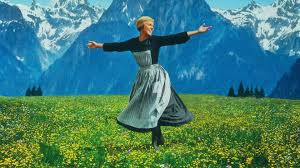
The Sound of Music from 1965: We need to take note that this film was directed by Robert Wise, who was a noted Film Noir director from the forties and fifties. The back shots of the scenes in the abbey give a spiritual aspect to this film that has often been dismissed as light and fluffy family entertainment. As the Mother Superior sings one of the memorable songs, “Climb every Mountain”, it serves as a metaphor for the film.

We all must endure the mountains of want and hardship, of suffering and loneliness, and we must scale them to achieve our dream. For Christians, and for other religions,  it is an act of faith in life itself, and the promise of eternal Salvation. The Baroness is depicted as so materially grounded, and such an obvious contrast to Maria, who literally has to give up everything to climb a mountain in the end, that many may look at this portion of the film as a typical ‘cat fight’ between two women and just dismiss the purpose.  However, when the film is seen in its entirety, the cinematic grandeur of the backdrop, combined with the emotional impact behind the messaging which was based on true events-a family fleeing the Nazis-we see the film as a message meant for a generational message that carries deep emotional impact.. We can look back at the spiritual moments of this film and reflect that it does leave us uplifted and feeling there is a deeper meaning here.

LadyHawke from 1985: Matthew Broderick and his talks with God set this film apart. Broderick is introduced as a thief, and we see him as the Everyman and a flawed hero.  Although the film was marketed as a love story between two doomed characters, Broderick’s thief is the one we can most identify with in this story. The spiritual nature is shown when we see there are two parts to every man, portrayed as the wolf and the hawk in the characters of Michelle Pfeiffer as the “LadyHawke” and her wolf-lover, played by Rutger Hauer. The two combine to illustrate that we are both the sinner and the redeeming healers, and the two parts are found in each of us.

H Potter & Deathly Hallows

The Harry Potter series from 2001 through 2011:  Good vs Evil are often very obvious symbols in the battle between Harry Potter and the evil Voldemort. But the theme running through the story of Harry Potter-of nothing is as it seems-found in all of the books and films, is a deeply spiritual message. The message throughout is to be careful of things that seem too good to be true. And the films tell us that we must look beneath the surface to find the true treasure within. The treasure in Harry Potter ends up being the friendships forged and the magic of Love, and the final message that Love triumphs over Evil.


Groundhog Day from 1993:The theme is that the ultimate power of Redemption can change everything; it brings true love and meaning to our otherwise empty lives. We see this in the character of a broken and shallow man, portrayed in one of the best roles Bill Murray has ever brought to the screen, and the life that he must forge as he begins to awaken to this new way of living. He has lived as an invisible man, choosing a non- existence and he is forced to confront his life and transform it into a richer and more fulfilling path. It is a path where he must help others and find the meaning of true love. This is the ultimate Redemption film, and one with deep Spiritual overtones.

Star wars logo

Star Wars: The Empire Strikes Back from 1980: Not only is the Star Wars mythology of all the films deeply embedded with the symbolism of Good vs Evil; but this particular film highlights the redeeming power that comes from within; when we reject our own dark side even at a great cost.
The message is that we will prevail and come out a better person, and perhaps a different one than we were-in Luke Skywalker’s case, he even has a new limb! The Dark Side is within us all; the power of evil and darkness is all around us, a powerful force throughout the universe, but love will prevail, even with great hardships that we endure

Risen from 2016:  with Joseph Fiennes starring as the Roman Soldier. Risen is more than just a “puff-piece” regarding the nature of the Resurrection. This film explores the idea that someone can witness a miracle such as the resurrected body of Jesus, returned in the flesh; and have a transformative experience of faith, and use that power to reject the glory and the material wealth of their lives to follow the true way.

The Nativity Story  from 2006:  This is the story of the birth of Christ shown warts and all, meaning it reveals the historic timeline that puts us into the scene of where Christ was born and the harsh reality of life for those under Roman rule. The beauty of the story is captured and the simple purity of the tale of the Holy Family comes through in this version.

Marvin’s Room from 1996: We see three great actors, Diane Keaton, Leonardo Di Caprio and Meryl Streep, combine to tell the story of our own lives. It shows us the selfish nature of our existence in the character of Meryl Streep; the capricious and angry emotions that we carry in DiCaprio’s role as a young and troubled teen son, and the burdens and the joys of love in its purest form found in Diane Keaton’s part of the caregiver who is faced with her own mortality.
We are witness to all of this with the themes of love and redemption. There is love for others, in the caregivers role that Keaton has taken on, and the love for family and the love that is willing to sacrifice all in the end. It comes full circle as Meryl Streep eventually redeems herself, from a self-centered sister, daughter, and mother, she gradually learns the meaning of true love and sacrifice for others.

There are many films that give us a glimpse into the human condition, which depict the parts that make up the whole of our humanity, and these films are just a small preview of the many other movies that help us discover our own spiritual selves as we watch and process these stories from some of our greatest filmmakers.
****

6 Degrees: Friday Flix-St Patrick’s Day Edition


6degreesLogogif (2)
Happy St Patrick’s Day to my fellow Film Fans!


Happy St Patrick’s Day to my fellow film fans!

At the movies: This week in movies, we see the opening of another Benji, which has been reviewed as something so close to the original Benji as to be redundant. But those of us who are Uber Dog lovers will not quibble. The remake is sufficiently cute and heartstring-inducing to be acceptable.

The Subject is Objectivity: On the subject of Film Criticism, there’s a good article this week in 6 Degrees magazine about Casablanca, where the critic writes, “How could I have written a…book on 1940’s Hollywood and …devoted so little space to Casablanca?” He goes on to admit that Casablanca isn’t a favorite, and then cites a long list of classics that DO arouse his passion.

I forgive him because if we’re honest, then that’s true of all of us. I do acknowledge many of the classics don’t exactly move me to watch them over and over. However, you can acknowledge the excellence and innovative techniques used by the filmmakers, and still allow the film may not ‘move you’ in a significant way. With film, often there is a gut reaction that embeds them in your psyche and compels you to want to see the film again and again. It can allow you to identify with a mood or character and makes you ‘get it’ on that deeply psychic level.

To that end, in my book, 6 Degrees of Film, I compiled the “List of 100’, and as noted before on the 6 Degrees blog, the endless lists we see, from everything that can be compiled including science-fiction films, horror, rom-com, classics and any combination of categories and genres that go on and on are rendered meaningless by their ubiquitous nature. One of my pet peeves is the overly large number of films listed in these articles (I’ll leave my list of 100 films out of the argument for the moment!).

When compiling the best films lists of any recent year, reaching the number of up to 50 or 100 seems high to me. Yes, we can compile lists for the best films of the decade, or for an entire genre to reach the higher numbers, but there should be some discernment and discretion with critics compiling these long lists of films where, when actually perused, as I have done, seem to include lots of questionable picks and sometimes just feel loosely pulled together in order to create the headline, rather than fulfilling the headline’s narrative with the content required to follow up. (For example: Best Villains who dress well or Best Looking supporting actresses wearing swimsuits….)

About the List of 100: In the book. 6 Degrees of Film: The Future of Film in the Global Village, there is a list compiled of favorite films in the back of the book. Among the films listed is 2001: A Space Odyssey, which is a landmark film in so many ways. The film’s fiftieth anniversary has arrived, and there are a few articles about the making of Kubrick’s classic in the 6 Degrees Magazine.

Here’s an excerpt from my book that points to the reasons that this film made such a significant impact on future filmmakers such as George Lucas:

The Roots of ILM
A Life magazine story from the 1960s summed up
the crisis in visual effects in movies: “There were so many
innovations occurring in film, but in the field of special
effects, there was a dearth of ideas. The big studios couldn’t
finance the large Technicolor spectacles that had been the
signature entertainment for decades at studios like MGM and
Paramount. By the sixties, the film industry had begun to
resemble, a company town where the mine has closed.” 116
Demographics had changed, and audiences had changed. Even
television had evolved, and the world was rapidly changing too.
This meant that movies needed to evolve and adapt to the changing
times. There was an opening for a big turnaround movie.
One appeared in 2001: A Space Odyssey. At 2001’s release in
1969, Stanley Kubrick’s innovations were the cutting edge in
technological advancement in films. But Kubrick’s innovations
did not translate into other copy-cat films, and Kubrick
remained something of a lone-wolf figure. For one thing, the
film was made in England and was too big and too expensive
to emulate. The film failed to revive the waning special-effects
industry in Hollywood. But it did inspire a generation of
young filmmakers who saw that it could be done.
George Lucas was one who acted on that inspiration. He
said, “Almost from the moment film was invented, there was
this idea that you could play tricks, make an audience believe
they were seeing things that really weren’t there. But this was
completely lost by the 1960s.

From the list of 100, there are a few more films recommended for viewing this week. One of the films is in honor of St Patrick’s Day, and is usually shown each year for this occasion. The Quiet Man, the quintessentially Irish film for all things Irish that we love….Also recommended, Casablanca, which we’ve discussed recently on 6 Degrees. And one of my favorite Bogey films in the Film Noir category, The Big Sleep.

Enjoy watching the classics and until next time, see you at the movies!-ML

6 Degrees: Friday Flix

168816805 FOR 6 DEGREES COVER PHOTO SHOT
6 Degrees of Film

Here’s what’s happening in the past week, since the Oscars were awarded last Sunday night. For more, check out our 6 Degrees of Film Magazine:

black panther 2018

• There is still lots of talk swirling around The Black Panther and its staying power…The film has broken records at the box office, and has proven to have enormous appeal in the comic book film genre as well as for African Americans seeking positive role models in super-heroes. And in the all-important numbers game, The Black Panther has already made the top ten money makers of all time; passing Beauty and the Beast to reach the ninth spot, as it is expected to eventually overtake the last Star Wars entry in the near future.

A Wrinkle in Time has received mixed reviews…From RogerEbert.com, we learn that the film is a mixed bag with ‘a lot to like.” And this from the Ebert site: ”…in the era of ‘grittiness’ in films, this film has ‘zero interest in seeming cool as it ramps up the sentiment, particularly in the final part of the movie.” From Film Drunk, the analysis is that the film is a series of “affirmations in search of a story.”

• Believe it or not, one week after the Oscars have ended, there’s speculation about nominees for the 2019 Oscar nominees…! Wes Anderson is an acclaimed director still looking for his Oscar win. And Martin Scorsese has another big budget film out, The Irishman, with a star -studded cast. Nominees from this year, Margot Robbie and Saoirse Ronan are starring in Mary, Queen of Scots.

• This week in Bad Movies: Dwayne Johnson accepted the “Razzie” for his part in last years forgettable Baywatch film version. There’s some talk of Spielberg having a dud on his hands with Ready Player One but it’s too soon to tell. In my opinion, the video game industry is a rather dicey venture when it comes to recreating its success in a Hollywood film. But even if it’s a dud, Spielberg’s film may not be so worthy as to be dubbed a “Razzie” entry. Films require that special something to belong in the classic Bad B Movie category…

• Women’s empowerment and diversity are still on the ascendance in Hollywood these days. The next big film festival, the South by Southwest Festival, is debuting several films from female filmmakers.

• On the Sequel front: Several entries that are already set for 2019 include How to Train Your Dragon 3; The Lego Movie Sequel; Godzilla: King of the Monsters; Avengers 4; a Men in Black sequel; Toy Story 4; The Secret Life of Pets 2; Top Gun: Maverick (33 years later!); Angry Birds 2 and Kenneth Branagh’s return as Poirot in Death on the Nile. The long-anticipated sequel to one of the most successful box office animated films of all time from Disney- Frozen 2, is set for November of 2019. And the sequel department would not be complete without the last entry in the granddaddy of all film sequels: Star Wars Episode IX out in December of 2019.

That’s it for this week. There are still some Oscar nominated films that are now On Demand that I want to see: The Darkest Hour is one of them. Next week, a look at some of the small screen films that deserve a viewing at least once in your life….The Armchair Film Festival is always one of my favorite festivals! Till then, see you at the movies!-ML

6 Degrees: Oscar News

168816805 FOR 6 DEGREES COVER PHOTO SHOT

Oscar News

The Oscars show was always a big deal for me…but in recent years, …not so much. The glamour is not there, and there are so many award shows, it just doesn’t pack the same punch. The turning point for me happened when they sent the Disney characters into the audience one year and Tom Hanks and Paul Newman just looked embarrassed. They don’t seem to know how to bring the show into the modern era

The biggest problem that has been widely documented is the diversity issue. The Academy was an “Old White Guy” organization and it showed. They have worked on trying to repair the breech, but it’s been painfully slow to watch.

Some stand-out moments I remember from recent years occurred when Lady Gaga sang The Sound of Music, and then when Billy Crystal returned to host the show it just seemed funnier, but James Franco remains, in my opinion, the worst host in Oscar history. I hope the show isn’t overlong, and the disaster of an announcement for Best Picture doesn’t occur again…Warren Beatty is probably blackballed forever. I keep watching it out of habit, but with each passing year, the glitz and glamor of a bygone era becomes more painfully evident.

Here is what I wrote about the Academy Awards in my book 6 Degrees of Film: The future of film in the Global Village from 2013:

On the Academy Awards

One of my biggest beefs is that even in the twenty-first century the Academy Awards show looks a lot like a holdout from a bygone era. The glitz and glamour are not as believable when there is so much more to the film industry in the modern era. The age of computer imaging and video games and the type of sophisticated special effects used in modern films are barely acknowledged. Little mention is given to the separate awards ceremony held for the scientific and technical awards. James Cameron invented a new method of filmmaking, and George Lucas and others initiated many breakthroughs in the way we see things on film. But none of these accomplishments are honored. New categories should be created to acknowledge these developments so they can be brought to the public’s attention. The global village of filmmaking is compartmentalized into one or two categories of short films and the foreign film category. Even though Slumdog Millionaire won several Oscars in 2009, the film is treated as if none of that ever happened. The encapsulated world of Hollywood elites still appears to be fairly homogenized (barring a few obligatory jokes about Jews in Hollywood). The only nod to the changing of the guard was in 2010 when Barbra Streisand handed the Best Director award to a woman (Kathryn Bigelow for Hurt Locker) for the first time, and when Halle Berry, the first African American woman to receive the Best Actress award, acknowledged Hattie McDaniel and all of the women of color who had come before her. If Hollywood and filmmaking are a large part of the American persona, and this show is one of our best chances to advertise our unique and diverse American way of life, then why doesn’t Hollywood pull out all the stops on these occasions? Instead, the powers-that-be in Hollywood present a timid and tepid tribute to films in a way they have done many times before. Shouldn’t there be some acknowledgement of innovation? To my mind, that is “the stuff that dreams are made of,” which Bogey spoke of so long ago….

And here we are, five years after 6 Degrees of Film was published, and I still have the same complaints! There are no innovative new categories, and the diversity issue is still front and center. We are still talking about the ‘old white guys’ show, with few exceptions.

But this year may be different. In this changed atmosphere, post #MeToo and Harvey Weinstein, then there may be some movement in the gender discrimination category.

Would it kill them to be innovative and come up with some new categories? Such as best “Breakthrough Performer” or Most Promising….really anything that smacks of “Something Different.” There’s been some discussion of late about naming the Best Picture that was awarded the Oscar for “Best Picture.” The Godfather and Lawrence of Arabia come to mind.

Oscar Selfie pix

Movies of the 21st Century

Winners in this category would be Slumdog Millionaire, with The Lord of the Rings: The Return of the King, A Beautiful Mind and Gladiator being on the short list.

Nominated films that were superior include: Lost in Translation, Capote, Munich, Juno, There Will Be Blood, Up, The Social Network, Inception, Moneyball, Gravity, Her, The Big Short, The Revenant, Arrival, Fences, and a few more that define the times we live in much better than the films that won the Oscar.

shape of water 17

This year, Lady Bird and Get Out will probably not win, as they are not odds on favorites. The Shape of Water is an interesting entry, and it gets my vote, but Three Billboards is an outside favorite that has a good chance.

The point of it all isn’t really that these winners are the “Best” films, but the films with either more popular votes from Academy winners, or they represent a snapshot in time, and may or may not have staying power. Most of the recent winning films are forgettable.


6degreesLogogif (2)
6 Degrees of Film


Sign up for 6 Degrees Friday Flix

Sign up for my mailing list to see all the latest news in film each week in Friday Flix. 6 Degrees of Film magazine features all the latest reviews and articles from leading publishers about current and classic movies. In editing the magazine, I make a point of going into the archives as well as searching the internet to find the latest reviews and summarizing the Big Picture each week in Friday Flix.

6 Degrees of Film blog features quarterly newsletters, weekly film reviews and reports, as well as excerpts from my 2013 book 6 Degrees of film: The Future of film in the Global Village. We also include reviews of classic movies, and current films in theaters and recommendations on television in the recurring feature: The Armchair Film Festival.  In other words, 6 Degrees is your one-stop shopping for all the film news that’s fit to print. Join us as we go through the latest winners and wrap up the Oscars report this week. We love to hear from you all….Enjoy the show and until next week, see you at the movies!-ML

6 Degrees: Capsule Review:The Black Panther

black panther 2018

I’ve seen so many reviews of this film that center around the ‘feel good’ politics of Black Panther. I’ve seen the fantasy politics of Black Panther listed, as well as the spoiler alerts tying the film into the Marvel Universe. There’s the record breaking box office numbers, as well as the stories of the many groups of young African American children going to see this film. And others who see it are wearing traditional African garb. In short, it’s a phenomenon…a ‘thing’.

And the film has been well received. Of the films in the superhero universe, this one is a cut above the rest. The plot centers around the rise to the throne of T’Challa, who is the new king in the fictional African country of Wakanda. Wakanda has hidden its amazing and superior technology from the outside world, and this is the central debate later in the film. Should they share this knowledge, or continue to keep it hidden…?

Without too many spoilers, the film is driven by the rise to the throne of the new king, played by Chadwick Boseman.  The Black Panther’s super powers include not only superior intellect, but his strength which is derived from the special formula that is given to the king to drink. And then there’s the technology, similar to James Bond’s, where he dons a special suit made of the miraculous fictional metal mined only in Wakanda known as Vibranium.  The Vibranium  makes him impervious to bullets and other weapons of dastardly origins.

But in my estimation, the thing that sets this superhero apart is the fact he is touted as a man with a heart. His father talks to him from beyond the grave, telling him, “You are a good man, and that is something that may bring trouble for you”, which is a wise thing to tell your son, if you only have a few moments with him in the afterlife. The film centers not entirely on the concept of this superhero saving people and thwarting dastardly deeds, but also working to help others, to find himself and to find his true love.

In other words, it may depict the life of an ordinary man in an extraordinary world, or the reverse of this. That is the debate in history: Are great and exceptional men made so by the times they live in, or is greatness thrust upon them due to the circumstances in which they find themselves? We think of our Founding Fathers and the greatest Presidents and leaders of the Civil Rights era. These men all had great hearts, and although most had their share of flaws, they were able to rise above and to grasp the moment and meet the occasion to prevail.

In this film, T’Challa may or may not be the one who is the strongest fighter, but he is the one who is the ablest, the wisest, and the one who will prevail. This is the takeaway that is most heartening for any of the superhero films in the Marvel Cinematic Universe. Perhaps, in the end, at least according to the laws of this fictional universe, not the strongest but the wisest will be the one who prevails. It’s a good lesson in life.

6 Degrees: Friday Flix

168816805 FOR 6 DEGREES COVER PHOTO SHOT
6 Degrees of Film


Happy Friday Film Fans! Here’s a short list of the films recommended to record coming up in the next week on Turner Classics.  Each film is reviewed in 6 Degrees magazine, so click the title to go to the reviews for each. The list includes:

Cat Ballou: Starring Jane Fonda; the film’s highlights include the title song sung by Nat King Cole, as a strolling banjo player singing the ballad of Cat Ballou. Lee Marvin won the Oscar for Best Supporting Actor in his comic turn as the drunker hero who deflates the stereotype of the stalwart gunslinger of legend that actors like John Wayne loved to portray.
The Search: Stars Montgomery Clift and is a unique look at the refugees of World War II who were comprised mainly of children. The story centers around a soldier, played by Clift, who is suddenly swept up in the refugee crisis when he becomes attached to one of the orphaned boys, and is torn between his strong bond with the child and his continued search to help reunite him with his parents. Although the film has its weaker moments when it dips into sentimentality, the overarching theme of loss and redemption, and the brilliant acting of a young Montgomery Clift in his prime, combine to make this a film worth watching.
The Lion in Winter: It’s embarrassing to admit there are some films that are so well known to me I can recite the lines. This is one of those films. Adapted from a stage play, with the brilliant idea borne from the kernels of truth, the writer imagines what it would be like to spend the Christmas holidays with the powerful King Henry II and his wife Eleanor. The kicker is that she has been imprisoned by Henry after raising an insurrection to overthrow him from the throne, although she’s  out of confinement just for the holidays.. This is not the stuff of myth, but is part of the historical record.The truth is stranger than fiction, by all accounts, and Peter O’Toole and Katherine Hepburn really do eat up the scenery with over the top performances as Henry and Eleanor, along with a young Anthony Hopkins playing son Richard. The film is a fanciful flight of the writers’ imagination, wondering what it would be like to be ‘a fly on the wall’ as we hear the two powerful monarchs fight and manipulate each other and those around them in this tragi-comic tale.
The Year of Living Dangerously is one of director Peter Weir’s best films. Linda Hunt is magnificent, cast as a man in a role in which she won the Oscar for Best Supporting Actor, and her performance has to be seen to be appreciated. Sigourney Weaver and Mel Gibson are both superbly cast, with Weaver as the journalist with conviction and Gibson as the flawed hero.
All the President’s Men is shown this week. I have never felt this was a masterpiece, however, the film deals with the search for the truth. The writing is superb, done by one of Hollywood’s great screenwriters, William Goldman, and it seems to rise to the occasion as we learn the phrase never uttered by Deep Throat: Follow the Money. This film is worth a second look, particularly in the current climate we live in that involves political intrigue and Russian meddling with our election system.
Rebel without a Cause is another b-movie that has been raised to mythic proportions. James Dean was the promising young heir apparent in Hollywood whose life was so tragically cut short, when he was killed in a car accident after completing only three major films. But this film elevates the notion of teenage angst at a time when young people were not given the same deep seated psychological examinations they are afforded in this new age. And the two leads, James Dean and Natalie Wood, rise to the occasion and turn in notable performances in this surprisingly enduring story directed by Nicholas Ray.

black panther 2018

At the Movies: The long-awaited Black Panther has arrived at the movies, and the reviews have been favorable for the most part. Wes Anderson’s Isle of Dogs is also out, and it seems to be a hit with most of Anderson’s fans. Both films are reviewed in 6 Degrees.

6 Degrees Magazine also features articles on the upcoming Oscars, as well as other current releases. So stay tuned as we will soon feature the annual Oscar News Newsletter from 6 Degrees.

It’s been a busy week, and there’s plenty of better than average films to see during the film festival season in Hollywood! Till next week, enjoy the films from TCM and see you at the movies!

6 Degrees: Friday Flix

168816805 FOR 6 DEGREES COVER PHOTO SHOT
6 Degrees of Film

Happy Friday! Here’s a look at some of the stories that have been front and center in Hollywood these past few days. The Oscar Race is underway, with leading contenders like “The Shape of Water” and its director Guillarme del Toro, vying for the Oscar along with some dark horses such as 22 year old Timothee Chalamet who is nominated for Best Actor for Call Me By Your Name.

Best Actor bets are on Gary Oldman for his portrayal of Churchill in Darkest Hour, but past winner Daniel Day-Lewis is also up for Phantom Thread, as well as fellow Oscar winner Denzel Washington (Roman J Israel, Esq) and Daniel Kaluuya (Get Out).

The Best Actress category features first time nominee Sally Hawkins, who played the mute cleaning woman in The Shape of Water up against Oscar winner Frances McDormand (Three Billboards Outside Ebbing, Missouri), the “legendary’ Oscar winner Meryl Streep, who is nominated for The Post, plus Margot Robbie in I, Tonya and Saoirse Ronan in Lady Bird.

In Theatres: Fifty Shades Freed is out, and mercifully brings the series based on the best-selling book to an end. The reviews have not been kind. Also out is the much-anticipated Black Panther superhero film, which has garnered good reviews in early release. Clint Eastwood directed the 15:17 to Paris film, based on true events, and it has had mixed reviews.

There’s an article in 6 Degrees Magazine about the highest grossing movies, and at Friday Flix, we listed the top ten a few weeks ago. The all time biggest grossing movies, both Number 1 & 2 were directed by the same man: James Cameron. Cameron directed both Avatar and Titanic.

Star wars logo
The latest Star Wars offering just made the top ten list, which means there are two of the highest grossing films in history from the Star Wars Franchise. Disney, as we know, owns the Star Wars franchise, so the total number of films from the Disney franchise in the top ten list is five, meaning half of these big box office winners are Disney films.

The good news here is that there are creative forces at work that have helped to shape these films…from James Cameron’s innovative cinematography to the development of CGI that began when George Lucas started Industrial Light and Magic over thirty years ago (See the excerpt recently published on our blog from 6 Degrees of Film.)

SW The Last Jedi 17

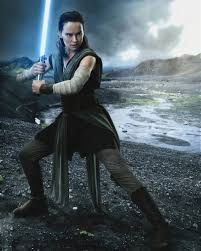
And “Girl Power” is more of a force than ever in film-making, with Frozen and the introduction of the Jedi Novitiate Rey in the Star Wars franchise. But there are still far too many films that rely on thin plots and comic book premises, CGI rendered story lines and weak plot points that have brought us to where we are in the film industry. Films that simply churn out the same tired super hero stories in sequel after sequel with formulaic plots and overly simplistic characters have become the standard in Hollywood filmmaking. And unfortunately, it sells.

Frozen pix

There are approximately three-count ‘em…three, films on the list of top ten films that are not sequels or have not been made into a series. Frozen has had spin-offs, but it is the only animated film to make the list. This speaks to the rising tide of women and girls who clamor for strong female role models, beginning with little girls who want to see the heroine carry the film for a change. Titanic was a ‘one-off’ for obvious reasons, although I would never say never in this environment. And the Avatar sequel is in the works, though Cameron has delayed the announcement of a definite opening date for several years.

Films like Lady Bird, The Florida Project, Three Billboards Outside Ebbing, Missouri, and The Shape of Water still get made. There are original projects, great writers and talented actors and directors who give us wonderful and creative films despite the long odds. But the overwhelming trend in recent years has been to stick with the predictable models and continue to churn out the ‘chum’ of sequel-mania. And the list for 2018 doesn’t indicate many changes anytime soon.

Coming Soon: But when something comes along that looks interesting, original, creative and fun, we will be right up-front cheering the film along! There’s a unique entry from Wes Anderson coming soon called Isle of Dogs, which is a stop-motion film; and Ron Howard is directing Solo: A Star Wars story, which should be entertaining.

Sundance Film Festival featured The Kindergarten Teacher, and Joaquin Phoenix has received lots of buzz for his performance in the upcoming You Were Never Really Here. Check out the Film Comment Podcast: “I loved it when I was a kid”, talking about movies that the critics saw and remembered from their childhoods. It’s always fun to look back on those movies we loved, and sometimes to cringe when we watch them again and realize they weren’t always great cinematic gems, but then again, sometimes we enjoy them even more when we see them after all these years!

Until next week, have fun and see you at the movies!


6 Degrees: Friday Flix

168816805 FOR 6 DEGREES COVER PHOTO SHOT
6 Degrees of Film

Your Armchair Film Fest: Some films to see and say “I”ve seen it” are found every month on Turner Classic Movies. (Click on the link to take you to dates and times). We’ve included a few of these in the list of films to record this month:

Films to record in February:

On the Waterfront: Some feel that, apart from his role as Don Corleone in The Godfather, this is one of Brando’s best performances (I am one of those people!)

Casablanca: If not for the plot, then simply to hear Bogey in one of his signature roles, say: “Play it, Sam” (He never said, Play it again, Sam!)

The political films are relevant in these turbulent times, and if you have not seen or experienced these documentaries and popular films that portray important periods in our nation’s history, then here is a great opportunity to catch up. I recommend not only All the President’s Men and Being There but also a back-to-back lineup that includes: Freedom on My Mind-about the Civil Rights movement and the Freedom Riders; Four Days in November which recalls the assassination of President Kennedy; An Inconvenient Truth, which is the documentary narrated by VP Al Gore on Climate change; The Times of Harvey Milk, a documentary on the life of one of the first openly gay politicians in the country who was assassinated (In my opinion, it’s superior to the film starring Sean Penn). The other films are Woodstock: The Director’s Cut which gives us a glimpse of the time period surrounding the famous folk festival at Woodstock in 1969. And finally, Hearts and Minds documents the Vietnam War, and the phrase is now familiar to all as we hear it in connection with “winning hearts and minds” in the Gulf Wars that have followed this one.

All of these films are recommended viewing for those who have never seen them and are perhaps curious about the time period surrounding the Vietnam War, the Civil Rights movement, and the protest period that ensued in the late 60’s and early 70’s in our country.

In coming weeks, we will feature the Oscar News Newsletter out before the Sunday, March 4th Oscars Ceremony. Stay tuned and till next time, see you at the movies!

6 Degrees:Friday Flix

168816805 FOR 6 DEGREES COVER PHOTO SHOT
6 Degrees of Film

For Film Fans: About the Movie Pass: I’ve heard lots of good things about those who have signed up for the Movie Pass. If you go see more than one or two movies per month, or even one and have to pay almost 10 bucks just to get in the theatre, then it will pay you to get one. Word of caution: Check your location online and make sure that your local theatres, the ones you frequent the most, are on the list! If not, it’s not going to be such a good deal….

I have the chapter of From Star Wars to Sin City…online now for those who were not able to access it last week. It’s an extended excerpt from my book: 6 Degrees of Film: The Future of Film in the Global Village. In this chapter, I have several quotes from George Lucas that seem even more prescient as he has sold his work to Disney and was envisioning the Star Wars mythology to continue long after his own contributions had ended…

There are several films in 2018 that are highly anticipated:

black panther 2018

In February it’s Black Panther, the Marvel film that has some insights into the world of Avengers…

In March: Bruce Willis will return in a remake of the classic Charles Bronson film: Death Wish
Director Wes Anderson will offer: Isle of Dogs
And Steven Spielberg is directing Ready Player One, based on the popular book
Another interesting title: Mary Magdalene will open with Rooney Mara and Joaquin Phoenix

In April: Phoenix again stars, this time in the crime movie: You Were Never Really Here, which has had some good “buzz” from early screenings

solo star wars

In May: Avengers: Infinity Wars drops. Like it or not, the comic book genre is here to stay…
Ron Howard will direct the spinoff: Solo: A Star Wars Story, with Alden Ehrenreich playing the Han Solo part

In June: The much-anticipated Ocean’s 8 female version, with Sandra Bullock starring will open.

Another Jurassic: Jurassic World: Fallen Kingdom is the sequel title.
Another sequel: Sicario 2: Soldado will open with Benicio Del Toro returning and Denis Villeneuve directing
In July: A Horror move: The Nun, part of The Conjuring Universe, debuts.
Another Sequel: Mission Impossible: 6 with Tom Cruise

In August: ANOTHER Sequel: The Equalizer 2 with Denzel Washington

In September: Here’s an idea. Another original version of Robin Hood with Taron Egerton in the lead role

In October: Tom Hardy will star as the villain from Spiderman’s Universe in Venom
Mowgli is another sequel of sorts. Andy Serkis takes on The Jungle Book character in this one.
First Man is a biopic of the first man who walked on the moon, Neil Armstrong

In November: The Nutcracker and the Four Realms is a Disney movie retelling the familiar tale.
Holmes and Watson is a comedy with Will Ferrell and John Reilly teaming up again
Fantastic Beasts is the next film in the series

M Poppins 2018
Mary Poppins 2018

In December: Aquaman drops into the Justice League category
Mary Poppins Returns is a musical scheduled for Christmas of 2018

Let us hope there are some original ideas along the way in the Indie department that are not yet on the radar. These films listed above are all big budget and as expected, they don’t break any new ground, but instead stick with the safest bets: Comic books and action hits that still draw big audiences.

In Case You Missed It: The Top Ten Highest Grossing films: (As of January 2018)

SW The Last Jedi 17

1) Avatar -2009
2) Titanic (Both directed by James Cameron) – 1997
3) Star Wars: The Force Awakens 2015
4) Jurassic World – 2015
5) The Avengers – 2012
6) Furious 7 – 2015
7) Avengers: Age of Ultron – 2015
8) Harry Potter and the Deathly Hallows-Part 2 – 2011
9) Frozen – 2013
10) Star Wars: The Last Jedi -2017

Frozen pix

*Star Wars: The Last Jedi just knocked the live action Beauty and the Beast off the top ten list. And the oldest film on the list is Titanic, from 1997. Frozen is the only animated film to make the list. And it’s usually the latest installment of the film series that makes the list. However, the Avengers from 2012 is the sixth film in the Marvel Cinematic Universe. The eleventh film in the series, the sequel to Avengers, titled Avengers: Age of Ultron, is also in the top ten.

The only Harry Potter offering to still show up in the top ten is the last installment, completed in 201l, which was the final installment in the Harry Potter series. The box office winners tell the studios that people still love fantasy and romance, and Girlpower is on the ascendancy with the 2015 version of Star Wars featuring Rey as the heroine of the film.
The top two highest-grossing films have prominent romantic stories, with Leonardo Di Caprio in Titanic as the doomed lover of Rose (Kate Winslet). But fantasy and science fiction, action and super heroes are all wildly popular with audiences. The shock of the familiar helps to encourage Hollywood as they churn out sequel after sequel each year.

Lucky for us that films like Lady Bird and The Florida Project help to balance out the continual diet of superheroes and sequels that dot the landscape of most theaters throughout the year…Check out the excerpts From Star Wars to Sin City here…and till next time, see you at the movies!-ML

From Star Wars to Sin City


Star wars logo

An excerpt from the 6 Degrees of Film: The future of film in the Global Village by Mary L Johnson:
“Star Wars is not a simple morality play; it has to do with the powers of life as they are either fulfilled or broken and suppressed through the action of man,” wrote Joseph Campbell, one of George Lucas’s inspirations for the mythology used to create Star Wars.
Mark Dippe, a visual effects supervisor, said that the first thing he thought when he saw Star Wars in 1977 was, “Who the hell is this guy George Lucas? The film just stood apart; it still does. I think George Lucas’s films had a big influence on changing the process and vocabulary of filmmaking. The legacy of Star Wars is that at ILM [Industrial Light and Magic], we get a chance to work on creating things that haven’t been seen before.”
Over twenty-five years ago, George Lucas incorporated Industrial Light and Magic after he made Star Wars and extended his empire into the first decade of the twenty-first century. From approximately 1987 through 2012, major developments from ILM and other parts of the industry have made the film industry what it is today. The industry witnessed the end of an era in film and the beginning of a new age of moviemaking.
Industrial Light and Magic has definitely framed the era and defined it with their many breakthroughs in visual effects. The storyboarding that is critical to their vision is now a major part of most successful film series, and the comic genre that has emerged would not have been a reality without the effects of ILM.
The criticism that Lucas and Spielberg films have juvenilized the movies, to my mind, is unfair. These filmmakers have given the public what they want, and there never has been a dearth of creative talent in the film industry. On the contrary, there are many exciting new avenues for young and innovative minds to bring their creations to the screen, including Internet productions and independent venues. We are always seeing new ways for artistic talent to emerge as the next big thing.
Film is changing and evolving as it has from the beginning, and the medium as a mass-communication tool and an art form make this an exciting time to break into the market. The future of film may involve the type of images seen in Sin City and Waltzing with Bashir, where actors are not filmed in the traditional way but with a kind of brushstroke or cartoon quality that enables the plot to go in many different directions. There might be alternate endings and story lines to follow with endless variations. Online, the viewer can access alternative views from various characters’ perspectives.
The experience of going into a darkened theater to view a film is changing forever. As in the penny arcades and nickelodeons that began the first century of film, we now see the evolution and dawn of a new age and a new way of understanding the world through the medium of film.
George Lucas spoke of his ideas on the future path that might occur using film and some kind of drug to enhance the experience. His ideas regarding future films would make theatrical, narrative-driven movies, in his words, “as quaint as an old silent-reeler”:
I see true environments being created and combined with a lot of biotech things going on, in terms of manipulating people’s senses through drugs. This combination will have the most powerful effect on the kind of storytelling we’re doing today. It’s too far off for me to worry about, and I’m not interested in virtual reality at its current level, because it’s just too crude. But if you can program virtual reality or simulator rides with biotech, you will have a very interesting non-world. The first step would be to take the simulator ride part of an environment … where you can just implant the story in a pill and live it.
That’s not outside the realm of possibility. You’d take the pill and go to sleep. It’d be like a dream and you’d have an actual, real, physical experience of something completely imaginary. What that’ll mean for society, I have no idea, and how you’d get there from here is way beyond me, but I know enough to know it’s within the realm of possibility. Because they’re already going there, creating images without actually making them, just as you create them in a dream.

Industrial Light and Magic

Jim Morr, a former president of ILM, said, “When ILM started, there was no effects industry. Now there’s an industry beyond ILM. I’m sure there are people who feel ILM has become too corporate since the early Star Wars days. Well, we are working on major Hollywood motion pictures, so it’s certainly not a free-for-all. But we are still kind of funky when you compare us to a business like IBM or Xerox.”
Lucas said, “ILM is also a company where it has to make enough money to develop the state of the art. So everything has to be done extremely efficiently, and they have to generate enough money year after year to be able to buy new equipment. It’s a very capital-intensive business, so that means a huge amount of money is reinvested every year after year after year. And most companies can’t do that.”
The Roots of ILM
A Life magazine story from the 1960s summed up the crisis in visual effects in movies: “There were so many innovations occurring in film, but in the field of special effects, there was a dearth of ideas. The big studios couldn’t finance the large Technicolor spectacles that had been the signature entertainment for decades at studios like MGM and Paramount. By the sixties, the film industry had begun to resemble, a company town where the mine has closed.”
Demographics had changed, and audiences had changed. Even television had evolved, and the world was rapidly changing too. This meant that movies needed to evolve and adapt to the changing times. There was an opening for a big turnaround movie.
One appeared in 2001: A Space Odyssey. At 2001’s release in 1969, Stanley Kubrick’s innovations were the cutting edge in technological advancement in films. But Kubrick’s innovations did not translate into other copy-cat films, and Kubrick remained something of a lone-wolf figure. For one thing, the film was made in England and was too big and too expensive to emulate. The film failed to revive the waning special-effects industry in Hollywood. But it did inspire a generation of young filmmakers who saw that it could be done.
George Lucas was one who acted on that inspiration. He said, “Almost from the moment film was invented, there was this idea that you could play tricks, make an audience believe they were seeing things that really weren’t there. But this was completely lost by the 1960s.”
Lucas labored for two years on his Star Wars script. The film’s goal was to create a universe. But beyond that, he was looking for a storyline that would serve as a staging ground for a new kind of mythology.
Lucas said, “I was struck [at the time] by the fact that the western was the last American myth and there’d been no mythology created since the mid-fifties. I thought space was the next environment where you could begin to develop that mythology.”

History of Industrial Light and Magic

George Lucas created ILM in 1975 to provide visual effects for Star Wars. How he did it is a story that in many ways parallels the innovations that Steve Jobs incorporated at Apple. A new approach to special effects was needed and a void to be filled. Lucas saw it and acted.
Most of the major studios had begun to dismantle and discard the trappings of the studio system. They had sold off their back lots, auctioning off props and equipment. Among the casualties of this corporate downsizing were the effects departments. The most talented of the artists either retired or scattered to find work. Consequently, cameras were consigned to the scrap heaps, put in storage, or sold cheap.
“Visual effects was, at the time, a dying art. A number of studios passed on the [Star Wars] script before [Fox] picked up the project.”
In forming ILM, Lucas sought to emulate the studio-effects departments that were now long gone in Hollywood. One of the first things ILM did was to look at the past and become resourceful in renovating the old equipment. They set out to locate an outdated camera known as a VistaVision.

The History of VistaVision

VistaVision, invented in the 1950s, is a film format used to create big-screen images such as those in The Ten Commandments. VistaVision also was used in the classics North by Northwest and White Christmas.
Although Paramount studios developed VistaVision, they soon abandoned it as too expensive. And theater owners had to retool theaters to show the films made in the format. Only about twenty theaters ever really retooled to show the movies to their full advantage.
Industrial Light and Magic wanted to achieve superior visual quality in their shots. They solved some of their problems by incorporating the old VistaVision cameras, acquiring them at bargain-basement prices. The two cameras built for use in The Empire Strikes Back were the first live-action VistaVision cameras built since the days of The Ten Commandments. For that reason, an old Ten Commandments poster hung above the printer in the optical department at ILM for many years.
ILM reimagined and retooled VistaVision equipment to become the VistaFlex camera. These cameras became one of the most significant (and also underrated) advances in camera technology after Star Wars. But unlike their predecessors, these cameras were lightweight and compact—the hot-rods of photographic equipment.
After Star Wars achieved its historic global box-office success, ILM became the permanent special-effects unit of Lucasfilm Ltd. Subsequently, a renaissance of VistaVision technology flourished at ILM. This innovative group also would go on to develop motion-control technology.

Motion Control

Motion control is the ability to control the movement of the camera, and the photographic subject in synchronization to the movement of the film through the camera. After the success of Star Wars, ILM had the opportunity to accelerate enormously the integration of electronics and filmmaking.
Motion control started in 1971 with Douglas Trumbull using it on the film Silent Running. John Dykstra, who worked at ILM and was a special photographic effects supervisor for Star Wars, had been a member of that team. Dykstra recalled, “We took archaic cameras, built before we were even born, and we created hybrids of them by bolting different parts together. Nobody else was inventing cameras to make films in 1975. We were there when a genre was being born and reborn.”
It is fair to say that George Lucas and his team rescued a dying part of their industry—the art of special effects—and transformed it into something wholly different, something extraordinarily special—even unique—to enhance the term special in the phrase.

The Dykstraflex System

Another breakthrough moment in the early history of ILM came with the Dykstraflex system, named for John Dykstra, the photographic effects supervisor for Star Wars.
The Dykstraflex system was built before the advent of personal computers. All of the interaction is between the motion-control system and the camera operator. The system was in operation for fifteen years, from 1976 to 1993.
Until the computer revolution hit with full force in the 1990s, the compositing process was in the hands of ILM’s optical department—the optical dogs—who were required to handle an incoming rush of film elements while ignoring the heat of deadline pressures. Little did they realize that by the spring of 1994, the old, photochemical optical process would be completely replaced by the electronics of digital computers, and the optical dogs would become obsolete.
So it went with a lot of the old optical equipment. It was either decommissioned and put on display or dismantled. The optical department itself was reduced to a small staff with two computerized motion-control printers. Talk was that celluloid film itself might soon become extinct.
In the anticipated future without physical film, the digital cameras would be used to record live-action or composite elements. Then the computer graphics would generate three-dimensional characters and sets, and compositing and editing would be accomplished in the digital realm. The final movie would be beamed directly to home viewers by satellite or through computer modem or electronically projected in the quaint, old-fashioned confines of a movie theater.
Metaphor for the End of an Era: Shattering the Glass
From 1990 through 1993, the industrial part of the ILM equation changed dramatically. ILM had a beautiful four-foot-tall and six-foot-wide glass painting of the gothic New York City building used in Ghostbusters II. But the glass had warped and shattered when ILM tried to have it framed. That was the end of glass paintings. The same could be said for the old-fashioned way that brush and oils were used for matte paintings on film. Within five years, the outmoded brush and oils were replaced by the digital medium.
The company was experimenting with the new Photoshop program on Macintosh (Mac) computers, and the head of the computer graphics department realized they could do matte paintings and composites on this simple little box. Ironically, Lucas himself is not a digital graphics guy at heart. He said,
I’ve never been that interested in computers … I’m interested in making movies and creating images and in doing it in the easiest way possible. When you start out making movies, you’re trying to get the largest vision with what amounts to a limited amount of resources. So it’s a constant struggle to add more colors to the palette, and the way you get more colors is to spend huge amounts of money. But at some level, there are colors you can’t get, because no amount of money will get you there.
With Star Wars we were basically off the color palette. The technology did not exist, but that’s what the story was. I wanted to tell this story, but the color only existed in theory. The only way you’ll get there is to create technology that will bring those colors into the realm of what’s achievable, and that’s basically what ILM was. So I had to get involved in computers and the high-tech area … And for a long time at ILM, the state of the art was using computers to manipulate hardware—the old-fashioned nineteenth century celluloid—through sprockets technology … In 1978–79, I put together a computer division because I wanted to get a digital printer.
A microcosm of the end of the studio system occurred with the computer age replacing the age of cameras and sprockets. George Lucas began by reorganizing the entire computer-graphics division at Industrial Light and Magic.
Lucas continues, “On T2 [Terminator 2] I realized that we didn’t need to think in three dimensions all the time, that the images for film are really two-dimensional and flat. Once I realized that we could paint on the individual film frames … I realized we could do anything.”
Through the use of computer graphics, Lucas transformed not only ILM, but the entire film industry within five years. By 1993, ILM had entered into a strategic business alliance with Silicon Graphics (SGI) that allowed for ongoing cooperation in developing high-powered workstations (computers).
At this point, the Mac Squad was formed. They utilized Macintosh computers and Photoshop software to combine the digital world with such traditional departments as optical, animation, and rotoscope. {Author’s Note: Rotoscoping is a technique in which animators trace over footage, frame by frame, to use in live-action. The glowing light saber in all three original Star Wars films, was a product of rotoscoping.} As with the beginning years of film production, the processing power and the speed and memory of computers made the transition to digital occur many years earlier than some had believed to be possible. Computers were becoming faster, and memory capability was doubling at an incredible rate.

The Age of Industrial Light and Magic

The film age we now live in is the age of Industrial Light and Magic. In essence, today is the age of the computer and special effects. For many years, the special-effects personnel worked anonymously. But with Star Wars, that anonymity ended. And so it continues that movie audiences expect and demand to be thrilled and dazzled by the artistry onscreen.
Lucas, naturally, disagrees with critics who claim that special effects tend to overpower subtleties of plot and character at times. He said, “The people who saw Star Wars and said ‘spectacular special effects!’ just never understood it. The same thing with Indiana Jones … Some people look at those movies and they don’t see the intricacies of the character and story … You can see so many movies released in the wake of those two movies, just loaded with special effects and stunts, but they don’t make very interesting movies.”

Future Shock

Industrial Light and Magic’s retooling included the sweeping away of archaic trappings of the industrial age. By the spring of 1994, the property master was cataloguing and auctioning off many old props, industrial hardware, and memorabilia that ILM had acquired in the 1970s.
This new technowave was felt with brutal suddenness in the halls of ILM. The old matte-painting department was replaced with computer hardware and painting-software systems. The old motion-control camera was replaced by some twenty computer-graphic workstations. The optical printing department was virtually eliminated by a high-powered scanner.
Dennis Muren of ILM said, “We became professionals as a calling, not just a career choice … I feel like the world has changed around us with a suddenness that no one could have predicted—and right now, we’re experiencing future shock!”
Lucas has nostalgic reflections. After all, he was the one who resurrected the VistaVision equipment to make Star Wars. He said, “I don’t like technology much, so I have no emotional ties to the technology whatsoever … I care about the images on the screen, and I’m not really enamored with the process at all. As a matter of fact, technology mostly gets in the way, and therefore, you’re constantly trying to get a better tool … On the practical side, I don’t think anybody really likes to stand out in the snow at three o’clock in the morning when it’s forty degrees below zero.”