The positives in this review lie in the beauty of this film’s cinematography and costuming. There is no plot or character development to dissect. But the stand-out performer in this live action fairy tale film would be Kevin Kline, playing Belle’s father.
He is given the chance above all else to emote gentle affection and sincere dialogue with nuance and humor. Other than that, there’s little to distinguish this movie from the original animated version, other than the ability of our times to project Computer Graphic Imagery onto the big screen.
This would be an enjoyable time spent for a mother daughter duo of any age. It seems to be entertaining enough on all levels to recommend for family viewing, but from times past, this would be considered a “chick flick”.
There is a definite feminine bent, not feminist, to the portrayals and the entire illusory vision whipped up in this fable. Frozen and other animated tales in recent times have given rise to the more feminist versions of the trapped princess. And although there is nothing to object to in terms of PC standards in this portrayal of the young Belle, played solidly by Emma Watson of Harry Potter fame, there is conversely no real dilemma lying outside the constricted world of the fairy tale maiden in distress.
This is recommended for families who seek a world of escapist cinema with beautiful visuals and innocuous story lines. In that regard, this is the chick flick you may have been waiting for.
**Go See this if you are “Female seeking Escapism”.
So…is the movie Good or Bad? That is the question coming from one spot-on commentator in our 6 Degrees magazine from this past week asking about the reviews for the film “Ghost in the Shell” with Scarlett Johansson. There are plenty of mixed reviews for this one, and the consensus was that they used the term “whitewash” to the extent that the film was buried somewhere in the lead….
But the bottom line is that all that may be overcome if the film has good “buzz”. And this film did not. There are plenty of reviews out there that are mixed for most of the films. It’s always a question of the audience preferences, and there have been several films in recent years that have bombed in the U.S. and done quite well overseas
Some examples are: John Carter; The Golden Compass; After Earth; Poseidon; Water World; The Wolverine and Pacific Rim. Some films don’t hold up well, some are big hits but fade fast from memory. The dirty little secret we all must concede is that film reviews are highly subjective, and with the amount of film blogs and posts out there, you can usually find even the worst reviewed film with at least one critic who actually likes it!
The other comment comes from Sir Smoke regarding the posit from an article stating that New Horror films are better than ever….Sir Smoke simply said, “No.New Horror Sucks”. I couldn’t agree more. As someone who was raised on Hitchcock…and with the idea that the best elements of horror are found in the simplest of details, some of the latest horror films don’t seem to rely on the simple ingredients that made Hitchcock the master of suspense. These details, the things that make for the best components that create horror in the mind and on the screen are somehow lacking in most of the new age horror films.
Simple elements of suspense are found in all of Hitchcock and in films like The Portrait of Dorian Gray, The Tingler, Carnival of Souls or George C.Scott’s 1980 film, The Changeling. In this latter one, the simple act of rolling a small red ball down a flight of stairs is listed in ‘The Horror Digest” blog as one of the scariest moments on film. Such a simple act and yet…the horror!
On Critical Thinking: There’s a piece called, “Just review the Damn movie” this month that speaks to a lot of the political correctness surrounding recent films with issues such as diversity and whitewashing. Some of the films that are striving to portray women and people of color or those in the LGBT community with dignity and accuracy are at odds with most of the history of film. And for that matter, the history of the United States and the rest of the planet as well!
There are some big problems facing Hollywood these days. These are addressed in a piece from 6 Degrees Magazine written by Bill Mechanic, the CEO of Pandemonium Films and featured on Deadline.com. The problems surrounding what has become the Hollywood machine includes top executives leaving the major studios like Paramount and Sony. The “Tent-Pole Films” (Defined as films that are big expensive draws for global audiences and are designed to spawn multiple sequels) are not producing the results in many cases that were expected. Big, expensive movies that flop after huge amounts, hundreds of millions of dollars are poured into the making of them, mean that somebody’s head will roll when the bottom line looks bleak.
The phrase for some of these less than promising films is the “get-around-to it” movies-meaning you’ll get around to seeing them on Netflix or the small screen. We’ve all seen plenty of films in that category…
The changing nature of the business is part of the entire work force that has to adapt to change. Disney has proven to be a major Disruptor by taking much of the market share. They have bet on big brands, Pixar and Star Wars plus MarvelStudios, and it has become harder for other studios to compete. It’s become in essence the Wal-Mart effect for the Movie Industry.
Is the movie business in denial, as one writer from The Verge posted recently? Some six of the seven major Hollywood studios are negotiating to release their films on home video barely three weeks after the theatrical release date. Virtual Reality is another focus for the business, with major theaters touting the VR experience as a way to counter slumping ticket sales. This is part of the aforementioned long-term trending. The idea that most brick and mortar buildings now housing movie theaters may become akin to the arcades of old, with other entertainment options featured along with films, is now taking hold. This may be the wave of the future…
The Armchair Film Fest: For the month of April, there are some great films to set your designated machine to record: Recommended are The Miracle Worker, Hannah and her sisters, Ivanhoe, Harvey, The Set Up, A Hard Day’s Night, Funny Girl, Please Don’t eat the Daisies and Butch Cassidy and the Sundance Kid. Watch the 6 Degrees magazine for reviews on these films if you’ve never seen them…
All of these films are on Turner Classic, which is great because there’s no commercial interruptions. One other noticeable difference on the Turner Classic site is that they’ve finally said goodbye to Movie Morlocks and have an upgraded blog site: Streamline, which has a much cleaner look and some interesting reviews- the short films of Harold Lloyd and Wuthering Heights vs Jane Eyre-all featured on our 6 Degrees Magazine site this week.
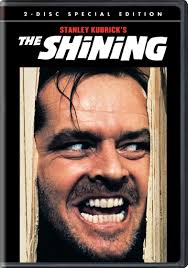
Two master film makers are mentioned in a post about the most difficult scenes to film Director Stanley Kubrick did one small scene in “The Shining” over 148 takes. But Chaplin was most notorious for his perfectionist style-one scene in “City Lights”, just a short time on the screen, took him an astonishing 340 times for the girl to say the line, “Flower, sir?” to Chaplin. Food for thought the next time the boss demands your attention to detail!
Finally, the magazine features reviews of Barbarella with Jane Fonda, FrancisFord Coppola’s first major picture, Finian’s Rainbow, The Zookeeper’s Wife and Going in Style (the latter didn’t get great reviews).
There’s a post listing the best films of Al Pacino, and one piece on the many plot holes found in Marvel pictures. Those who read me regularly can see me smiling, as we all know that the main reason for Marvel pictures isn’t to tie up loose endings and create logical plot points!
There’s also a post that lists the best films about World War I, in honor of America’s 100th Anniversary of our entrance into WWI. The one thing I do take issue with is the inclusion of one of my favorite films: Lawrence of Arabia. Although it’s true that the film does depict war scenes and occurs during WWI, this film isn’t really part of the European war that was fought on the continent. So technically, it may be included, but it’s not one that immediately springs to mind when I think about the Great War. Galipoli, Sergeant York, and Paths of Glory yes-but not Lawrence!
I’m thinking about the Summer Movies a bit early this year. Some look very promising, and we’ll talk more about them in the coming weeks. Also recommended is a good book on film- Talking Pictures-by the Washington Post film critic Ann Hornaday.
I’ll be back next time with more of the latest from the La La Land of filmdom. Till then, see you at the movies!-ML
Continuing with the thoughts about which films most impact our lives personally, I have re-posted here on 6 Degrees one of my older pieces that talks about films such as The Sound of Music, The Wizard of Oz and Roman Holiday-all of these films that encompass the times we live in and moments in our lives. One thing that has been lost in recent years is the millennial need to see films in color. Granted, it is at times a dated process to watch silent films, and some films don’t hold up well, but there is so much to be seen and heard in our rich history of the movies that would be lost if we shunned the superb examples of film making in black and white.
The films of Hitchcock, of Chaplin and Laurel & Hardy, of Harold Lloyd and Buster Keaton, and the films of Bogart and Gary Cooper were primarily black and white ones. In fact, almost the entire genre of Film Noir is gone if you don’t watch the films in their original black & white format. It’s just a point of personal privilege and it sounds like some old fart ranting about how the good ol’ days of film were really the best ones, but there is a history to film-making that would be lost if we shunned the black & white treasures of the past.
Moving on: The end of March brings openings of The Boss Baby– the animated feature with the voice of Alec Baldwin (most reviews are not favorable); reviews for Life, Wilson, Atomic Blonde with Charlize Theron; an interview with director Danny Boyle about Trainspotting 2 and a Film Comment article on this one also.
Other films of note coming out are The Zookeeper’s Wife, with Jessica Chastain, based on a true story of Warsaw zookeepers who saved the lives of Jews in World War II.
There’s a Film Comment piece about Paul Newman’s work as a director in our 6 Degrees magazine. And RogerEbert.com features a book review of “Talking Pictures” by Washington Post critic Ann Hornaday.
There’s also an interesting post about a relatively new phenomena, the re-emergence of 1984. The book by George Orwell has had a rebirth in this era of Trump, and the film version of the same has also been showing in several major cities.
One of the interesting aspects of the recently released Natalie Portman film, Jackie, is the portrait of Camelot that Jackie helped to create after the assassination of JFK. RogerEbert.com discusses this interesting backstory behind the legend of Camelot.
Of Note and under the heading-Fem Flicks: ALL of the content found on rogerebert.com during this last week in March has been written by women. The site also features examples of female-driven storylines in Hollywood with a video interview of Jessica Chastain and Niki Caro from The Zookeeper’s Wife.
We might be headed for a writers strike in Hollywood, according to CNN. But the Writers Guild of America must renegotiate their contract by May of this year, so stay tuned. We’ve also featured in our 6 Degrees magazine a piece (also from Roger Ebert) on the black and white classic from director Francois Truffaut, The400 Blows. As well there’s a beautiful article on one of my favorite actresses of any era, Audrey Hepburn, who starred in “Roman Holiday” (both of these films were shot in black & white).
Also noteworthy is a piece in Rolling Stone on “Five Came Back” which has been called by some the best documentary ever made on the subject of Hollywood and wartime. As we move into April, there’s a list of movies to stream in the coming month
One Last Thing: One of my favorite reviewers, my good pal from Australia, JasonKing, also has a wonderful movie magazine that’s found on Flipboard and it features great reviews. In fact, one of the highest reviewed posts on 6 Degrees was from Jason’s site-his piece on Kong: Skull Island. Check him out if you have a chance!
Next week we’ll feature some of the Turner Classic films and the accompanying reviews. Write or Comment if you can on some favorite films that have impacted your own lives. Looking forward to spring and seeing you at the movies!
Today in the Friday Flix, we’ve got some more reviews for the Beauty and the Beast film, which was Number One at the box office this week. Kong: SkullIsland (my review is on6 Degrees-waiting for small screen was my recommendation) is still doing well. There’s a piece from Mubi.com about the entire spectrum of Kong films beginning with the original 1933 version.
There’s an interesting post from the A.V. Club that reflects on the films that best embody the 90’s. That’s a fascinating concept in my opinion, and a good one to ponder. What are some of the films that embody your high school years; the American Dream; your own visions of life and/or romance and success…the thought experiment can go on and on.
I’m going to extend this out to ask readers, as the A.V. Club does, to reflect on the films that embody their youth. We can continue to expand that with the films that reflect the past and depict life in America or the changing global vision…these are all good questions to ask when we think about films that impact our lives. More on this next week…
There are reviews in the 6 Degrees magazine for Trainspotting 2, Elle, the classic Kubrick film, Dr. Strangelove or How I Learned to stop worrying and love the bomb; Wilson, Cinema Paradiso,The Eyes of My Mother, the wonderful Noir film from 1944, Laura (one of my personal favorite film noirs!), and Life with Jake Gyllenhaal.
There’s a piece this week that discusses the accusation that the website Rotten Tomatoes has become the final arbiter affecting the outcomes of new films. The irony is that in days of old, that was the knock on many of our finest critics. My thinking is that if a movie’s premise sounds interesting, or you really want to see it, and/or if a movie gets good “buzz” or word-of-mouth movement, then the negative reviews from one source shouldn’t affect your decision to see a film. It doesn’t affect mine, and the dirty secret is, as we all know, critics don’t always get it right, folks.
There is a piece from the excellent site: Filmschoolrejects.com, about the origins in the Beauty and the Beast myth that trace back to the Jean Cocteau filmLa Belle et la Bete.
Fem Flicks: The Internet Movie Database (IMDB) has set up a rating to help promote women in film and support and advance their work. There will be a Women’s Media Summit also this month that honors the work of women filmmakers. Both of these articles are found in 6 Degrees of film magazine.
Coming Soon: The L.A. Times has ten movies that are good enough to generate Oscar buzz already, so check out the post and see what you think. That’s the great thing about film. We can all stop and think about the films that affect our lives; there’s the good and the bad ones, the silly and funny ones, the fabulous ones and the classic unforgettable films as well as the very forgettable ones.
My homework this week is going to be to answer the question posed earlier in this post…. The list of films that affect our lives, that shape our views, and have made an impact on us. The post asks us to look at films of the nineties, but we need to look at the Big Picture and include films from several decades past to square this circle.
Looking forward to hearing more about what our readers think regarding films that impact your lives…Have a great weekend, friends, and see you at the movies!-ML
Authors Note:6 Degrees of Film: The Future of Film in the Global Village is soon celebrating three years of print! Still available on Amazon.com- here’s an excerpt from the book about the authorship of the film Casablanca-where a hodge-podge of ideas and egos resulted in one of the most iconic films ever made!
Casablanca
Script authorship of Casablanca also was disputed, only this time it was writer versus writer who vied for the lone credits. Someone said about this B movie classic, “One of the charms of Casablanca lies in its awkwardness. Not only do the politics and romance sit side by side, but that there are two or three contrasting manners of style. There’s the comic-cynical, the soppy-elegiac, and the solemn-propagandist … [It’s] not so much a story as a stringing together of great moments to remember. How, and in what order we remember them is left to us, and this is part of why we like the film so much.”
Four authors claim to be the true author of Casablanca. There is Howard Koch, who claimed he was brought in “to shape the film’s politics”; the brothers Julius and Philip Epstein, who wrote as a team; and Casey Robinson. Robinson said that he had the idea for a film “out of a ‘lousy play’ called Everybody Comes to Rick’s.”
According to Koch, the story was, “So they start shooting and Hal comes to me and says, ‘We need some help. There’s a little trouble.’ Bogart had said, ‘I won’t shoot this __________’; and he had used a very nasty word and gone home.”
Ingrid Bergman on the Casablanca shoot said this: “Every day, we were shooting off the cuff; every day they were handing out dialogue, and we were trying to make sense of it. No one knew where the picture was going, and no one knew how it was going to end … We said, “Well, who are we?” … and Curtiz would say, “We’re not quite sure … It was ridiculous. Just awful … Bogart didn’t know what was going on, so he retired to his trailer … I wanted to know who I was supposed to be in love with, Paul Henreid or Humphrey Bogart?”
The Epstein brothers had gone on to another project for Frank Capra and were not available, so they sent the script in from Washington page by page. Two scripts were floating around, one from the Epsteins and one from Howard Koch. Robinson was brought in to add the love-interest angle. It was apparent that “none of them knew he was working on a movie that would turn out to be something to boast about; all the signs were that Casablanca would be a stinker.”
The facts are this: The film used some lines from the play, Everybody Comes to Rick’s, including the line “Then play it, Sam” and the song As Time Goes By. The irony was that Julius Epstein was not proud of his part in scripting Casablanca. He called it “slick shit,” and said, “Casablanca is one of my least favorite pictures. I’m tired of talking about it after thirty years. I can explain its success only by the Bogey cult … I can recognize that the picture is entertaining and that people love it. The whole thing was shot in the back lot. Furthermore, there were never any such things as letters of transit around which the entire plot revolved. The movie is completely phony.”
In Kong: Skull Island, the denouement is the whole deal. If you could condense it, or fast forward through to the end-The Ape’s the Thing. By that, I mean that the characters, the back story, all prove to be extremely uninteresting and poorly fleshed out in this latest version of King Kong.
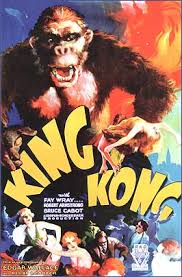
One of the original concepts surrounding the classic 1933 version of “King Kong” (BTW: -David O. Selznick himself reportedly came up with the “King” moniker to add to the Kong), was the big fight to be staged between the giant ape and a dinosaur (A Komodo Lizard, actually).
The Good Kong-holding Fay Wray
This is the takeaway. In Kong: Skull Island, if only we could fast forward from a tedious, plodding two hours of nothing to see the ape fight a giant lizard. There is no Fay Wray, no Empire State Building to distract or interest us. Just waiting for Godot…in this case, the big fight. There’s no need for Oscar caliber actors to waste their time and talent on this. My recommendation: Wait for the small screen and fast forward through to the fight scene.
This week there are mixed reviews out for the new live-action Beauty and the Beast starring Emma Watson as Belle the Beauty and Dan Stevens as the Beast. The knock on this is that it’s a CGI version of the exact story that was made so well back in 1991. So now they are re-creating it with live actors and CGI. A remake that falls shot of the original, but isn’t really terrible…hmm, that is not an original story in Hollywood.
There are reviews for not only Beauty & the Beast, but also Kong: Skull Island and Get Out featured in the online 6 Degrees of film magazine. I have a short review of Kong: Skull Island set to preview this week, but in case the suspense is killing you, know that it is recommended to wait for the small screen where you may safely scroll through to the big fight scene.
On this St. Patrick’s Day, they always trot out the predictable Irish film list. It’s a fairly short list, but The Quiet Man, from 1953, is usually at the top of most of them. And I agree, it’s a great film about Ireland, filmed on location and is a beautiful movie both in storyline and visuals. One of the missing points rarely mentioned is the strong female lead from Maureen O’Hara. She plays a young bride who is torn between her brother and loyalty to family and her love for her new husband, played by John Wayne. And even though she is literally dragged kicking and screaming to the final resolution, she is seen as a strong, funny, smart and never cowed Irish woman with a mind of her own. This was quite a feat for the time period when this film was made and Director John Ford brought out all the best elements of O’Hara’s character to create this unique early model of feminism and strength. There’s a review from Filmsite on 6 Degrees that details much of the background of the making of this film.
One other thought about St. Patrick’s movie madness for my Armchair Film Devotees-rent the film, “The Playboys” with Aidan Quinn, Albert Finney, and a young and beautiful Robin Wright. Made in 1992, the film is a romantic drama surrounding a group of touring actors who descend on a quiet Irish village and disrupt their normally placid lives. This is one to add to the usual list of Irish must-see films to break out on St. Patrick’s Day.
From the Past:The Origin stories-a term of late for back stories that are fleshed out and made into feature films. Turner Classic is showing some of the great ones through the month of March. The term “to Gaslight someone” or to cloud someone’s vision of reality is taken from the film, Gaslight starring Ingrid Bergman and Charles Boyer. Directed by George Cukor, it’s still a classic tale.
Frankenstein & The Mummy, both with Boris Karloff, are shown this month. The original vampire story, Nosferatu, a silent film directed by the legendary F. W. Murnau, is shown. The Cabinet of Dr. Caligari was remade recently by Martin Scorsese and starred Leo DiCaprio (Shutter Island).
Humphrey Bogart became a film star, a gangster, after starring in the play, “The Petrified Forest” and then the film version with Leslie Howard, who declared he wouldn’t make the film without Bogart. Bogey was so grateful he named his daughter Leslie, after his friend. And years later, after laboring for many years pigeon-holed as a tough guy, Bogart got his big break in a leading man role starring in Casablanca, in 1942, with Ingrid Bergman.
The original Pink Panther film, that launched so many terrible sequels and a few funny ones, starred not only Peter Sellers but also David Niven, and was directed by Blake Edwards. King Kong was made in 1933 and made a star of FayWray. It is still probably the best version of the story.
Bonnie & Clyde was a huge hit for Warren Beatty and Faye Dunaway, and it also made the career of the noted film critic Pauline Kael, who loved the film and was hired by the New Yorker during this time period. Kael was ascending as a critic at the same time as the New York Times fired their long-time movie critic Bosley Crowther, who hated the film, and had vehemently panned it. Bonnie and Clyde was considered hip, and a product of the new age of film makers coming into their own in the sixties. Violence and sex were still taboo subjects for the mass audience, and Director Arthur Penn’s edgy production was considered cutting edge for its day.
Finally in March for TCM, there’s two films that routinely make the top ten lists for film critics- The Wizard of Oz from 1939, and 2001: A Space Odyssey, made in1968. These two are definitely on my personal list.
There’s a biography in 6 Degrees magazine paying tribute again to the TCM host Robert Osborne, who died this past month. Some film legends and critics are irreplaceable. Robert Osborne, Pauline Kael, and Roger Ebert all fall into this category. The documentary about Roger Ebert, “Life Itself”, is featured in an article on Ebert.com that we highlight in 6 Degrees.
Another exciting feature on the Ebert site is the Women Writers Week, which premieres during the last week of March where they will be showcasing the work of their team of women writers and critics. As mentioned, Pauline Kael was one of the pioneers in film criticism for decades, and her voice, along with Ebert’s, is sorely missed. At a time when more and more publications and news organizations are ditching their staff, we need to focus and promote the great work done by both men and women who write for blogs, online movie sites and other publications where at times, they are paid little or nothing to continue to build up the craft of film criticism and to speak out and promote the arts.
Shout out to my good friend and colleague: Professor Futon Spoonin-who curates the wonderful Flipboard mag: Film 101: Classic Cinema toCelluloid…. Prof: I tried to write to you and couldn’t get thru the maze of Flipboard tech-so here it goes….I plead guilty to the charge and simply add that the nature of the beast: Content Curators-means we are always “ripping off” other people’s content! I think even the New York Times conceded they cannot review all of the films out there…so therefore, we must find great and informative content from all sources available.
This week, on St. Patrick’s Day, wishing everyone the best and hoping that the road will rise to meet you and that you find yourself in heaven, one half hour before the Devil knows you’re Dead!-See you at the movies-ML
This week, there’s still some controversy about the Oscars show that
somehow managed to crash land the ending of a perfectly decent show. And then we found out that the ratings were abysmal, so perhaps it’s better to just go back to the drawing board and be glad more people didn’t see the fiasco at the end of the evening! And on a sad note, the beloved figure for movie buffs, Robert Osborne, a man who was the urbane and dapper host of Turner Classic Movies for many years, died recently. He will be missed. Here’s some of what’s happening atthe movies, found in the magazine-Six Degrees of Film online:
The Upcoming Dates for Festivals: Noir City: Will be held March 24
to April 2 in Hollywood- Two of the best Noirs featured: This Gun for Hire & Ministry of Fear.
For the Armchair Film Fest: The Annual TCM Classic Film Festival: April 6 to April 9th:Make ‘Em Laugh: Comedy in the Movies: Born Yesterday, The Graduate; High Anxiety, Postcards from the Edge, What’s Up, Doc? are just a few of the classic comedies featured.
Books on Film:The Way Hollywood Tells It: Story and Style in Modern Movies- “Hollywood welcomes innovation, but it also controls it” is a quote from book author, David Bordwell. He writes about the fact that, although the times we are living in are extremely disruptive, the film industry has actually encouraged the Hollywood machine to remain fairly consistent in terms of the style and the production techniques used in film from the early years. Bordwell argues that the Hollywood model of mass market theatrical filmmaking is continuing with traditions that emerged as early as 1917. The norms of the actual process of filmmaking have remained fairly stable, as the mores and styles have changed through the years. In the book I wrote in 2013, 6 Degrees of Film, many of these same ideas parallel those of Bordwell’s The Way Hollywood Tells It. The films of the modern era are very much in league with the styles and filmmaking techniques that emerged in the early classics and during the Golden Age of Cinema.
Robert Osborne: Goodbye to a genuine Good Guy. Osborne had written the definitive history of the Oscars, and was once an actor himself. But his legacy is one that made him a beloved fixture at Turner Classic Movies, where he introduced feature films for decades.
Recommended: A great piece in The Hollywood Reporter has been written on the origins of how the original King Kong came into being. It’s called, “Origin of ‘Kong’: The Unbelieveable True Backstory of Hollywood’s Favorite Giant Ape“, and it’s centered around a real life explorer and filmmaker named Merian C. Cooper, who ended up at RKO with the legendary David O. Selznick. Selznick came up with the name, King Kong, by the way.
Of Note: There’s a piece on Dr. Strangelove, one of our favorite films. At this period in our history, Strangelove seems strangely prescient suddenly. There’s more on the continuing Oscar drama surrounding “”envelope-gate”. And coming soon to the 16th Annual Tribeca Film Festival in New York, The Godfather cast members will reunite. That should be worth the wait.
What Critics are Saying About: I don’t feel at Home in this World Anymore- has been given glowing reviews by critics. The unusual choice of the worst Best Picture “Snubs” from the past two decades is another list that is interesting. There are reviews for all 9 of the Best Picture nominees for 2017 found in our magazine. An interesting, but a bit in the weeds piece, again from David Bordwell, on the early history of Cinema, is one where he explains the static camera style of the early days of cinematography, the “tableau” style. The issue surrounding this is how the techniques of storytelling developed in films in the early period-before 1920, when films were still silent. Bordwell explores the style in detail in this article from his site.
Reviews for:Get Out has been getting positive reviews; Kong: Skull Island has had many good reviews, but there are some mixed opinions on this one; Beauty and the Beast has debuted with favorable reviews; Moonlight, the best picture winner (eventually), has also garnered mostly favorable reviews. The Ottoman Lieutenant, although praised for its visuals, has been garnering poor or lukewarm reviews owing primarily to a weak script. Logan has been garnering good reviews. And finally, there’s a list in our magazine of the best Vampire movies of all time. If you’re a fan, check it out.
Best of the Web: Check out these sites on the web. Some of the best articles are found on The Hollywood Reporter,NPR (National Public Radio), the L.A. Times and Davidbordwell.net.
One of the titles that caught my eye was “Films for Intelligent Audiences“. Of course, readers, you are all intelligent, and although I don’t agree with many of the films listed, the concept is a good one. Hollywood and filmmakers in general need to make MORE films for Intelligent Audiences. Some of the films that I did agree about that were on this list include Inception and The Big Short, Fight Club, Prestige, The Matrix, GoneGirl, and Memento. The idea is that we should promote and applaud more films that make us think and take us out of ourselves by challenging our intellect. These are the films that will be remembered a generation from now.
Here’s to the films that challenge us. See you at the movies!-ML
Lately, I’ve been talking about the problems in the Oscar broadcast, as well as the mentality of the entire Academy of Motion Pictures. Other problems are cited this week in a piece from 6 Degrees Magazine talking about the obscure Best Picture winners that nobody sees. Moonlight is no exception. It’s the second lowest-grossing winner in history (The Hurt Locker is first!) Spotlight and The Artist were also box office failures. Which doesn’t mean they aren’t good films, or that they will not eventually be recognized. But five of the past eight winners were rather obscure, little known films. There seems to be a pattern emerging here, as I mentioned last week. The Academy needs to rethink their criteria for judging these films, as well as the categories they’ve set up.
What Critics are saying about…March Movies that are being released to DVD or coming to the small screen in 2017 include: Memento; Blazing Saddles; Jurassic Park; This is Spinal Tap; Pete’s Dragon; The BFG; Who Framed Roger Rabbit; The Life Aquatic; Wht’s Eating Gilbert Grape; A Man Called Ove; Sweden- Sing; Fantastic Beasts & Where to find them; Passengers; Miss Sloane; Assassin’s Creed;Elle; Silence; Patriot’s Day and Midnight in Paris.
The Logan spinoff film with Hugh Jackman has had generally good reviews. Kong: Skull Island has also opened to favorable reviews. Get Out, a Horror/Thriller directed by Jordan Peele, has been given almost perfect scores from Rotten Tomatoes, and has earned some rave reviews. The romantic comedy Table 19 has, on the other hand, been generally panned across the board. The Great Wall with Matt Damon has also been panned and considered a flop. Finally, there is a long-read on the Some Came Running site in praise of the Martin Scorsese film Silence, recently released.
The genre of comic book films was discussed in The Guardian this past week. The critics have come out with a list of favorite superhero films, and they include: Batman from 1989 (my favorite also!); Captain America: The Winter Soldier; Thor: The Dark World and The Dark Knight. All of these are generally well reviewed and represent some of the best in a newly established genre that has had some weak entries in recent years. There are some imaginative possibilities in this category, but the lazier end of the spectrum can provide simply a host of CGI scenes with little chance of clever dialogue or original scripts.
Best of the Web: From the Ebert.com site, there’s a great tribute to the actor Bill Paxton, who died suddenly last week. A piece in Film Comment laments the death of the comic film. One quote said, “Hollywood has perfected {the comic film} using the generic formula and familiarity to generate laughs.” We live in a fast paced and ever changing media environment, and the society has created the need for ever more complex screen stories. We need characters created in classics such as The Thin Man or His Girl Friday, or physical comedy that rivals the early Jim Carrey films or classic Chaplin or Keaton. In other words, the films that pass for comedy these days aren’t really all that funny, and they don’t seem to be trying too hard.
Recommended: Logan, Fences; Lion at the movies. Arrival is recommended for the small screen. And if you like Hugh Jackman, rent the following: Kate & Leopold; Scoop; Les Miserables.
The Big Picture:Movies for 2018 awards are already being mentioned. They include: The Big Sick- A Romantic Comedy with Ray Romano & Holly Hunter; Dunkirk with Tom Hardy. The true story of the massive evacuation known as the “Miracle of Dunkirk”; Christopher Nolan directs; and DarkestHour- Gary Oldman plays Churchill during the Battle of Britain.
The idea that films are somehow immune from the other problems that plague us in society is laughable. We are a divided nation politically, and even, or perhaps especially, our film community illustrates the divide we face. There is always a need for films with clever, witty dialogue, actors who charm and move us in the same breath, films that unite us and great directors who challenge us to look at life in a new and different way. These are the challenges as we move into the future, and as mentioned this past week, these are the types of films that we don’t see often enough. Art has always been about the future, and a new way of looking at life. This is a pivotal moment in the field and craft of film-making, and let us hope that there are artists working today that will rise to the occasion and
bring us together through the great and beautiful art of film-making.
After last night’s mix up at the Academy Awards for Best Picture, it illustrates the perfect metaphor for the type of arrested development mentality that has gone into the entire short-sighted thinking of the Academy virtually since its inception. There are so many chances for the group as a body to do the right thing and shake things up. But they continue to stumble their way into the future wearing blinkers.
To illustrate the point, here is a list of the winners for Best Picture from the past 17 years:
Gladiator- 2000; A Beautiful Mind-2001; Chicago-2002; The Lord of the Rings:The Return of the King-2003; Million Dollar Baby-2004; Crash-2005; The Departed-2006; No Country for Old Men-2007; Slumdog Millionaire-2008; The Hurt Locker-2009; The King’s Speech-2010; The Artist-2011; Argo-2012; 12 Years a Slave-2013; Birdman-2014; Spotlight-2015
And within that list, there are a few notable exceptions (a couple of years were skipped because they had such forgettable films). My list would include:
Gladiator: 2000; A Beautiful Mind; 2001- ?2002 who cares: Lost in Translation-2003; The Aviator: 2004; Capote 2005; The Departed-2006; No Country/Juno/There will be Blood- 2007: Slumdog Millionaire-2008; The Hurt Locker-2009; The Social Network-2010; The Artist/Moneyball-2011; 2012: Les Miz or Lincoln; 2013: Gravity/12 Years/Her; 2014: who cares?; 2015: Spotlight/The Big Short/The Revenant
Some of the years had more than one winner. I may simply see this year as a who cares? category. But the overarching theme of the Academy seems to be trying to pick the film with the least long term impact. Since Titanic, there haven’t been too many great films picked.
For films in the 21st Century, I would pick A Beautiful Mind, No Country for Old Men, There will be Blood, Slumdog Millionaire, The Hurt Locker, Lincoln, Gravity, 12 Years a Slave, Her, The Big Short, Moneyball & The Blind Side. as films that make a lasting impact from Hollywood.
One standout performer isn’t really an actor or actress. It’s the author, Michael Lewis. He has written three of the films in the past 15 years that have made an impact on our society. The Big Short, Moneyball and The Blind Side are all films made from his books. Spotlight, the winner last year, is an important film in this sense. We are now facing an era where journalistic integrity and truth are questioned from the highest echelons of our society. Therefore, the film that emphasizes seeking the truth at all costs is one that we should continue to promote. It tells us why we should care about journalists getting to the bottom of the story.
Lincoln, although a good and not a great film, was one that Spielberg has said was almost made for the small screen. That is the trend that continues, and perhaps there will be categories in the future for films released in venues other than traditional theaters. That is the wave of the future. There is a changing dynamic in Hollywood and globally, and the Academy is going to have to acknowledge it someday.
The films Inception and The Matrix gave us alternative visions of reality. We saw in Her a film about the very real challenges that isolation of the individual causes in our society. And Juno, about a teen pregnancy, spoke of the changing mores we face. It gave us a new voice as a screenwriter, Diablo Cody, a much needed voice for women. The Hurt Locker broke barriers as Best Director Oscar was given for the first time to a woman, Kathryn Bigelow. And when 12 Years a Slave won for Best Picture, it was an indication that the “Indians were finally fighting back”. Meaning that the concept of the brave white men and women who conquered the West and all of America was given to be a myth that needed to be deflated. There needs to be a new way to understand Hollywood and the concept of movie making in general.
Lost in Translation is a ground-breaking film, also speaking of isolation and giving voice to a different vision, one created by another female director, Sofia Coppola, daughter of Francis. The two films released in the same year, There will Be Blood and No Country for Old Men both dealt with violence and subjects where the film had no hero or anti-hero. The Departed and The Wolf of Wall Street also were nihilistic visions, where society is darkly honest, a black hole at times, and the reality is often frighteningly evil. This may be a commentary also of our times, and a way of pushing the audience to the brink of no return. Another commonality in these two latter films is the presence of a great American actor, Leonardo Di Caprio. Only a truly great actor could pull off the nihilistic and dark visions he has given us with any amount of credibility.
Of course, the sequels and serial films, the comic book genres, and all other mass media concepts for film-making still go unacknowledged by the Academy. They seem to be stuck in some time warp where Elizabeth Taylor and Clark Gable may somehow reappear, courtesy of CGI, and attempt a coup where all the trends and realities of the future are somehow set aside. This is the alternate reality that we see played out yearly with the Academy Awards show.
And although there were some attempts to acknowledge things like “diversity” and globalism, there is a real blinker-visioned reality to the types of awards given out still. Movies ABOUT movies still win a lot. The Artist and Birdman are self-congratulatory vehicles for the most part. But the Independent filmmakers, the ones honored at Sundance every year, are forging ahead and creating their own paths inHollywood. Why they don’t recognize this and somehow carve out a niche for them is part of the tunnel visioned, short-term thinking that has gone into the Hollywood mind-set for the past forty to fifty years.
It seemed fitting that Warren Beatty and Faye Dunaway committed the ultimate faux pas by shutting down the stage where usually trite and mundane speeches are trotted out to the sound of bored applause that is routinely bestowed on the lackluster winner of Best Picture. It may be the ultimate for the renegades who brought us “Bonnie and Clyde” in
the sixties. Perhaps its best to say that the films with the greatest
impact have to be seen and then understood even a decade out from their initial release. It’s the shock of the new that sometimes cannot be understood.
We still have great actors working to make movies. Di Caprio is our greatest American actor. Philip Seymour Hoffman was one of the greatest of our actors, now deceased. Michael Keaton has made a real comeback as a significant American actor in vital roles from The Founder to Birdman. Tom Hanks has done some good work in Captain Phillips and The Bridge of Spies, and some of his roles have been just mediocre. The call is out for actors who are still here. De Niro, Nicholson, Di Caprio, Tom Hardy, Benedict Cumberbatch and others working still, need to challenge themselves with roles that Michael Keaton and Denzel Washington have taken on of late. There are parts out there that will interest us and will live on as we look back and see what our society has become as we go further into the 21st Century.








 Six Degrees of Film